Dryer Vent Cleaning in Somerville, NJ
Dryer vent cleaning clears the lint that collects in the duct between the dryer's exhaust outlet and the cap on the outside wall or roof, so hot, damp air can leave the house on every load. AMG Duct Cleaning Somerville NJ cleans the whole run, starting at the dryer connection and ending at the exterior flap, and checks that air is moving out of the cap before the crew leaves.
Lint that gets past the screen settles in the vent, packing tightest at elbows and in any sag, and a blocked vent is a fire hazard as well as a slow dryer. The Consumer Product Safety Commission warns that fires can start when lint builds up in the dryer or its exhaust duct, and U.S. Fire Administration data puts failure to clean at the top of the factors behind home dryer fires. The warning signs build slowly: loads still damp at the end of a normal cycle, a laundry room that stays warm and humid, a flap outside that barely moves while the dryer runs.
Where the laundry sits changes the job across central Somerset County. Older houses in Somerville, Raritan and Manville often have the laundry in the basement, with a vent that climbs to the rim joist or crosses the ceiling to a side wall. Houses built in the townships from the 1980s on more often have the laundry on the first floor or upstairs near the bedrooms, and the upstairs ones vent through the attic to a roof cap or a gable wall. In a Franklin townhouse the laundry may be in an upper-floor closet that vents up through a chase.
How does a full dryer vent cleaning work?
The crew slides the dryer away from the wall, takes off the transition hose, and clears the lint that gathers behind the machine and at its outlet, where the lint screen never reaches. The run is then cleaned with rotary brushes sized to the duct while a vacuum collects what breaks loose, working the full length through walls, ceilings and the attic section. Lint is pulled out of the line rather than pushed toward the cap.
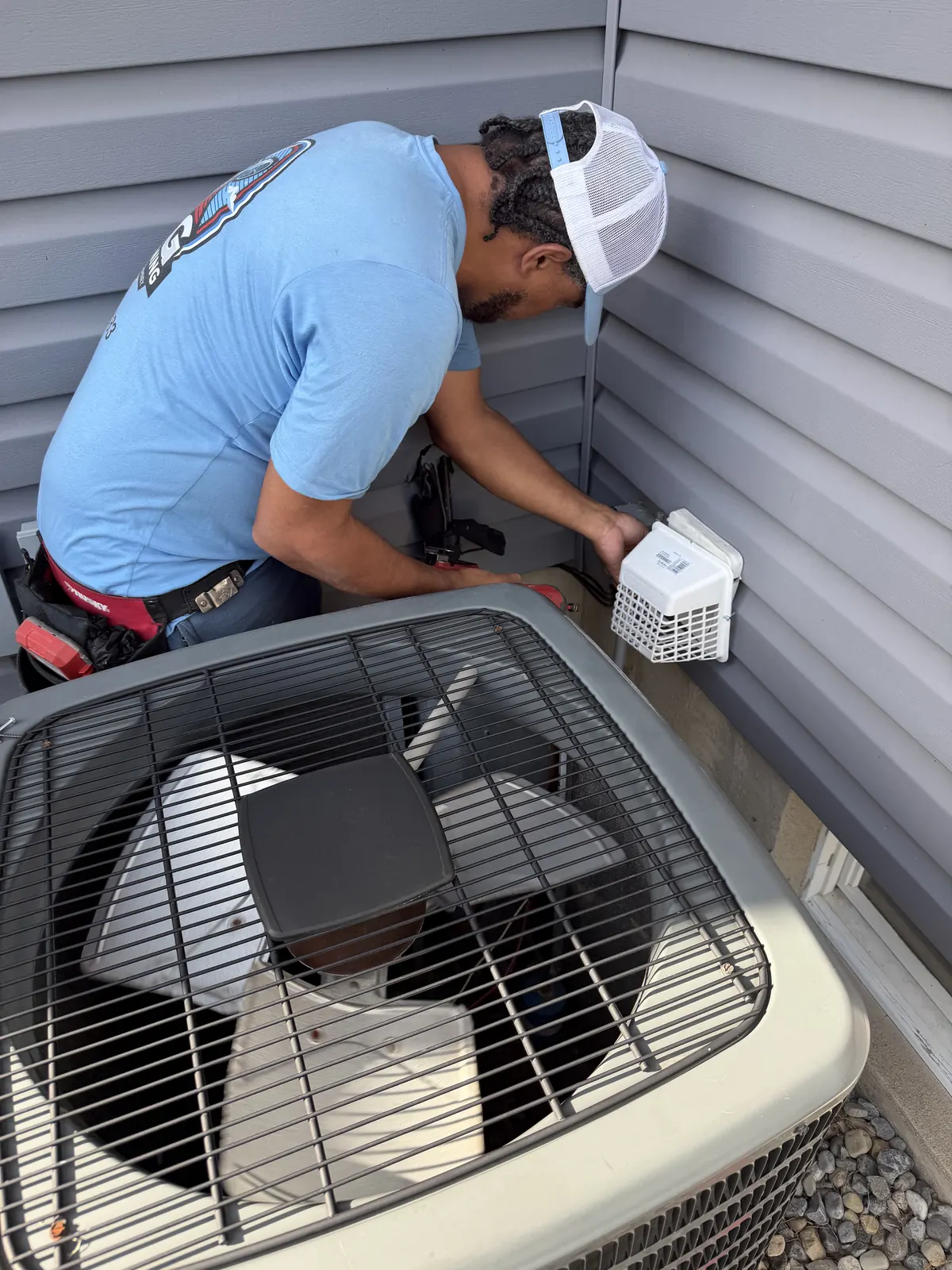
Outside, the cap and its damper flap are cleared of lint, nesting material and debris, and the flap is checked for free movement. The CPSC's own advice is to go outside while the dryer runs and confirm exhaust air is coming out of the vent, and that is how the visit ends: dryer on, crew at the cap, air moving. The hose goes back on with a clamp, and any foil or plastic accordion hose is pointed out for replacement.
What are the signs a dryer vent needs cleaning?
The CPSC names the clearest one: clothes that come out damp after a normal cycle, or loads that need more time than they once did. Other clues show up in the laundry room: a cabinet too hot to rest a hand on, air that turns steamy during a load, a scorched smell, or lint collecting around the door and behind the dryer. Outside, a flap that stays shut or barely lifts while the dryer runs means the air is not getting out.
How fast a vent fills depends on the run and the household. Long runs with several elbows, upstairs laundries venting through the attic, pets, and a dryer that runs most days all fill a vent faster. A yearly cleaning suits many households, and after the first visit the crew can tell you whether your run calls for more or less.
What makes vents around Somerville harder to clean?
In the older boroughs the vent often passes through a finished basement ceiling or a wall built after the dryer went in, with a stretch of flexible hose hidden where no one can see it sag. Two-family houses in Manville and Raritan often have two dryers on two separate runs, sometimes with both caps on one wall, a few feet from each other, and each is cleaned and checked on its own. In townhouse communities, including the many in Franklin, the exterior wall or roof may belong to the association, so the visit is arranged with the management office when the cap sits on common property.
Roof caps are the other hard spot. An upstairs laundry venting through a roof jack collects lint at the cap, where a screen, a stuck flap or a nest can block the whole run. The attic section is cleaned from inside, and the cap gets checked from the roof if it is safe to stand there that day; if it is not, the crew tells you and works from the attic side. A roof run that is too long or has too many bends to stay clear is a case for dryer vent installation along a shorter route.
Why does the fire risk change how the job is done?
Lint is dry, fine and quick to burn, and it collects a short distance from a heating element or a gas burner. Given how often failure to clean shows up in dryer fire data, the crew treats the vent as a safety system: every foot of the run and the cap on every visit, and a straight answer when the duct material or the route is the real problem. On a gas dryer the connection behind the machine gets a look too, and anything wrong there is pointed out before the dryer goes back against the wall.
Dryer vent visits go on the schedule 8 AM to 8 PM, 7 days a week through the Somerville line, and the company doing them is licensed and insured and veteran owned. The estimate is free. The visit pairs well with air duct cleaning, since the crew is already in the house, and with a chimney cleaning ahead of the heating season.
What is included
- Dryer moved out and the transition hose removed and inspected
- Lint cleared from behind the dryer and at its outlet
- Rotary brushing with vacuum collection along the full run
- Wall, ceiling and attic sections cleaned from inside the house
- Exterior cap and damper flap cleared of lint and nesting material
- Dryer switched on at the end and air checked leaving the cap
- Transition hose reconnected with a clamp, not tape
- Foil or plastic accordion ducting flagged for replacement
Questions and answers
Who cleans dryer vents in Somerville, NJ?
AMG Duct Cleaning Somerville NJ cleans dryer vents in Somerville and the eight towns around it, Manville, Hillsborough and Franklin among them. The crew cleans the full run from the dryer connection to the outside cap and confirms airflow before leaving, and the estimate is free.
How often does a dryer vent need cleaning?
Once a year suits many households. Big families, pets, long runs with several elbows, and upstairs laundries venting through the roof fill faster and may need it sooner. After the first cleaning, the crew can tell you how quickly your run is collecting lint.
Why are my clothes still damp after a full cycle?
A restricted vent is the most common reason: lint in the duct, a crushed hose behind the dryer, or a flap that does not open. The CPSC lists damp clothes at the end of a typical cycle as a sign the lint screen or exhaust duct may be blocked. If the vent was the restriction, cleaning it brings drying times back down.
Can you clean a dryer vent that exits through the roof?
Yes. The attic section is cleaned from inside the house, and the roof cap is cleared from above when footing on the roof is safe. If the roof run is too long or too bent to stay clear, the crew explains how a shorter route would help.
Should a foil dryer hose be replaced?
Yes. CPSC guidance calls for swapping plastic or foil accordion duct for rigid metal or corrugated semi-rigid metal, since the flexible kind catches lint and kinks or crushes, choking the airflow. The crew points out any section like that during the cleaning.
More questions and answers about our work
Dryer Vent Cleaning across central Somerset County
We provide dryer vent cleaning in central Somerset County. Choose your town for local details.
Ready for cleaner air?
Tell us about your home and get a free estimate.