A newer high-efficiency furnace does not breathe room air the way an older atmospheric model did. It pulls its combustion air through a dedicated pipe run out through the side wall, often paired with a second pipe that carries the exhaust back outside. That intake pipe is particular about what sits near it, and one of the things installation instructions flag by name is the vent from a clothes dryer. In a lot of houses across Branchburg, Hillsborough, Franklin and Montgomery, the laundry room and the mechanical room share a wall or sit close together, which puts the dryer hood and the furnace intake within a few feet of each other without anyone having planned it that way.
Why the intake pipe is particular about what sits nearby
Furnace installation instructions set a required distance between the combustion air inlet and the vent of any clothes dryer, with those distances drawn from the National Fuel Gas Code rather than left to a contractor's judgment. The same instructions list the substances that should not reach the combustion air supply, and antistatic fabric softener residue is one of them, named specifically because it rides along in dryer exhaust and because the instructions describe what happens once it gets inside the furnace. A furnace installed in a laundry room is one of the layouts the instructions call out by name as a case that may need its combustion air pulled from outdoors rather than from the room, which is exactly why the intake pipe exists in the first place.
What a dryer's exhaust does to a combustion air intake
Dryer exhaust carries lint, moisture and whatever is left of fabric softener and detergent after a load finishes. Pulled in through a nearby combustion air intake, that mix does not stay inert. The furnace maker's own language warns that these contaminants turn corrosive once they reach the inside of the unit, attacking the heat exchanger and burner components that were built to handle clean outdoor air, not a stream carrying softener residue and moisture. Lint on its own clogs the intake screen over time, narrowing the opening and starving the burner of the air it needs for complete combustion. The Consumer Product Safety Commission notes that restricted combustion air is one of the conditions that lets carbon monoxide build up inside a home, which is the reason this clearance gets written into installation instructions instead of left as a suggestion.
Spotting the two pipes and the dryer hood on the same wall
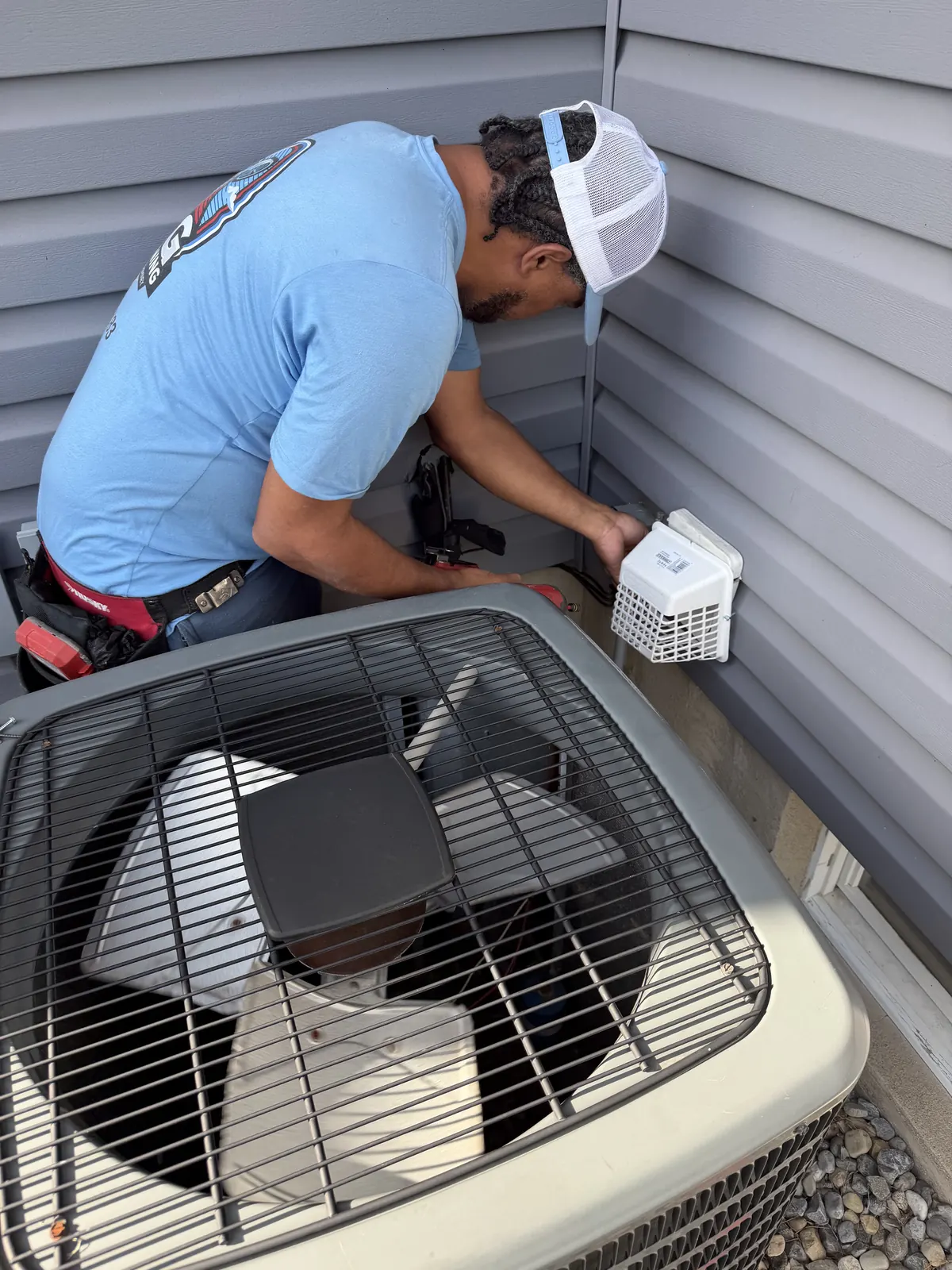
From outside, a condensing furnace shows two PVC pipes close together on the side or rear wall, usually at a similar height. One is capped with a screen to keep out debris and small animals. The other, the exhaust, often sits lower and without a screen. A dryer vent hood nearby has a flapper or louver that swings open while the dryer runs and closes when it stops. In houses where the laundry room backs onto the mechanical room, all three openings sometimes land in the same wall bay, a few feet apart, with nothing about the exterior suggesting a problem until someone is standing there with a tape measure. The dryer hood was placed based on where the laundry room's exterior wall happened to be, long before anyone was thinking about a furnace's combustion air supply.
When the intake can't move, the dryer vent does
The combustion air intake's position is set by the furnace installation and by where the unit itself sits inside the house, so it is rarely the piece that gets relocated after the fact. Dryer Vent Installation is the more practical fix in most of these cases, rerouting the dryer's exhaust to a different exterior wall, a different bay on the same wall, or a different height, far enough from the intake to clear what the instructions call for. That sometimes means a longer run of rigid duct from the dryer to the new exterior point, or a route that takes one more turn than the original vent did, and both of those get accounted for in how the new run is sized and laid out so airflow out of the dryer stays where it needs to be.
Why this is showing up now in Branchburg, Hillsborough, Franklin and Montgomery
Census estimates put the median house in Branchburg, Hillsborough and Franklin at a year structure built around 1986, and Montgomery closer to 1994. Houses from that era are now on their first or second round of new mechanical equipment, and a lot of those replacements are moving from an older atmospheric furnace to a sealed-combustion, high-efficiency model with its own intake pipe. The original dryer vent in these houses was placed decades ago, sized and located for the laundry room layout at the time, with no thought given to a combustion air intake that did not exist yet. The clearance issue is not a sign that anything was done wrong originally. It is a new rule meeting an old vent location for the first time, and it only comes up once the furnace itself changes.
What decides the cost of relocating a dryer vent
What a relocation costs depends on how far the new route has to travel to clear the intake, how many turns the new run needs to reach an exterior wall, what kind of siding or masonry the new opening has to pass through, and if the existing duct run can be reused in part or has to be replaced along its full length. A written estimate after a look at both pipes and the current vent route lays out what the new path covers, so a homeowner knows what changes at the exterior wall and what stays the same inside the laundry room.