Two-family houses are a large part of the housing in this corner of Somerset County. Census estimates count about a quarter of Manville's homes in two-unit buildings and nearly a fifth of Raritan's, and Somerville adds two-families and small buildings of three or four apartments. When the owner lives in one unit and rents the other, the owner is landlord, neighbor and maintenance department at once. A two-family doubles almost everything in the basement, and the owner is the one person who sees both halves, so the owner is also the one who has to watch both units and keep a visit simple for everyone living there.
Two units, two systems, one basement
In many two-families each unit has its own furnace, and both usually stand in the one basement with their own trunks and filters. The first-floor system is the simple one: short runs straight up into the rooms above. The second-floor system has to climb, so its supply runs travel through first-floor walls, closets or a boxed chase, sometimes beside the chimney. Every joint on that climb is a place where the upstairs heat can leak into the downstairs hallway, and where the smell of one kitchen can reach the other apartment. When a tenant says the bedroom never warms up, or that they can smell the neighbor's cooking through a register, the joints along that climb are the first suspect, and air duct repair seals them.
Air duct cleaning in a two-family treats the two systems as two jobs in one visit. Each has its own return, its own filter slot and its own history, and they rarely carry the same amount of dust. A unit with pets, heavy cooking or a tenant who never changed the filter can hold far more than the other, so the two are inspected separately and the findings are written up per unit. That record is also useful at lease renewal.
The upstairs dryer is the one to watch
The first-floor unit's dryer tends to live in the basement or a back room, with a short run out through the rim joist. The second-floor dryer has a harder path. Its vent often drops through the floor into the lower unit's ceiling, crosses the house, and leaves through a side wall, or it climbs to the attic and the roof. Those long runs have low spots where warm, damp lint settles, and in older conversions they were sometimes built from foil or plastic hose because it was easy to snake through a finished ceiling.
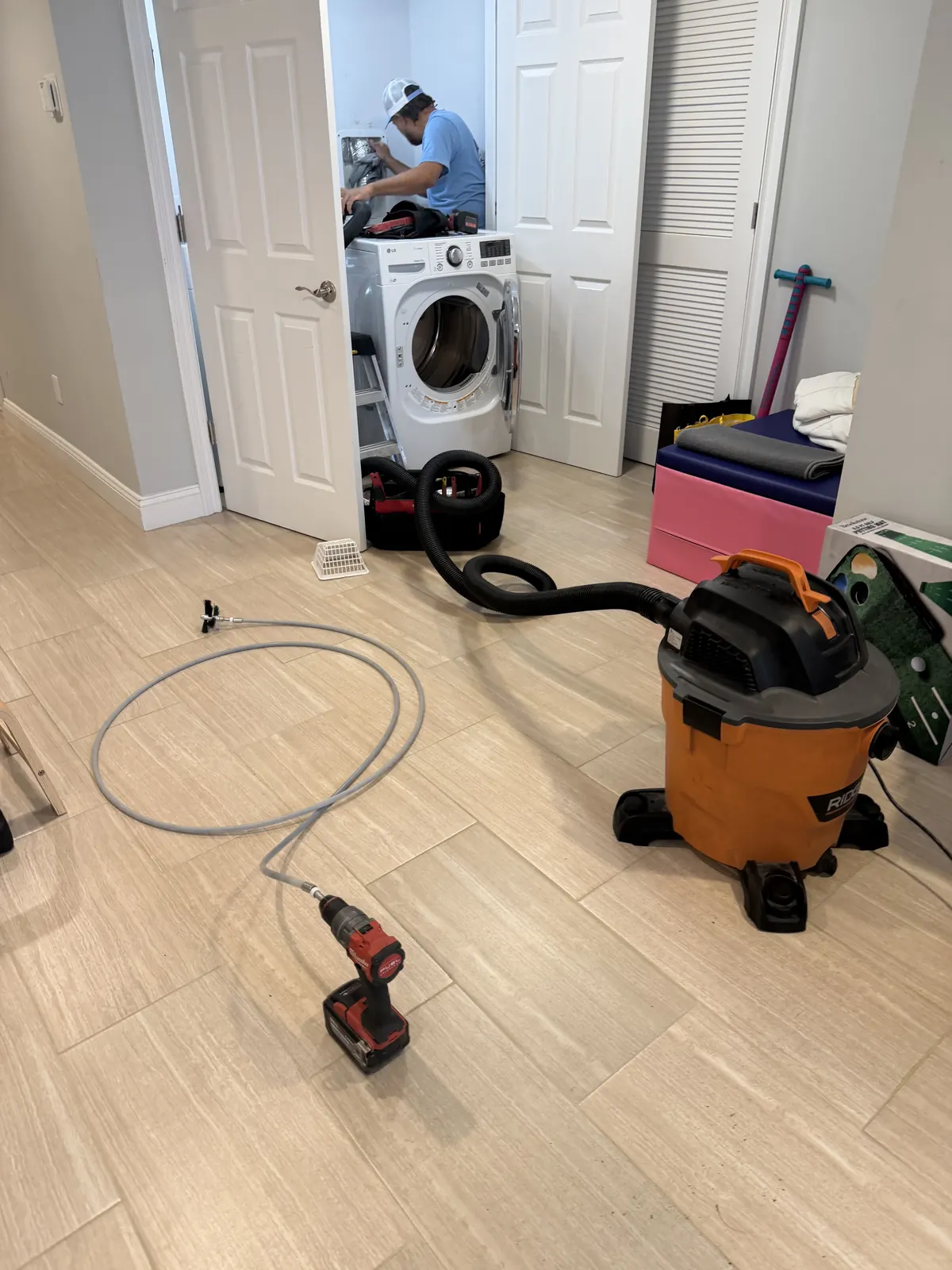
The National Fire Protection Association is direct about this. Its dryer safety sheet ranks a dryer nobody cleaned as the top cause of home dryer fires, wants the venting made of metal, rigid or flexible, so the air keeps moving and loads dry on time, and asks owners to confirm that nothing restricts the exhaust pipe and that the outdoor flap opens while the dryer runs. In a two-family, the upstairs run is the one that fails those tests most often, and it passes through the other household's ceiling. Dryer vent cleaning covers both runs from machine to hood, and dryer vent installation replaces a foil or plastic section, or an upper run with too many turns, with rigid metal on the shortest practical route.
How often, and who notices first
The NFPA's guidance is to clean the lint out of the vent pipe once a year, or more often if clothes are taking longer than normal to dry, and to clean the lint filter before or after every load. The same sheet says never to run the dryer without its lint filter, so a torn or missing screen in a tenant's machine gets replaced, not ignored, because every load it skips sends more lint into the run. In a rental unit, the tenant notices the warning sign first: towels that need a second cycle, a laundry closet that feels hot, a dryer that shuts itself off mid-cycle. Ask tenants to tell you when drying slows down, and put the vent on the same yearly calendar as the furnace filters for both units, so it does not depend on anyone remembering.
The chimney both furnaces share
Often both furnaces and one or two water heaters vent through a single masonry chimney. That one flue serves two households, which makes its condition everyone's business. The Consumer Product Safety Commission advises having heating systems inspected and serviced every year, with the inspection covering chimneys and flues for blockages, corrosion and partial or complete disconnections, and it wants a carbon monoxide alarm on each floor of the home and outside the bedrooms. In a two-family, that means alarms in both units, not only the owner's.
Chimney cleaning takes the soot and debris out of the flue and its base and reveals the liner's condition, and chimney repair handles a cracked crown, a missing cap or a liner mismatched to the appliances now using it. Before each heating season, a look through the cleanout at the chimney's base shows whether debris has piled up. When one unit's furnace is replaced with a high-efficiency furnace that has its own vent pipe through the wall, the other unit's appliances may be left alone in a flue sized for more, which is worth checking before the next heating season.
Scheduling a visit around two households
A visit to a two-family works best when both units know about it in advance. The crew needs the basement, both furnaces, both dryers pulled away from the wall, and access to the outside hoods, and in some houses a closet in the upstairs unit where a chase or a vent passes through. Tell the tenant the day, which rooms are involved and roughly how long, and make sure pets are settled. One visit then covers both systems, both dryer runs and the chimney base.
A yearly routine for owners
Change both furnace filters on schedule. Check both outside dryer hoods, especially the upstairs one, for a flap that opens freely. Book one yearly visit that covers both dryer runs, looks at both duct systems and inspects the shared chimney. Keep working carbon monoxide alarms in both units. In the two-families of Manville, Raritan and Somerville, the item most likely to slip through that routine is the upstairs run, so if only one thing gets done this year, make it dryer vent cleaning for the unit above.