Franklin's farmhouses and the older houses clustered in Millstone's village section often sit on a crawl space rather than a full basement, and when a laundry room sits above that crawl space, the dryer vent run usually drops down through the floor and travels across the crawl space before it climbs back up through a rim joist or a foundation wall to the outside. That routing works on a lot of these houses, but a few details decide if it stays a safe run or turns into a long-running moisture problem under the floor.
Where the vent has to terminate
The vent has to end outdoors, past the siding or the foundation wall, never inside the crawl space itself. Terminating it inside, even loosely draped near a vent opening or left blowing against the ground, pushes hot moist air and lint straight into the crawl space, where it settles against joists, insulation and whatever sits on the dirt or gravel below. NFPA's guidance on clothes dryer safety is direct about this point: the exhaust has to vent to the outside of the house, not into an attic, crawl space, or other inside part of the home. A vent that stops short inside the crawl space is one of the first things a technician checks on an older Franklin or Millstone house, since it is an easy mistake to make when the original run was shortened or altered during a past renovation.
Rigid metal through damp crawl air
Crawl space air runs damper than a basement or a finished room, especially on a house without a sealed vapor barrier over the dirt floor, and that moisture matters more once a vent material choice enters the picture. Flexible foil or plastic duct marketed for dryer use holds lint in its ridges and sags between supports, and in a damp crawl space that sag becomes a low spot where condensation collects instead of draining toward either end. Dryer Vent Installation through a crawl space calls for rigid or semi-rigid metal duct for the same reasons it gets specified anywhere else in the house, smooth walls that shed lint rather than catching it, and a stiffer run that holds its shape instead of drooping between joists over the years.
Sag, condensate and slope
Even rigid metal duct needs a steady slope toward the outdoor termination, so any condensate that forms on a cold section of pipe runs out with the airflow rather than pooling at a low joint. A crawl space run that dips and rises more than once, chasing joists or other pipes already in the way, creates exactly the low points where water collects, and over time that moisture rusts a seam or loosens a joint from the inside. Supports placed at regular intervals keep a long rigid run from sagging under its own weight, which matters more in a crawl space than a basement, since the run is often longer and harder to check once it is buttoned up.
Supports and strapping through the joist bays
A dryer vent crossing a crawl space usually runs perpendicular to the joists, passing through drilled holes or resting in strap hangers fastened to the underside of the floor. Metal strapping, not wire or cord, holds the duct in place without crushing the round cross-section a dryer needs to push air at the rate it is designed to move. A run fastened with whatever was on hand, a bent coat hanger or a wrap of plumber's tape, tends to sag at exactly the spots where real supports were skipped, and that sag is where lint and moisture collect first.
Where the hood exits outdoors
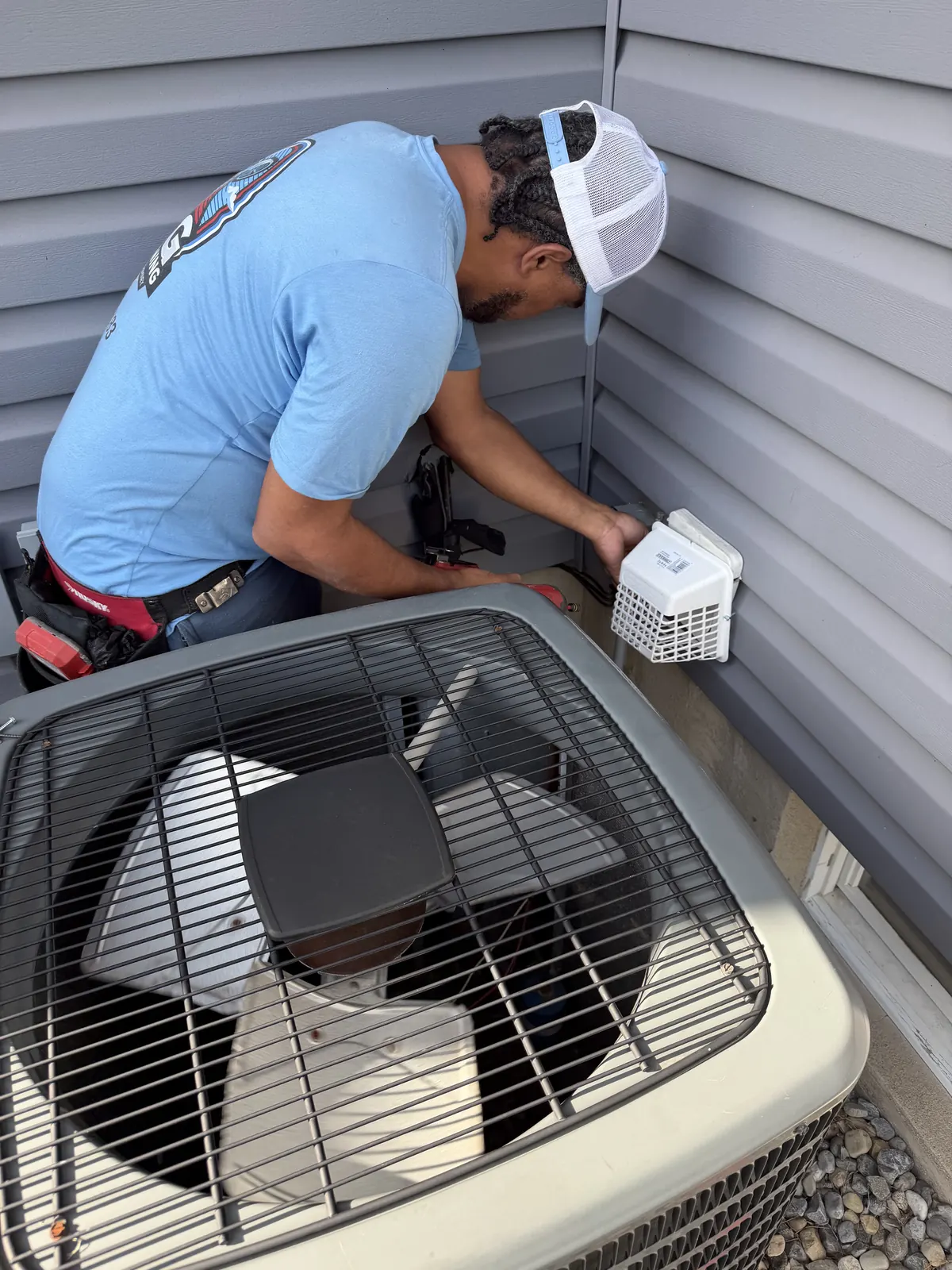
The outdoor termination matters as much as the run leading to it. A vent hood with a damper that opens under airflow and closes afterward keeps outside air, insects and small animals from working back into the duct between loads. Height above grade matters too, since a termination mounted low on a foundation wall sits closer to standing water after rain, closer to snow cover in winter, and closer to whatever grows along the foundation over a season. On a Franklin or Millstone house with a crawl space, a technician looks for a termination that clears grade, points away from a walkway or a window well, and sits far enough from a foundation vent or any other intake that the moist air it pushes out does not find its way back inside.
What decides the cost of a crawl space reroute
What a dryer vent reroute through a crawl space costs depends on how far the laundry room sits from an outside wall, how many joist bays the run has to cross, if the existing run can be reused in sections or has to come out entirely, and how much crawl space access a technician has to work with. A written estimate after a look at the current run and the crawl space itself lays out what Dryer Vent Installation covers on that house, and Dryer Vent Cleaning gets scheduled on its own once the run is in place, since a newly installed rigid run with proper slope and support still collects lint and keeping it clear stays a separate, ongoing job.