
Manville and Raritan's postwar housing stock includes a lot of compact single-story and split-level houses built with a dryer closet off the kitchen or a basement laundry area, and the duct run to the outside often took the shortest path available, through a rim joist and straight out the back wall. When a deck, a screened porch, or a concrete stoop went in later, sometimes decades after the original exhaust run was installed, the termination hood ended up tucked into the pocket underneath, boxed in by skirting, lattice, or the deck framing itself.
What happens to lint and moisture in that pocket
A dryer vent's job is to push warm, humid air loaded with fine lint out past the house wall and let it disperse into open air. Under a deck or porch, that air has nowhere to go. Lint settles on the joists overhead, on the lattice, and on the ground directly below the hood, building up in a spot that almost never sees direct sun or a breeze strong enough to dry it out. On a cold morning the moist exhaust condenses against the cooler wood framing instead of carrying away, leaving the area under the deck damp long after the dryer cycle has ended. The National Fire Protection Association's guidance on clothes dryer safety points to lint buildup as a driver of dryer fire risk, and a termination point that traps lint against wood framing rather than letting it blow clear is a harder spot to keep clean than an open wall termination out in the yard.
Why the hood and damper matter in this spot
A dryer vent hood is built with a spring-loaded damper, flaps that open when the dryer runs and close the rest of the time to keep the duct from acting as an entry point for pests or an open gap for rain and snow. In an open, unobstructed wall location those flaps work the way they were designed to. Tucked into a deck or porch pocket, the flaps sometimes end up propped against lattice or packed with caked lint that keeps them from closing all the way, and in other cases dirt and leaf debris that collects in the enclosed space gets pulled toward the hood and settles around the flap hinge over a season or two. A hood that cannot close fully loses the one feature that keeps the duct from becoming an open invitation to a nesting animal looking for a dry, sheltered spot near the house.
What a cleaning reaches and what it leaves behind
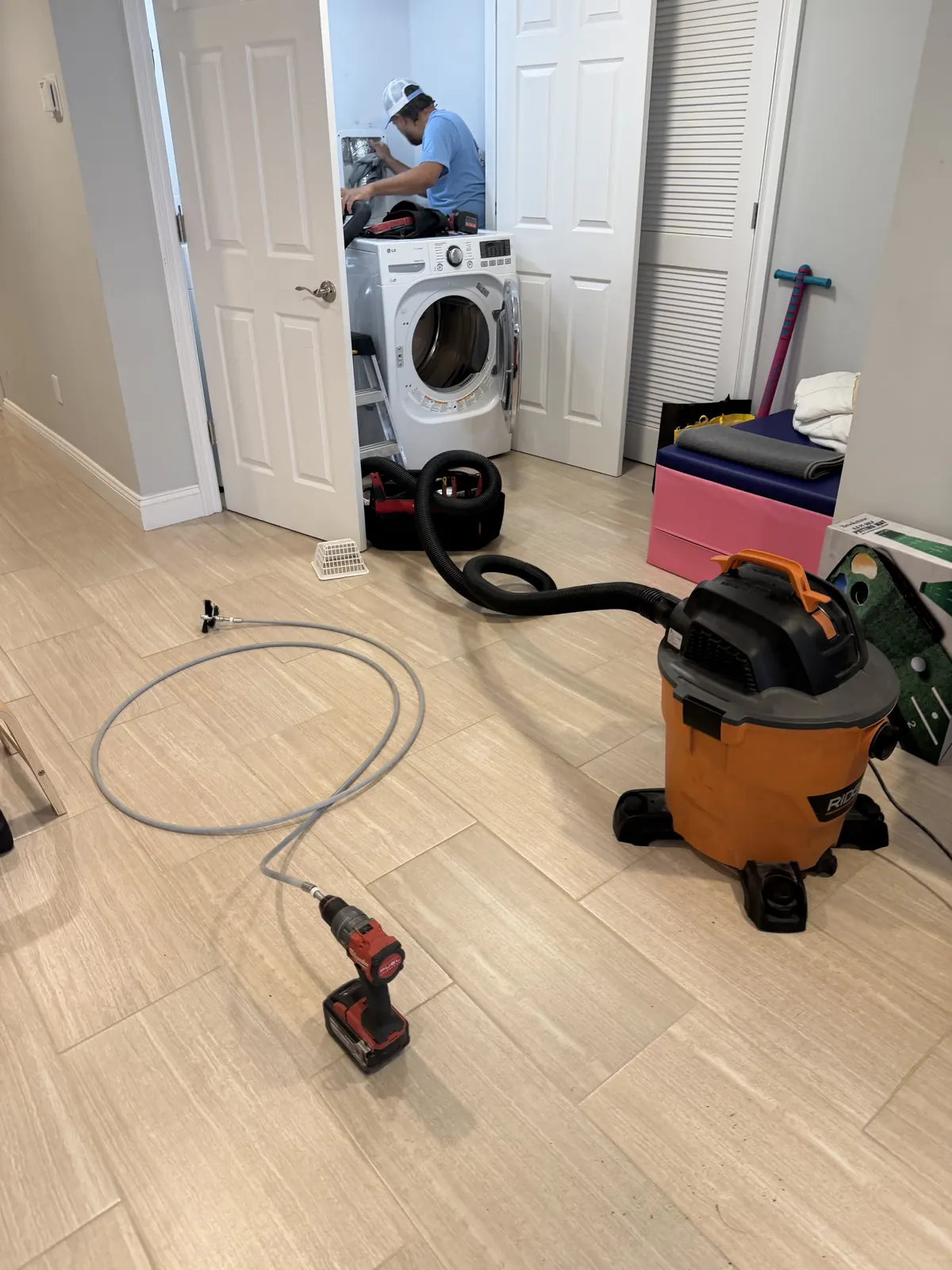
Dryer Vent Cleaning clears the full run, the transition at the dryer, the length through the rim joist or wall, and the termination hood itself, brushing and vacuuming lint out of a duct that has gone a long stretch without attention. In a deck or porch pocket that work still matters, since the dryer side of the problem, the buildup inside the duct and at the hood, is still there to clear regardless of where the termination sits. What cleaning does not change is the pocket itself. A hood that sits a few inches from lattice or decking stays that close once the cleaning is done, and the lack of airflow around the termination keeps drawing lint and moisture back into the same enclosed space between visits, so the interval between cleanings in a spot like this is often shorter than for an open wall termination nearby.
When the termination needs to move
A duct relocation becomes the better answer once the pocket itself is the problem rather than a buildup that a cleaning can clear on its own. That covers a hood sitting closer to decking or lattice than it should, a run that was shortened or rerouted when the deck or porch addition went in without anyone rethinking where the vent should end up, or a damper that cannot close because of how tight the space around it has become over time. Dryer Vent Installation in this situation usually means moving the termination to a clear section of exterior wall away from the deck or porch footprint, running rigid metal duct rather than foil or vinyl flex for the new section, and fitting a hood with a damper that has room to open and close without catching on anything nearby.
Moisture building up on the deck or porch side
A deck or porch pocket is often a damp spot on its own, shaded, low to grade, and slower to dry after rain than open ground nearby. Venting a dryer's humid exhaust into that same pocket adds another moisture source on top of what is already there, and over time that shows up as dark staining or soft wood on the joists and decking closest to the hood. Mold Treatment and Removal covers the duct system and the connected HVAC equipment, not deck framing or porch structure, so staining on the wood itself is a separate repair conversation with whoever handles the deck, even though moving the vent termination away from that wood is often what stops the staining from coming back year after year.
What decides whether cleaning or relocation is the right call
What a visit recommends for a vent ending under a deck or porch depends on how enclosed the pocket is, how far the hood sits from lattice or framing, the condition of the damper once it is reached, and how much of the existing duct run can be reused if the termination moves. A written estimate after a look at the run and the hood lays out whether a straightforward cleaning clears the immediate buildup or whether the termination point itself should move to a more open wall, so a homeowner in Manville, Raritan, or elsewhere in Somerset County knows which problem is being addressed before any work starts.