Census estimates put the median year structure built in Hillsborough and Franklin squarely in the 1980s, the busiest stretch of home building either township has seen. Furnaces and duct systems installed during that run were often built with fiberglass duct board rather than sheet metal, a rigid insulated panel that gets scored, folded and stapled into trunks and plenums right on the job site. It looks different from metal the moment a panel comes off a return grille, and it needs a different answer when the question is whether to clean it or replace it.
What fiberglass duct board is
Duct board is a compressed fiberglass panel faced on the outside with a foil skin that acts as both vapor barrier and structural skin once the seams are taped. The inside surface, the air side, is bare or lightly coated fiberglass rather than smooth metal. That inside surface is absorbent in a way sheet metal never is. Dust settles into the fiber instead of sitting on top of it, and moisture that reaches the board gets pulled in rather than beading up and draining off. Those two traits drive almost every decision about cleaning versus replacing a section.
When duct board can be cleaned
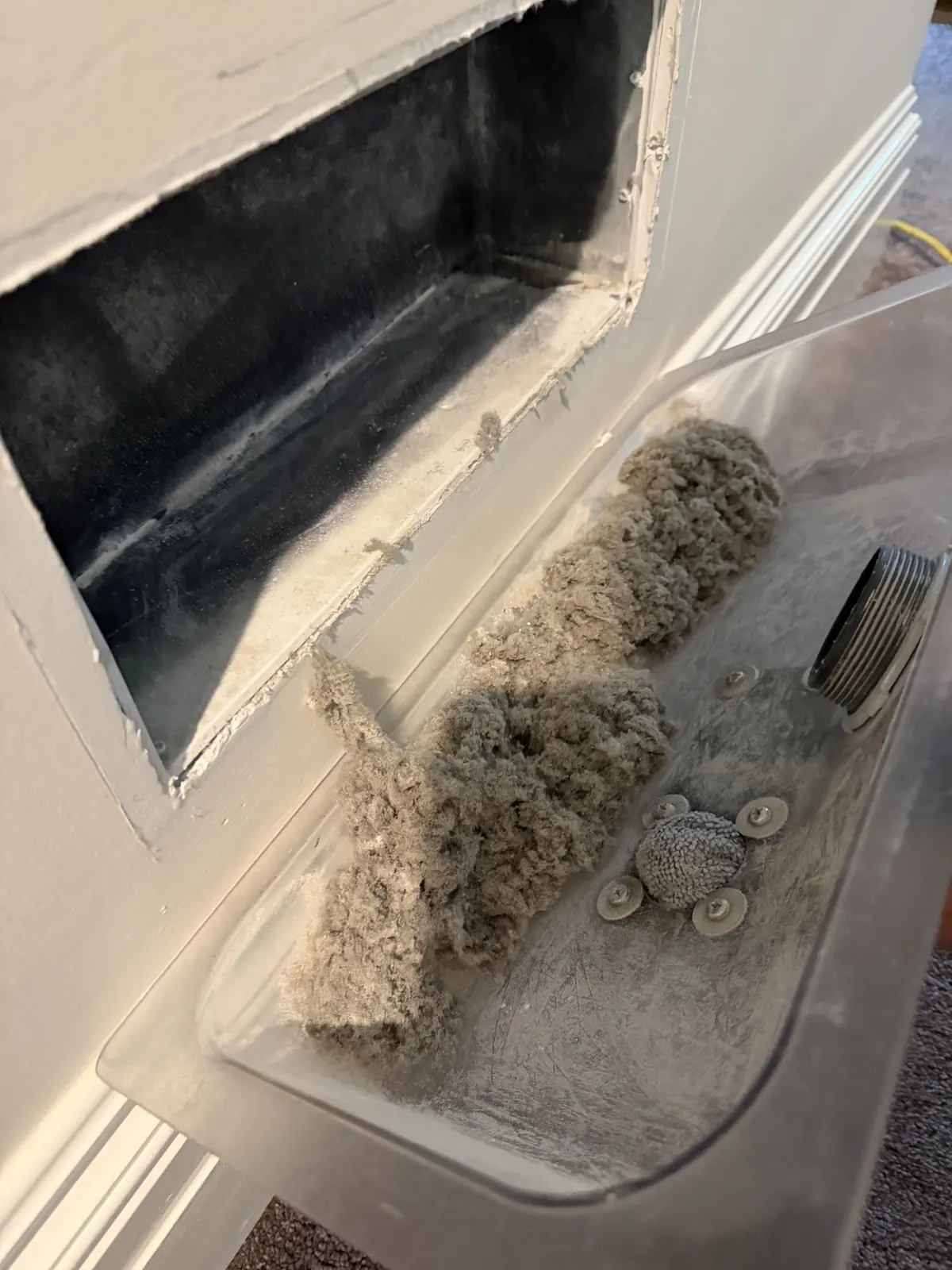
Dry board that has stayed dry its whole service life, with an intact foil facing and no soft or crumbling spots, responds well to Air Duct Cleaning done with gentler tools than a metal system calls for. Stiff rotary brushes built for scouring sheet metal can gouge the fiber surface and open a path for dust to work deeper into the board, so the approach for duct board uses softer agitation paired with negative-pressure vacuuming that pulls loosened debris out through the register or plenum opening rather than scrubbing it in. Done this way, a dry duct board system can come out looking close to new, with the surface fiber intact and the foil seams undisturbed.
Why wet or moldy board gets replaced instead
Board that has been wet, whether from a condensate line that backed up, a roof leak that tracked into an attic plenum, or chronic humidity in a crawlspace, does not clean up the way dry board does. Once water soaks into the fiber, it tends to stay there longer than it would on a metal surface, and that is exactly the condition mold needs to take hold. A section with visible mold growth, a musty smell that does not clear after the system runs, or fiber that has gone soft and compressed is a section to pull out and rebuild rather than brush and vacuum. Cleaning does not remove mold that has colonized the fiber itself, since the growth is inside the material, not sitting on its surface. Mold Treatment and Removal addresses the duct system and the connected HVAC equipment once a moisture source has been found and corrected, and on duct board that usually means cutting out the affected section and rebuilding it with new board or switching that run to sheet metal.
Torn facing, sagging panels and when it becomes a repair job
A foil facing that has split along a seam, a panel that has pulled away from its staples, or a trunk that sags noticeably between hangers are structural findings, not cleaning findings. A torn facing lets conditioned air leak into the joist bay or attic space it passes through, which shows up as a system that runs longer to reach the same temperature. A sagging panel usually means the fiber itself has lost rigidity, often from age combined with some moisture exposure even if it never looked outright wet. These conditions call for Air Duct Repair, which on a duct board system can mean resealing a seam with new mastic and tape, re-supporting a sagging run with additional hangers, or cutting out and splicing in a new section where the board has failed structurally. A system that gets a cleaning when it needs a repair looks better for a season and then shows the same symptoms once the dust that was masking a leak gets cleared away.
A note on what else is sometimes wrapped around older ductwork
On a system from the 1980s or earlier that has been added onto or patched over the years, it is worth knowing that some older insulation, tape and mastic products contained asbestos, and disturbing that material without the right precautions is a recognized exposure risk, according to the EPA's guidance on protecting a household from asbestos. This is less about the duct board itself, which is a fiberglass product, and more about any wrap, tape or patch material from an earlier era that might still be attached to a trunk line before a 1980s system was ever installed. A technician working on an older duct run checks what is on the ductwork before cutting into it, rather than assuming every layer dates to the same decade as the furnace.
What decides the cost of the visit
What a duct board job costs comes down to how much of the system is dry and intact versus how much shows moisture damage or structural failure, how many sections are reachable without demolition, and whether the work is a straightforward cleaning or includes cutting out and rebuilding one or more runs. A written estimate after a look through the attic, crawlspace or basement where the trunk and branch lines run lays out what was found section by section, so a Hillsborough or Franklin homeowner knows which parts of the system are being cleaned and which are being replaced before the work starts.
Deciding what to do with a 1980s system
A fiberglass duct board system from the 1980s is not automatically a system that needs to come out. Plenty of them have stayed dry for decades and clean up well with the right tools. The signal to look harder is moisture, past or present: a condensate pan that has overflowed, a roof or plumbing leak that reached the plenum, or a crawlspace that runs damp for part of the year. Finding and fixing that source first, then deciding section by section what can be cleaned and what needs to be rebuilt, gets more mileage out of an older duct board system than treating the whole trunk the same way end to end.