Franklin's condo buildings and townhouse clusters often skip the basement furnace room altogether. The air handler for a heat pump system sits instead in a hall closet, a utility closet off the kitchen, or a stacked unit tucked above the water heater, with a return grille built right into the closet door and a plenum that runs only a few feet before it splits toward the bedrooms. That layout is compact and efficient for the builder, but it leaves almost no slack for a technician working around the unit, and it means the whole job happens a few feet from carpet, a coat rack, or a neighbor's shared wall.
What a closet air handler changes about the visit
On a basement system there is room to stand beside the furnace, pull the filter, and run a hose to the truck outside without much thought for what is nearby. A closet air handler removes that room. The technician works standing in a hallway or a small footprint of tile, often with a single door for access and no second way around the unit. That changes the order of the work: drop cloths go down before any panel comes off, the vacuum hose gets routed along the baseboard rather than straight through a room, and each step is planned so a filter, a screw, or a handful of dust does not end up on the carpet behind the unit. Air Duct Cleaning in this kind of closet is less about reaching long basement trunk lines and more about working cleanly in a tight space where every surface close to the unit is finished flooring or drywall.
Clearing the filter rack and blower first
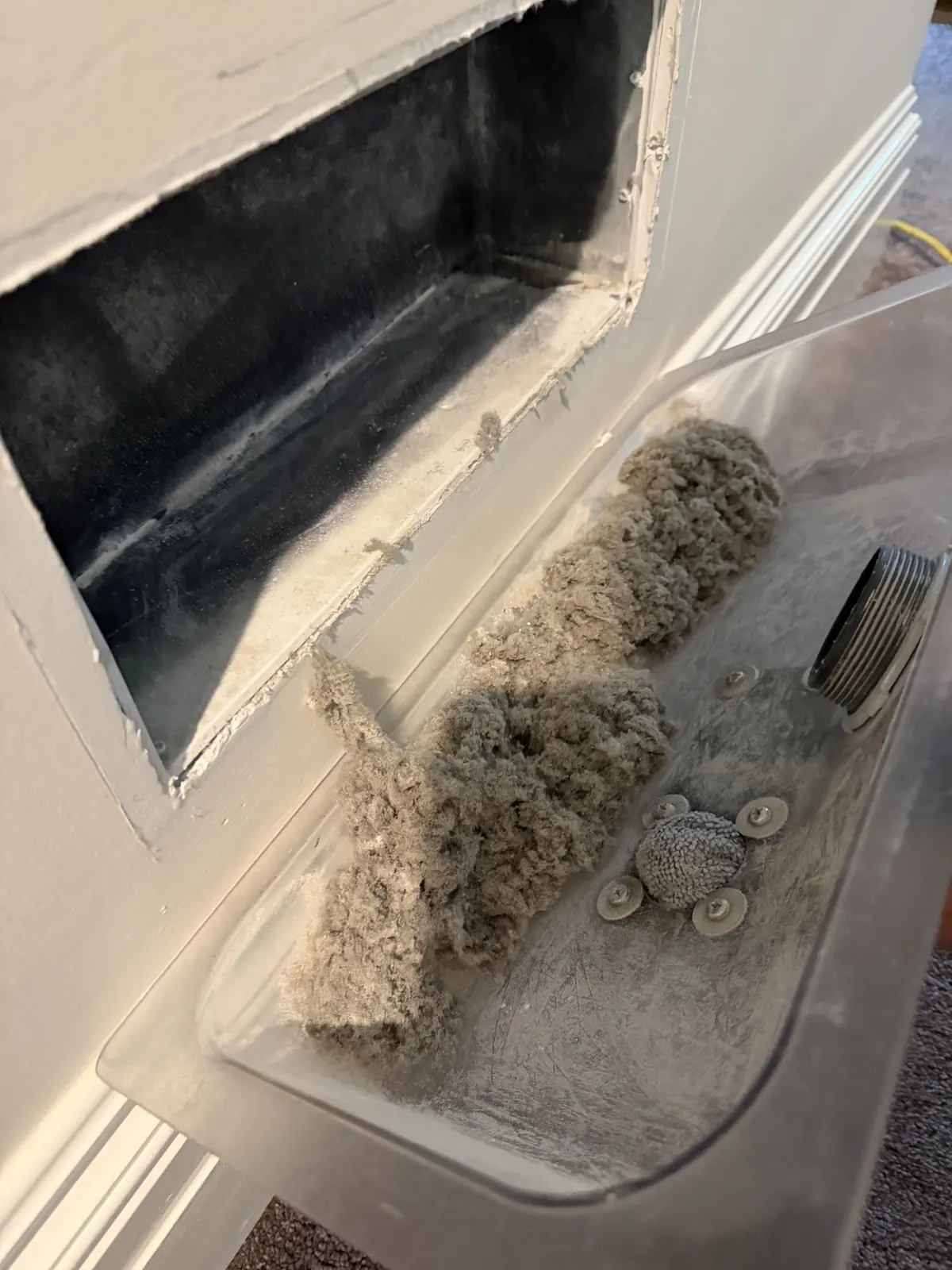
The filter rack on a closet unit usually sits at the base of the handler, behind a thin access panel, and it is the first thing opened. A filter sized wrong for the slot, or one left in place past its useful life, lets dust bypass the media and settle directly on the blower wheel. That wheel gets brushed and vacuumed in place, since pulling it in a closet this size is rarely practical, and the technician checks the blades for a buildup heavy enough to throw the wheel out of balance. A closet unit with a long service history and no filter changes on record tends to show this kind of buildup more than a basement furnace does, because the shorter duct run gives dust less distance to settle before it reaches the fan.
The coil, the pan, and the short plenum runs
Past the blower sits the evaporator coil, and in a closet system the coil access panel is often the tightest spot in the whole job, sometimes requiring a flashlight and a mirror rather than a direct line of sight. The coil gets checked for dust matting between the fins and for standing water in the condensate pan underneath it, since a pan that drains slowly in a closet has nowhere to go but the subfloor or the wall behind it. From the coil, the plenum splits almost immediately into branch runs headed for each room, and because those runs are short, a brush and vacuum pass clears them faster than a comparable basement system with long trunk lines. Air Duct Cleaning on a layout like this moves quickly once the unit itself is open, since the real work is getting cleanly into the closet rather than chasing duct through a long crawlspace.
Protecting carpet, hallways, and association rules
A condo visit carries a second layer that a single-family house does not: shared hallways, a parking lot with assigned spots, and an association with its own rules about service vehicles and visiting hours. Drop cloths run from the closet door out to wherever the vacuum hose reaches a window or a slider, protecting carpet the whole way rather than just at the unit itself. Where a building requires advance notice for contractors in common hallways, or limits work to certain hours, that gets confirmed before the appointment is set rather than discovered at the door. Somerset County associations vary on this, and a resident in Franklin or a nearby building should check the house rules ahead of time so the visit is not held up by a parking tag or a hallway reservation nobody mentioned.
When air duct repair comes up in a closet system
A closet install sometimes shows a plenum seam that was never fully sealed, a flex run kinked where it was forced around a stud to reach a bedroom register, or a return seal at the closet door that has gapped over time and lets closet air mix with return air. These are not cleaning items. Air Duct Repair addresses a seam, a kink, or a gap once it is found, and in a closet system that often means a short section of rigid duct replacing a stretch of flex rather than a full rebuild. Because the runs are short to begin with, a repair in this kind of layout is usually a contained job, limited to the section near the unit rather than a long run through an attic or basement.
What decides the cost of a closet visit
What a closet air handler visit costs depends on how many registers and returns the system serves, how tight the access panel is, if the coil needs extra time to reach safely, and if a repair item turns up alongside the cleaning. A written estimate after a look at the unit and the register count lays out what the visit covers before the work starts, so a condo owner knows what is included and what, if anything, gets flagged as a separate repair.