
Understanding the Investment and Scheduling for Air Duct Repair in Somerville
When your home’s comfort starts to falter—rooms feel drafty, some spaces never quite reach the set temperature, or dust builds up faster than usual—faulty ductwork is often involved. In Somerville, New Jersey, where winter cold and summer humidity both test your HVAC system, timely repairs protect comfort, energy efficiency, and indoor air quality. This guide explains what typically shapes the overall investment and timeline for duct repairs, how to prepare your home for a smoother process, and when it is smart to bring in professional air duct repair to ensure durable results.
Every home is different: construction era, attic and basement layouts, and equipment type all influence the scope of work. By understanding the major variables, you can anticipate scheduling needs and coordinate repairs with other projects or family routines.
What Drives the Overall Investment
While specific figures depend on an in-person evaluation, several predictable factors shape the total investment required to restore duct performance. The size and complexity of the duct network matters: longer trunk lines, numerous branches, or difficult attic and crawl-space access demand more labor and materials. The condition of existing ducts is another major influence—widespread leaks, deteriorated insulation, or rusted sections expand the work needed to reach a stable, long-term solution.
Material choices contribute as well. High-quality HVAC mastic, mesh tape, foil-backed tape, new hangers, clamps, and replacement flexible duct segments all add up, but they also ensure durability across Somerville’s seasonal swings. If the project includes reinsulating long attic runs or correcting undersupported spans, expect additional steps to create continuous thermal protection and mechanical stability.
Finally, diagnostic depth can play a role. Simple visual inspections address obvious issues, while more comprehensive testing—like static pressure measurements or duct leakage testing—can uncover hidden problems and guide targeted work. The right level of diagnostics helps avoid repeat visits by clarifying exactly what needs attention.
Typical Timeline Considerations
Project duration varies with scope, access, and preparation. Small repairs such as sealing a handful of joints or replacing a short crushed segment may be completed quickly. Larger undertakings—reinsulating long attic runs, correcting multiple flexible ducts, or addressing return-side leaks throughout a home—take longer. Homes with tight attics or low basements add time for safe staging and access. Weather can also influence scheduling; during extreme heat or cold, working times may be adjusted for safety and material performance.
Coordination with your household’s schedule matters too. Clearing storage around ducts in basements and attics before the appointment allows work to begin immediately. Pets should be secured in a comfortable area away from the workspace, and vehicles moved if access points run through a garage.
Project Phases from Start to Finish
Phase 1: Assessment and Planning. A technician evaluates visible duct conditions, notes air distribution complaints, and may perform baseline measurements. They create a prioritized plan that addresses sealing, flexible duct corrections, insulation upgrades, and support improvements.
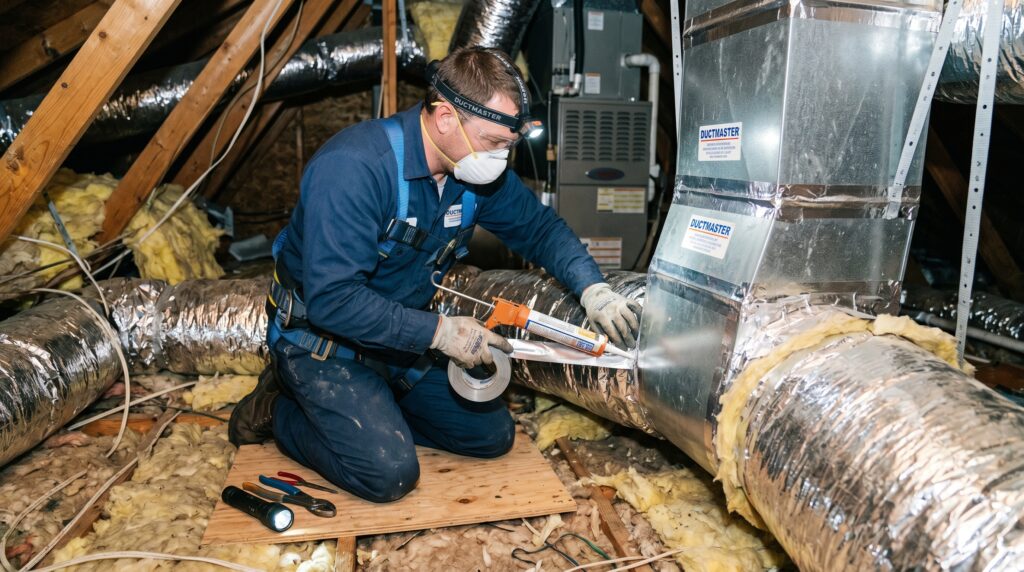
Phase 2: Sealing and Structural Corrections. Leaks at seams and transitions are sealed with HVAC mastic and reinforced as needed. Flexible ducts are straightened, reconnected properly at collars and connectors, and damaged sections replaced. Supports are added or adjusted to eliminate sags and vibration points.
Phase 3: Insulation and Jacket Restoration. Ducts in unconditioned spaces receive new or repaired insulation to protect supply air temperature and reduce condensation risk. Jackets are closed with foil-backed tape to maintain a continuous thermal barrier, paying special attention to elbows and transitions.
Phase 4: Verification and Balancing. With repairs complete, the system is run to check airflow, noise, and temperature delivery. If needed, dampers are adjusted to balance comfort room to room. Optional diagnostics can confirm leakage reductions and healthy static pressure.
Somerville-Specific Variables
Somerville homes frequently feature basements that double as storage and utility spaces, which means ducts are more likely to be bumped or compressed. Attic runs above second-floor bedrooms in capes and colonials can endure temperature extremes that accelerate insulation wear. In neighborhoods with mature trees, seasonal pollen and dust loads press returns to work harder. These realities increase the importance of sealing return leaks, securing hangers, and restoring jackets in unconditioned spaces.
Additionally, older homes may have legacy transitions or unconventional routing dating back decades. Correcting those sections often brings outsized gains in comfort and reliability, though it may add steps to the repair plan.
Preparing Your Home to Streamline the Timeline
Before work begins, clear stored items away from ducts in basements and attics and ensure safe paths to access points. Replace or remove fragile items near registers or returns that may be handled during testing. Identify electrical outlets for tool use and make sure lighting is adequate in work zones. If family schedules are tight, discuss the sequence of rooms to minimize disruption—bedrooms and home offices can be prioritized at the beginning or end of the visit, depending on your preference.
Note any rooms with chronic comfort complaints, as well as times of day when problems are most noticeable. This input helps focus the assessment and speeds decision-making on targeted repairs.
What to Expect During and After Repairs
Technicians will typically move systematically from the air handler outward, sealing seams, correcting connections, and replacing compromised segments. In attics, they may reposition flexible runs to eliminate sharp bends, then restore or upgrade insulation. In basements, they will reinforce hangers and reseal returns to limit dust infiltration. You can expect brief pauses in heating or cooling while work proceeds, but coordination with your household will limit inconvenience.
After repairs, airflow should feel steadier, noises like whistling or rattling should diminish, and rooms that previously lagged behind should stabilize more quickly. A short verification run allows for damper adjustments to fine-tune comfort.
How Diagnostics Enhance Outcomes
For complex homes or persistent comfort complaints, adding diagnostic testing can pay dividends. Static pressure measurements indicate whether ducts, filters, and blower settings are properly matched. Duct leakage testing quantifies air escaping from the system, guiding sealing efforts to the most impactful locations. Camera inspections of hidden runs can reveal crushed sections or disconnected branches you cannot see directly. While diagnostics add steps to the process, they reduce uncertainty and help ensure that repairs provide lasting improvements.
In Somerville’s variable climate, small inefficiencies can snowball into noticeable comfort gaps. Diagnostic clarity helps prevent repeat visits and accelerates the path to an even, quiet, efficient air distribution system.
Maintenance After the Work Is Done
Protect your investment by replacing filters on schedule and keeping returns unobstructed. Once or twice a year, perform a quick visual check of exposed ducts, especially near storage areas, attic access points, and tight joist bays. After any home improvement project, walk the duct path to confirm that nothing shifted. Note the date of repairs and take a few photos for your home maintenance records.
Seasonal checks are especially valuable in Somerville. Before summer heat, verify attic jackets and supports; before winter, confirm that basement runs are sealed and insulated to prevent temperature loss and condensation patterns that could reappear as the weather changes.
Frequently Asked Questions
Q: How long do air duct repairs usually take? A: Simple jobs can be completed relatively quickly, while whole-home sealing, flexible duct corrections, and insulation restoration require more time. Access conditions and the number of problem areas are the biggest timeline drivers.
Q: Can I remain at home during the work? A: Yes. Technicians coordinate room access and minimize disruption. Pets should be secured away from work areas for safety.
Q: Will sealing ducts help with dust and allergies? A: Sealing leaks, particularly on the return side, reduces the chance of drawing dusty air from basements, attics, or crawl spaces into the system, supporting cleaner indoor air.
Q: What if persistent comfort issues remain after repairs? A: That is the moment for diagnostics such as static pressure measurements or duct leakage testing. These tools pinpoint root causes like undersized runs or hidden disconnections.
Q: Do ducts in unconditioned spaces need insulation? A: Yes. Insulation helps maintain supply air temperature and reduces condensation risk, especially important in Somerville’s hot summers and cold winters.
Ready to Plan Your Next Step?
Understanding the variables that shape the scope and scheduling of duct repairs helps you coordinate confidently and protect your home’s comfort year-round. When you want a thorough assessment, targeted sealing, and lasting improvements handled by specialists who know local housing and climate, schedule professional air duct repair and enjoy even temperatures and quieter operation in every room.
PREVIOUS: Air Duct Repair Checklist For Somerville New Jersey Homes NEXT: Air Duct Repair Mistakes Somerville New Jersey Homeowners Should Avoid
