
Introduction: A Practical Checklist for Somerville Homeowners
When comfort starts to fluctuate or dust returns too quickly after cleaning, the problem may be hidden in your ductwork. For residents in Somerville, New Jersey, where seasonal swings bring humid summers and crisp winters, duct integrity is crucial for efficiency and indoor air quality. This repair checklist is designed to help you evaluate your system from end to end, prioritize tasks, and decide what you can address yourself versus what requires professional air duct repair. Follow each section carefully, take notes and photos as you go, and approach the work with safety and patience.
This checklist emphasizes practical steps that fit the housing styles common around Somerset County—capes and colonials with attic runs, ranch homes with basement trunks, and townhomes with tight mechanical closets. The goal is to create a repeatable routine you can use annually or after any renovation to keep airflow smooth, quiet, and clean.
Safety and Preparation
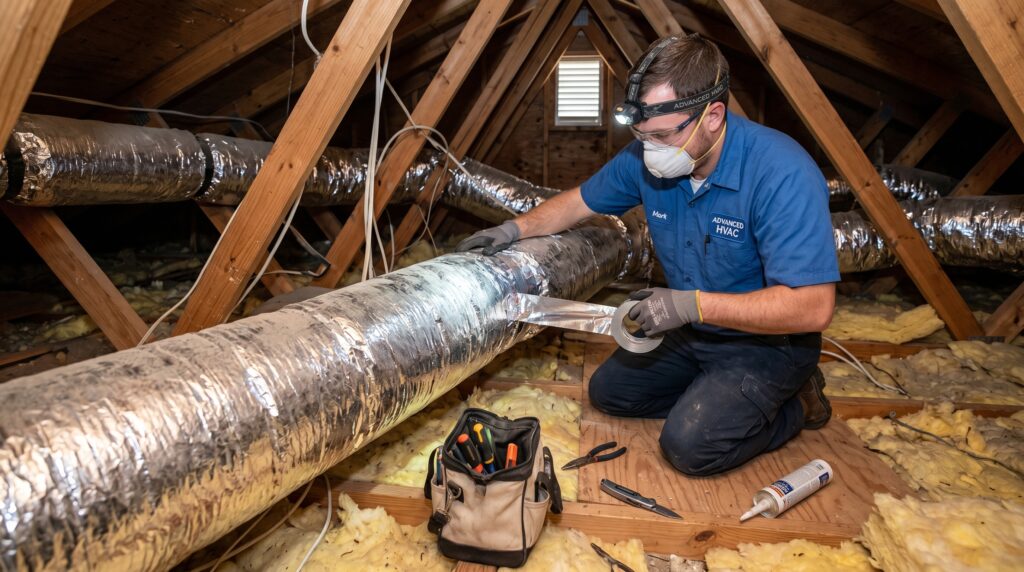
Start by shutting off HVAC power at the thermostat and, if possible, at the breaker. Put on gloves, eye protection, and a dust mask or respirator. Set up strong lighting. If you are working in an attic, lay down plywood across joists to create stable footing. Clear walkways in basements so you do not trip on storage while inspecting ducts overhead. Gather essentials: HVAC mastic, fiberglass mesh tape, foil-backed HVAC tape, sheet metal screws, a drill, tin snips, clamps or zip ties for flexible duct, and replacement insulation where needed.
Have a notepad or your phone ready to log issues. Numbered labels or colored tape can help you track multiple repairs so you can methodically work through them without losing your place.
Checklist Part 1: Visual Inspection from Plenum to Registers
Begin at the air handler or furnace plenum. Inspect the main trunk and follow each branch. Look for dust streaks or dark smudges around seams, elbows, and transitions—classic signs of escaping air. Gently press on joints to check for looseness. Confirm that flexible duct connections show the inner liner tightly over collars, secured with a clamp or heavy-duty zip tie, and sealed with mastic. Note any missing screws on metal-to-metal connections.
In basements, check for corrosion near the floor, especially by appliances or areas with prior moisture. In attics, look for crushed sections or insulation jackets split at turns. Verify that supports hold ducts level and remove significant sags. Make a list of issues from most urgent to least, prioritizing leaks, crushed runs, and uninsulated spans in unconditioned areas.
Checklist Part 2: Sealing Leaks and Gaps
Clean surfaces first so sealant adheres. For hairline gaps at seams, brush on a continuous layer of HVAC mastic. For wider openings, embed fiberglass mesh tape into the wet mastic, then topcoat. On metal joints, add a few sheet metal screws before sealing to improve mechanical stability. Use foil-backed HVAC tape as a protective outer wrap over mastic or for securing insulation jackets, not as a replacement for mastic on pressure-bearing seams.
Avoid common pitfalls. Do not use household cloth duct tape; it deteriorates rapidly. Do not block dampers with sealant. Do not push mastic into the airstream where it could create turbulence or collect dust.
Checklist Part 3: Flexible Duct Corrections
Straighten meandering runs and remove kinks. Replace segments with torn inner liners or irreparable compression. When installing a new section, slide the inner liner fully over the collar or connector, secure with an approved clamp or zip tie, seal with mastic, then pull the insulation and jacket over the joint and close with foil tape. Keep bends gentle and support spans at regular intervals to prevent sagging.
Beware of storage interference. In many Somerville basements and attics, boxes, seasonal decorations, or ladders press on ducts. Reorganize storage so ducts remain clear. A few inches of clearance can preserve airflow and prevent future disconnections.
Checklist Part 4: Insulation Upgrades
Any duct running through unconditioned space needs intact insulation. Replace crushed, wet, or missing wrap. Fit new insulation snugly, particularly at elbows and transitions where jackets often split. Seal jacket seams with foil tape to maintain a continuous barrier. Insulate after sealing; insulation alone does not stop escaping air.
Remember that insulation protects against both heat loss and condensation. In summer, insulation helps prevent moisture on cold supply ducts; in winter, it preserves temperature as air travels to distant rooms.
Checklist Part 5: Supports and Vibration Control
Examine hangers and straps. Add supports where long spans sag, and ensure straps do not cut into flexible duct. Use wide, smooth supports and distribute weight evenly. Where sheet metal rattles, add screws and a coat of mastic at loose seams. Confirm that dampers are not half-closed unless you are deliberately balancing the system.
If booming or popping noises persist after tightening and sealing, the issue may be static pressure. In that case, professional testing can verify whether duct size, filter resistance, and blower settings are properly matched.
Checklist Part 6: Return Air Integrity
Return leaks draw in dusty, unconditioned air from basements, crawl spaces, or attics. Inspect filter access panels and return drops for gaps. Seal seams with mastic and confirm that the filter slot seals firmly when closed. Keep returns clear of furniture and drapes to avoid starving the system of air, which increases noise and reduces comfort.
A leaky return can also distribute odors from storage or garage areas. Addressing those leaks can noticeably improve indoor freshness and reduce dust accumulation throughout your home.
Checklist Part 7: Testing and Documentation
After sealing and adjustments, power up the HVAC system. Revisit rooms you flagged and note any airflow and temperature improvements. Use a smoke pencil or incense near repaired seams to check for remaining leaks. Listen for changes in noise during start-up and shutdown cycles. Take photos of completed repairs and record materials used and dates. This log becomes a reference for future maintenance and a helpful resource if you sell your home.
For a quantified measure of success, consider a professional duct leakage test or static pressure check. These diagnostics reveal hidden problems and provide a performance baseline for the future.
Somerville Context: Houses, Climate, and Practical Realities
In Somerville’s older neighborhoods, short basements and tight joist bays often force creative duct routing. That can lead to elbows and transitions that are more vulnerable to leaks or insulation splits. Attic runs above cape-style bedrooms can overheat in July and freeze in January, magnifying small sealing flaws. Apply your checklist with these realities in mind: protect elbows, secure transitions, and be thorough with insulation where ducts traverse unconditioned space.
Local pollen and leaf litter can elevate dust loads in spring and fall. After sealing leaks, monitor your filter condition; you may find filters stay cleaner longer once returns are tight and supply joints are secure.
Frequently Asked Questions
Q: How long should a homeowner set aside to complete this checklist? A: Plan for several hours across a weekend if you are new to duct work. Complex findings can extend the timeline, and there is no harm in dividing tasks into manageable stages.
Q: What if I discover mold-like growth or strong musty odors? A: Stop DIY repairs and consult a qualified professional for assessment and remediation. Specialized handling is essential for safety and effectiveness.
Q: Which is better for sealing—mastic or foil tape? A: Use mastic as your primary sealant. Reinforce larger gaps with fiberglass mesh tape, and apply foil-backed HVAC tape as an outer wrap or to secure insulation jackets.
Q: Can I improve airflow without replacing ducts? A: Yes. Sealing leaks, straightening flexible runs, adding supports, and ensuring returns are tight can significantly improve airflow and comfort.
Q: Should I adjust dampers after repairs? A: It is wise to rebalance dampers once sealing and insulation are complete to fine-tune comfort from room to room.
Putting It All Together
By following this checklist, you establish an orderly approach to finding and fixing the most common duct problems in Somerville homes. Sealing seams, straightening flexible runs, upgrading insulation, tightening supports, and securing returns work together to restore even temperatures, reduce noise, and support cleaner indoor air. For complicated situations—systemwide leakage, persistent comfort problems, or hard-to-reach runs—schedule professional air duct repair and enjoy a quieter, more efficient home in every season.
NEXT: Air Duct Repair In Somerville New Jersey Cost And Timeline
