Building a Maintenance Program for Your Somerville Exhaust Hood
Great food requires great ventilation. A strong maintenance program for your kitchen exhaust hood keeps air moving, captures grease effectively, and reduces fire risk. In Somerville, New Jersey—where restaurants and food service businesses range from quick-service venues to school cafeterias—your schedule should reflect local demand, menu types, and inspection expectations. This guide outlines a practical approach to setting intervals, training teams, documenting work, and coordinating professional service so everything runs smoothly. If you need an expert partner to fill gaps or tackle deep cleanings, align with professionals in kitchen exhaust hood cleaning who can tailor visits to your volume and equipment.
Maintenance isn’t just about degreasing; it’s about airflow, safety interlocks, rooftop protection, and recordkeeping. When each piece works together, you avoid unplanned downtime and keep your kitchen comfortable for staff and guests. The following framework helps you build a repeatable program that scales from small cafes to multi-hood facilities.
Assessing Your Kitchen’s Risk Profile
Begin with a candid evaluation of your menu and production hours. Heavy frying, charbroiling, and wok cooking generate more grease-laden vapors than light sautéing or baking, requiring shorter intervals between services. Track daily sales or oil usage as a proxy for grease output. Consider the size and layout of your hood and duct system; long runs with multiple elbows collect more residue and can demand more frequent attention. Finally, factor in seasonal spikes. Somerville’s community events, holidays, and warm-weather patio dining can push systems to their limits, making mid-season tune-ups a smart choice.
Setting Service Intervals
Divide maintenance into daily, weekly, monthly, and quarterly tasks. Daily, wipe the exterior canopy and nearby backsplash to prevent surface film from hardening. Empty and clean grease cups if present. Weekly, remove baffle filters for soaking and rinsing, and check that they seat correctly once dry. Monthly, perform a deeper canopy and plenum cleaning and verify capture efficiency with a simple airflow test using a lightweight paper strip. Quarterly, schedule duct and fan service to remove hidden accumulation and inspect belts, hinge kits, containment, and gaskets. Adjust intervals up or down based on observation logs, residue levels, and inspection feedback.
Choosing the Right Cleaning Products
Use food-service-safe degreasers compatible with stainless steel. Keep separate dilution ratios for light film versus heavy carbon. Avoid abrasives that scratch metal; scratches trap grease and make future cleaning more difficult. Complement primary degreaser with a pH-neutral floor cleaner that cuts residues without leaving a slippery film. Always rinse thoroughly and dry surfaces to minimize water spots and to help your inspections catch any remaining residue.
Filter Management and Rotation
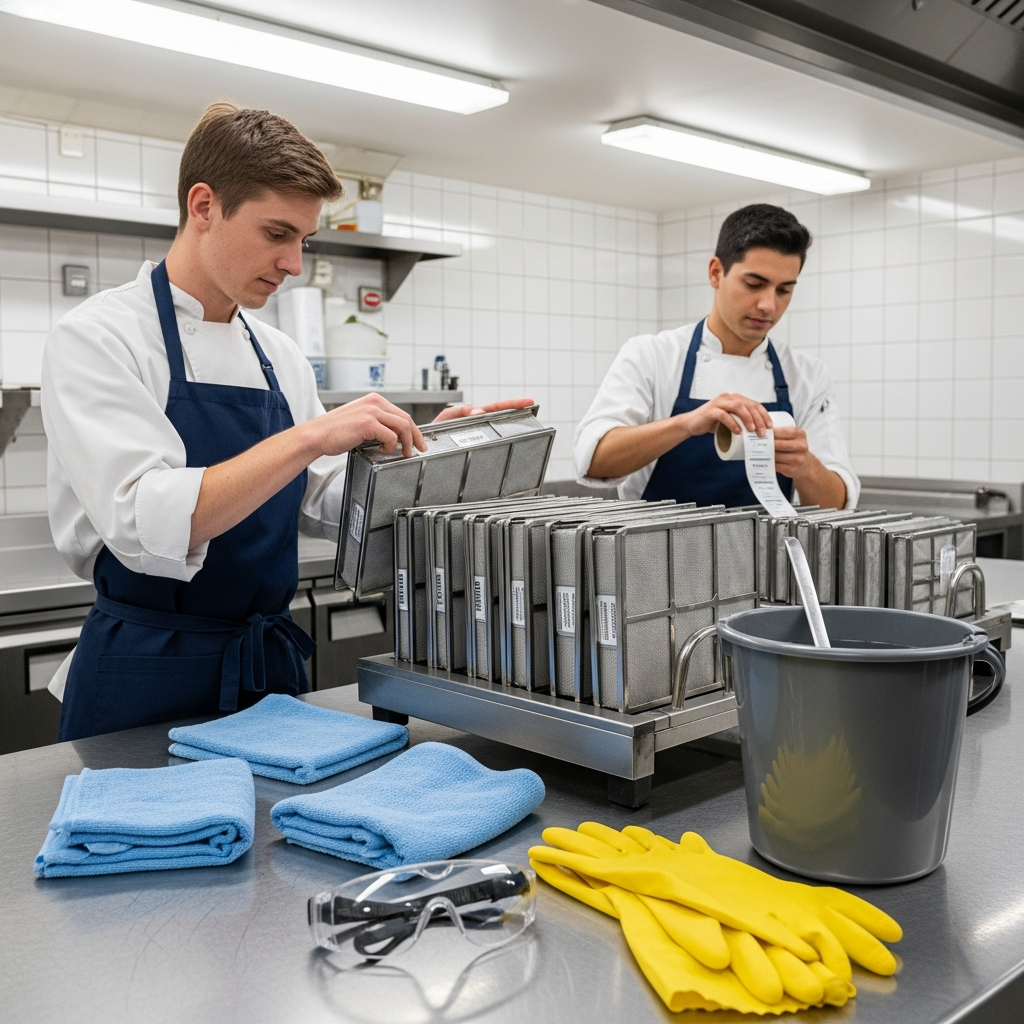
Filters are the workhorses of your system. Label them by position and rotate to even out wear and airflow distribution. Train staff to remove filters carefully to avoid spills, soak them in warm degreaser solution, rinse thoroughly, and air dry upright. Inspect for bent frames or broken welds, which can create bypass paths for grease. Replace damaged filters promptly and record the change in your maintenance log so airflow performance remains consistent across the canopy.
Airflow and Make-Up Air Considerations
Your exhaust hood and make-up air work as a team. If your hood struggles to pull smoke, the issue may be with the supply air rather than the hood itself. Schedule periodic inspections of make-up air filters and dampers. Dirty or misadjusted supply can reduce capture, create drafts that push smoke into dining areas, or cause doors to slam from building pressure imbalances. Document any HVAC adjustments alongside hood maintenance so you can correlate airflow changes with cleaning dates.
Duct and Fan Maintenance
Hidden duct sections can harbor the most dangerous buildup. Plan quarterly inspections via access panels and clean as needed. On the roof, verify hinges allow the fan lid to open safely and that electrical and drain connections are not strained. Inspect belts, pulleys, and bearings; note wear for scheduled replacement before a failure during service. Keep grease containment in good condition to prevent staining or roof membrane damage, and replace absorbent media when saturated. A smooth, balanced fan improves capture and reduces noise and vibration in the kitchen.
Training and Accountability
Consistent results come from clear roles and expectations. Assign daily wipe-downs to closing staff with a simple sign-off. Make weekly filter service part of a rotating duty schedule so everyone learns correct handling. Monthly and quarterly deep tasks should be led by a trained supervisor who understands lockout procedures, chemical dwell times, and reassembly checks. Offer short refresher trainings and keep laminated how-to cards near the hood for quick reference. Recognition for clean, safe work encourages buy-in across the team.
Documentation That Stands Up to Inspection
Maintain a log with the date, time, personnel, tasks completed, chemicals used, and photos of key areas. Store invoices and reports from any third-party services. When inspectors visit, you can show a clear trail of diligence, including before-and-after visuals, filter replacement dates, and notes about repairs such as gasket changes or belt replacements. Organized records reduce stress during audits and can help with insurance benchmarks.
Measuring Performance
Quantify a few simple indicators: how long it takes to remove visible grease after a shift, how quickly smoke clears when the line fires up, and whether odor complaints arise in the dining room. Note any changes in fan sound or vibration levels. Track these in your log alongside cleaning dates. If performance dips, shorten intervals or bring in a specialist to evaluate the fan, duct access, or make-up air settings.
Common Pitfalls and How to Avoid Them
Skipping rinse steps leaves a sticky film that grabs new grease quickly. Rushing filter drying leads to dripping and water spots inside the hood. Using harsh abrasive pads can scratch the canopy, creating grooves that hold grease. Failing to protect fire suppression nozzles during cleaning can leave residues that obstruct discharge. Each pitfall has a simple remedy: rinse completely, dry thoroughly, avoid abrasives, and use nozzle caps approved by the suppression manufacturer.
Planning for Peak Seasons
Before holidays or community events, schedule an extra filter service and a quick canopy wipe-down. After high-volume periods, add a mid-cycle duct and fan check to remove accelerated buildup. Adjust staffing to cover these tasks during slower prep hours so service is unaffected. Communicating the plan to the whole team ensures a coordinated effort and keeps your kitchen operating safely under increased demand.
When to Bring in Professional Support
Certain conditions merit expert attention: long, vertical duct runs; multiple elbows; fans with hardened deposits; persistent smoke despite regular maintenance; and roof staining that indicates containment issues. A qualified Somerville provider uses high-flow hot-water systems, rotary tools, and proper containment to reach difficult sections safely. They also provide documentation and photos that strengthen your records and provide evidence of compliance.
For deep cleanings that pair with your in-house program, schedule periodic service with a local team specializing in kitchen exhaust hood cleaning. This partnership keeps heavy-duty work on track while your staff handles daily and weekly tasks, maximizing uptime and safety.
Continuous Improvement Cycle
Treat maintenance as an iterative process. Review logs monthly to identify trends. If belts show wear sooner than expected, check pulley alignment and fan balance. If the canopy needs frequent wipe-downs, assess cooking methods and oil management practices. Train new staff quickly so knowledge does not erode with turnover. Small, steady adjustments keep your program effective and sustainable.
Frequently Asked Questions
Q: How do I set the right maintenance frequency? A: Start with daily wipe-downs, weekly filter service, monthly canopy cleaning, and quarterly duct/fan service. Adjust based on grease load, smoke capture, and inspection feedback.
Q: What kind of degreaser should I use? A: Choose a food-service-safe product suitable for stainless steel and heavy fats. Follow dilution guidelines, allow dwell time, rinse thoroughly, and dry to reveal any missed spots.
Q: How can I tell if my fan needs attention? A: Listen for new vibrations, squeals, or rattles. Inspect belts for glazing or fraying. Check for uneven grease patterns on blades, which can indicate imbalance.
Q: Do records really matter? A: Yes. Logs and photos provide proof of diligence, support insurance and compliance, and help diagnose recurring issues by correlating performance changes with maintenance dates.
Q: What about make-up air? A: Inspect filters and dampers regularly. Poor supply air can undermine capture even if the hood and ducts are clean. Balance both sides for best results.
Keep Your Program on Track
A thoughtful maintenance plan protects people, property, and production. By setting clear intervals, training your team, documenting work, and partnering strategically, you can prevent surprises and keep airflow strong. When you are ready to reinforce your routine with expert support and inspection-ready documentation, coordinate with Somerville professionals in kitchen exhaust hood cleaning. Together, you will sustain a safer, cleaner kitchen that performs day after day.
