Introduction: Industrial-Scale Challenges Need Industrial-Strength Solutions
Industrial kitchens—large commissaries, high-output catering hubs, university dining centers, and food manufacturing facilities—move at a different pace and scale than typical restaurants. Heat loads are higher, run times are longer, and grease aerosols can be resinous and stubborn. An effective hood cleaning process must align with throughput, safety systems, and regulatory expectations, all while minimizing downtime. This guide outlines an end-to-end approach suited to Somerville, New Jersey operations, from pre-job planning through verification and documentation. If you need specialized support to complement your in-house capabilities and ensure consistency across shifts, consider partnering with trusted kitchen exhaust hood cleaning experts who understand the demands of industrial environments.
The sections below detail hazard assessments, lockout/tagout considerations, filter and plenum care, duct and fan access, and quality assurance. While the specifics vary by facility and equipment, the underlying principles—control hazards, remove fuel, verify airflow—remain constant.
Pre-Job Planning and Hazard Assessment
Start with a thorough walkthrough. Map the hood system: canopy, plenum, filters, duct routing, cleanouts, fan assemblies, and termination points. Identify suppression nozzles, fusible links, gas lines, electrical disconnects, and make-up air diffusers. Review past reports to spot chronic trouble areas such as elbows with heavy deposits or fans that vibrate under load. Establish safe access routes for ladders or roof stairs and confirm fall protection where required.
Coordinate with production to schedule downtime that permits adequate cooling before cleaning. Build a communication plan so supervisors, maintenance, and sanitation teams know start/stop times, water usage expectations, and any temporary noise or odors. Confirm that hot surfaces have cooled, suppression systems are protected from overspray if necessary, and lockout/tagout procedures are in place for gas and electrical feeds when work demands it.
Chemistry Selection and Material Compatibility
Grease soil profiles vary by process. High-BTU wok lines produce different residues than conveyor ovens or tilt skillets. Choose detergents that match your soil without damaging stainless steel or aluminum components. Non-caustic, food-contact-safe degreasers are often preferred inside facilities to minimize fumes and risk. Pre-wet surfaces with warm water to improve chemistry contact and reduce streaking. Always test on a small area before full application, and avoid mixing products. For facilities with strict environmental policies, select biodegradable options and capture rinse water to protect drains.
Filter Removal and Plenum Preparation
Remove baffle filters carefully, keeping them level to prevent drips on equipment below. Stage them on wheeled racks for organized transport to soak tanks. With filters out, inspect the plenum and hood interior. Use scrapers or pads suitable for stainless steel to remove heavy sludge before applying detergents; this reduces chemical demand and improves rinse results. Protect sensors, light fixtures, and suppression components as directed by the manufacturer to prevent accidental discharge or damage.
If your facility uses multi-stage filters or spark arrestors, maintain order by labeling each piece and its location. Consistent placement aids airflow and helps trace recurring soil patterns by station or process line. Photograph conditions before, during, and after cleaning for records and audits.
Soak Tanks and Batch Efficiency
Industrial operations benefit from dedicated soak tanks sized for entire filter sets. Fill with hot water and the selected degreaser to the recommended dilution. Agitate filters gently as they enter the bath to release trapped air and promote coverage. Stagger batches so the first set can be rinsed and dried while the next soaks, keeping the workflow continuous. Monitor bath strength and replace solution when suds weaken, soil loading rises, or soak times creep up.
Scrub filters along the direction of the baffles with medium bristles, paying attention to edges and corners where viscous residues collect. Rinse with warm water until clear, then stage on drying racks with good airflow. Use fans to accelerate drying if needed, avoiding heated drying that could warp frames.
Hood Canopy, Plenum, and Duct Access
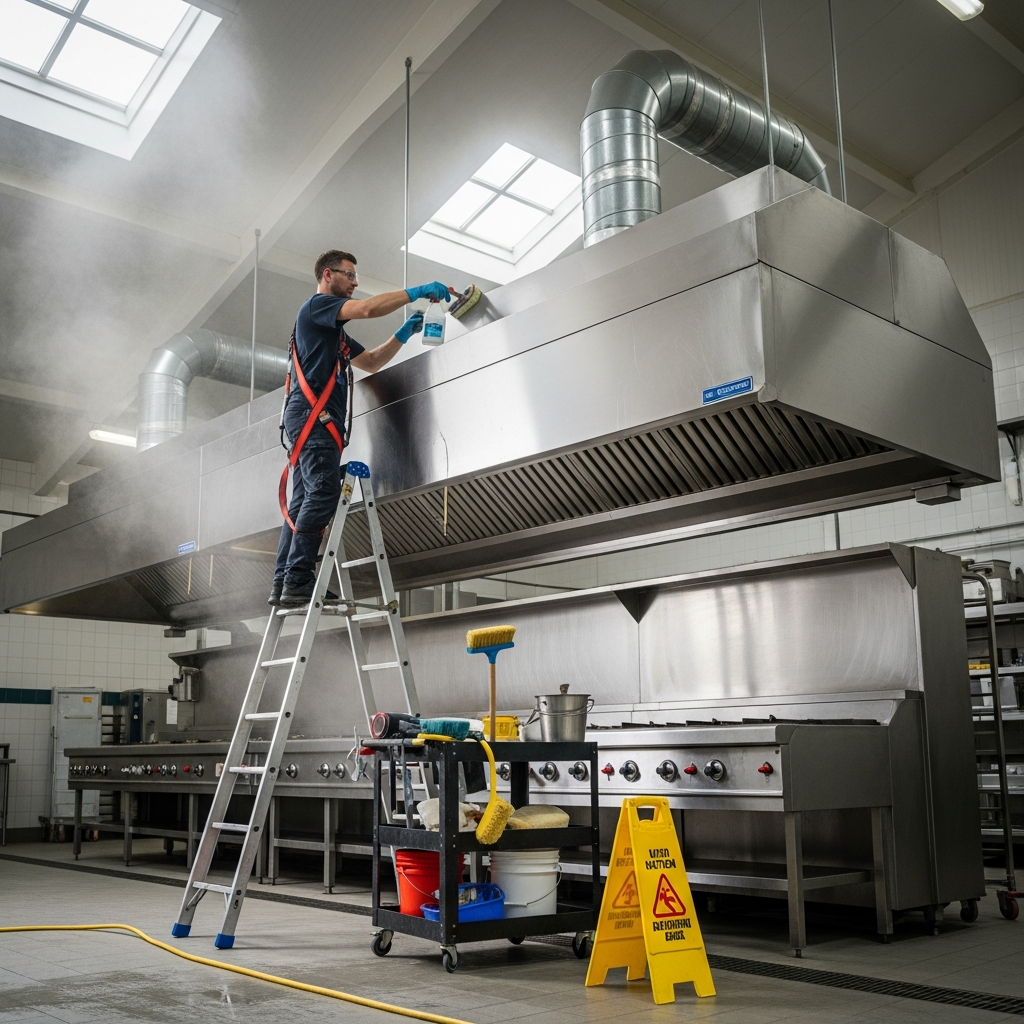
Apply degreaser to hood interiors and plenums, allowing dwell time to soften residues before gentle agitation. Work methodically from top to bottom to prevent re-soiling cleaned areas. For ducts, access through code-compliant cleanouts. Use low-splash application techniques to keep chemistry where it is effective without spreading aerosols. Mechanically remove heavy deposits at elbows and transitions with tools approved for stainless or galvanized steel, taking care not to gouge surfaces.
Coordinate with maintenance to verify cleanout gaskets seal properly after service. Improper sealing reduces negative pressure and can draw conditioned air away from production zones. Confirm that all fasteners and access panels are secure before moving on.
Fan Assemblies: Blades, Housings, and Balance
Shut down and lock out the fan. Check for oil leaks at bearings, belt wear, and pulley alignment. Clean blades thoroughly; even thin films degrade performance and can throw the fan out of balance at speed. Wipe housings and drip edges, and clear weep holes so moisture can escape rather than pooling. After cleaning, rotate the fan by hand to confirm it spins freely without scraping. Re-tension belts as necessary per manufacturer guidance, and document all adjustments.
On rooftop units, verify that grease containment systems are empty, secure, and ready for service. Overflow from saturated pads can stain the roof and create slip hazards. Indoors, confirm that vibration isolators are intact and that flexible connectors are free of cracks or gaps that could cause leaks and noise.
Rinse, Recovery, and Environmental Controls
Rinse all treated areas with controlled flow to minimize splash and runoff. Capture and filter rinse water when required by facility policy, removing grease before disposal. Keep floors dry by staging absorbent pads and using squeegees to direct water safely to drains. Ventilate work zones to reduce odors and humidity spikes that might affect neighboring production lines.
Immediately after rinse-down, perform a visual inspection with bright, angled light. Residues catch the light differently than clean metal surfaces; retrace steps where sheen or tackiness remains. Patience here pays dividends in performance and audit readiness.
Reassembly, Start-Up, and Verification
Reinstall filters in their original order and verify that each seats securely in the track. Check that suppression nozzles and drip trays are correctly positioned and that light lenses are clean and secure. Restore power under supervision and run the system while production equipment remains off. Listen for vibrations, check for rattles, and confirm even capture at the hood edge using a ribbon or parchment strip.
Introduce a controlled heat load—such as a single griddle or kettle—and watch capture behavior. Smoke and steam should flow consistently into the hood without rolling out at the edges. Record readings from any installed monitoring devices, and note observations in the service log. For multi-hood facilities, repeat these checks at each station, adjusting or reseating filters as necessary.
Quality Assurance and Documentation
Industrial facilities benefit from structured documentation. Include before/after photos, chemical data sheets, lockout/tagout records, and a checklist of components serviced. Record belt tensions, bearing observations, and any replaced parts. File service reports centrally so supervisors and safety officers can review trends and plan upgrades or schedule changes proactively.
Develop key performance indicators: number of findings per service, average soak time, filter replacement rates, and any odor or smoke incidents logged by production. Use this data to refine intervals and justify investments in upgraded components or make-up air improvements.
Coordination with Production and Sanitation Teams
Cleaning in an industrial environment is a team sport. Sync schedules with sanitation to avoid conflicts at sinks or drains. Inform production leads of any temporary restrictions, such as limited access near hood banks or rooftop fans. If redesigns are planned—moving a kettle bank or adding a fryer line—engage early so hood capture and duct routing are evaluated alongside equipment layout. A small adjustment on paper can avert big problems after installation.
Risk Controls: Fire, Slip, and Chemical Safety
Maintain PPE expectations throughout: gloves, eye protection, and slip-resistant footwear. Place wet-floor signs and route hoses to avoid trip hazards. Seal or cover sensitive controls during rinse-downs, and keep a charged, appropriate fire extinguisher nearby whenever cleaning near cooking equipment. Label chemical containers clearly and train staff in first-aid responses for splashes. Good housekeeping during the job translates directly to a safer return to production.
When to Call Specialists
Some conditions demand expert tools or methods: heavy resin at duct elbows, inaccessible vertical risers, or fans that require partial disassembly for balanced cleaning. Thermal or foam-based applications, steam tools, or rotary duct equipment may be appropriate under professional supervision. If you encounter recurring airflow imbalances, smoke rollback despite clean filters, or vibration that persists after belt and blade cleaning, bring in specialists. Scheduled kitchen exhaust hood cleaning ensures your in-house routines are reinforced by deep, system-wide service.
Frequently Asked Questions
Q: How often should industrial facilities clean their hood systems? A: Frequency depends on production hours, fuel type, and menu. Many high-output facilities combine frequent in-house filter cycles with scheduled professional service to keep ducts and fans within acceptable soil levels.
Q: Can we clean ducts without shutting down production? A: Limited spot cleaning may occur during off-peak windows, but thorough service requires controlled downtime for safety and effectiveness. Plan windows that minimize impact to throughput.
Q: Which chemicals are safest around food prep areas? A: Choose food-contact-safe, non-caustic degreasers when possible, follow dilution instructions, and ventilate. Always test compatibility with stainless and any aluminum components.
Q: What documentation should we keep? A: Maintain service checklists, photos, chemical data, lockout/tagout logs, and observations about airflow and equipment wear. Centralized records simplify audits and inform maintenance planning.
Q: How do we verify success after cleaning? A: Inspect under bright, angled light, perform ribbon tests at the hood edge, run a low-load cooking simulation, and log any odors or smoke. Consistent capture and quiet operation are your benchmarks.
Keep Your Operation Running Clean
Industrial kitchens succeed when every support system performs on cue. A disciplined hood cleaning process—supported by smart chemistry, safe access, and thorough verification—keeps airflow steady, reduces fire load, and protects uptime. Build your plan, train your team, and document results so improvements compound over time. When deeper cleaning or independent verification is needed, partner with local specialists who can tailor service to your layout and production schedule. For reliable results that stand up to audits and long production runs, coordinate with proven kitchen exhaust hood cleaning support in Somerville.
