
Introduction: Maintenance Habits That Keep Your Hood Performing
Well-maintained kitchen exhaust hoods capture heat, smoke, and grease efficiently, protecting your team and keeping your space pleasant to work in. For operators in Somerville, New Jersey—where seasonal swings influence building ventilation—consistent maintenance is the simplest way to avoid smoky rushes, fan breakdowns, and surprise findings during inspections. The tips below combine daily habits with periodic checks so you can prevent small issues from becoming big disruptions. If you want added assurance or support beyond your in-house routines, integrate periodic kitchen exhaust hood cleaning into your plan to validate performance from canopy to fan.
Good maintenance is not about one big clean; it is about a rhythm. Short, repeatable steps build a culture of care that protects airflow, reduces fire load, and lengthens equipment life. The following guidance will help you create that rhythm and keep it going through busy seasons.
Tip 1: Make Filter Swaps Non-Negotiable
Baffle filters are your first line of defense. Schedule cleanings based on menu and volume, and adjust as the seasons or your lineup change. Busy fryers and charbroilers may need multiple cleanings each week; baking-heavy operations may need fewer. The key is consistency. Mark a calendar, assign responsibility, and keep at least one spare set so you can swap quickly during a lull, then clean the removed set properly with a hot-water soak, compatible degreaser, and thorough rinse.
After cleaning, dry filters completely before reinstalling. Moisture left in corners invites new soil to stick and can streak the stainless surface. When filters seat firmly without rattles or gaps, you maintain steady capture and minimize noise during service.
Tip 2: Wipe What You Can See—It Protects What You Cannot
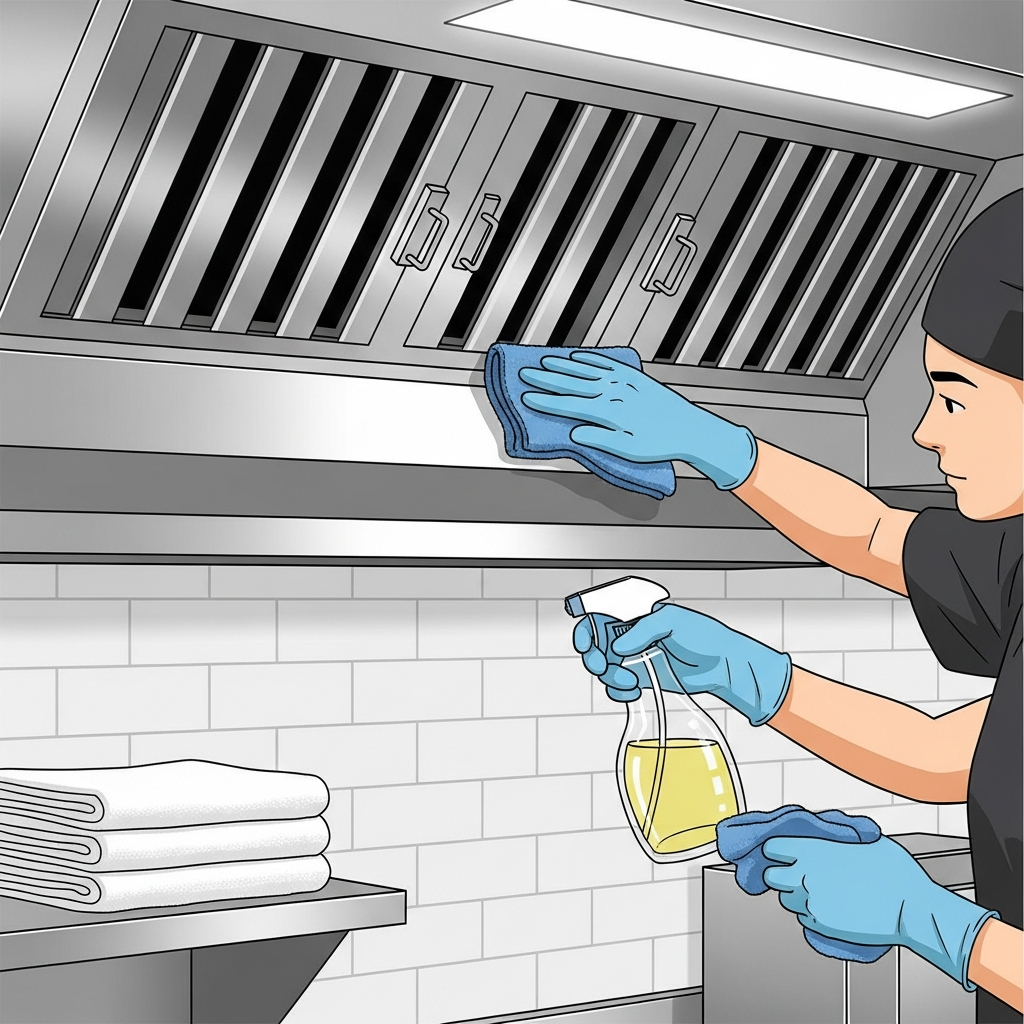
Residues on the canopy lip and accessible plenum edges act like magnets for fresh grease mist. A quick wipe-down with a food-safe degreaser at the start and end of each day limits accumulation and keeps the hood looking professional. Use lint-free towels, and do not forget corners, fasteners, and seams where tacky films hide. Small, frequent touchups keep cleaning chemistry mild and prevent heavy scrubbing that could scratch finishes later.
Make a habit of inspecting behind utensil rails or magnetic strips attached near the hood; they can shadow areas that otherwise look clean. Removing and wiping these accessories weekly helps maintain a spotless perimeter that resists re-soiling.
Tip 3: Balance Airflow with Make-Up Air Awareness
Exhaust capture works best when make-up air is balanced. If doors stick, backdrafts occur, or smoke rolls from the hood edge during rushes, adjust make-up air dampers or have a technician inspect the system. Seasonal changes in Somerville can shift how your building breathes; heaters in winter and strong AC in summer alter pressure zones. A brief airflow test with a ribbon or parchment strip at the hood edge should show steady inward pull across the full width of the canopy.
Keep diffusers and grilles dust-free so air enters evenly. If tall staff report cold blasts or hot spots, you may have diffuser maldistribution that interferes with capture. Simple cleaning and minor adjustments can make a noticeable difference.
Tip 4: Listen to Your Fan
Sound is an early-warning sensor. A smooth, even hum signals proper tension and alignment. Squeals suggest belt slip; scraping implies contact between the wheel and housing; rhythmic thumps may indicate blade imbalance or loosened fasteners. Train staff to report new noises, then investigate promptly. A quick belt check or fastener tighten can prevent midservice failure that leaves your kitchen hazy and uncomfortable.
Document fan observations in your maintenance log. Noting a minor squeal today makes it easier to connect the dots if performance dips next week, helping you plan service windows that do not interrupt revenue hours.
Tip 5: Keep Grease Cups and Troughs in Check
Grease cups and troughs quietly protect your kitchen from drips and stains, but they can only do their job if emptied regularly. Add a quick check at the end of each rush. Empty and wipe the containers into approved waste, then re-seat them clean and dry. This simple habit goes a long way toward preventing slippery floors and unsightly streaks down the hood face.
Tip 6: Choose Gentle Chemistry and Use It Right
Not all degreasers are equal. For stainless steel, select a food-contact-safe detergent formulated to dissolve fats without harsh caustics that can pit or discolor surfaces. Follow dilution ratios, let the solution dwell long enough to work, and rinse until runoff is clear. Stronger is not always better; with frequent touchups, mild solutions maintain brilliance without etching or leaving residues that attract soil.
If your filters include aluminum, confirm compatibility before committing to an alkaline cleaner. When in doubt, test a small area and evaluate the result under angled light to spot streaks or haze.
Tip 7: Train, Rotate, and Recognize
Maintenance sticks when everyone knows the why and the how. Train new hires on safe filter removal, soak times, brush direction, and complete rinsing and drying. Rotate responsibilities so the same person is not doing every filter swap alone, and recognize great work—nothing builds pride like a gleaming hood and smooth capture during peak service.
Keep a laminated quick-reference sheet near the dish area with key steps and safety reminders. Clear, visual cues speed training and reduce mistakes on busy nights.
Tip 8: Verify After Each Cleaning
With filters reinstalled, run the hood and perform a quick ribbon test across the opening. You should see even inward movement from end to end. If one area appears weaker, reseat the nearest filter, rotate positions, or replace a suspect filter with a spare. A short low-load cooking simulation—warming a lightly oiled pan—can reveal lingering odors or smoke that indicate an interval adjustment is needed.
Capture a photo now and then for your log. Visual records help you prove diligence and spot trends you may not notice day to day.
Tip 9: Mind the Seasons in Somerville
Winter’s tighter building envelope means less natural infiltration; odors linger longer and make-up air balance becomes more critical. In summer, higher humidity can stretch filter drying times—plan your swaps earlier in the shift so units are fully dry before reinstalling. Local events can also spike volume; temporarily shorten intervals during festivals or sports weekends to maintain comfort and safety.
Tip 10: Stock Spares and Basic Parts
Maintain at least one full spare set of baffle filters. Store them clean, dry, and labeled by station so you can swap without delay. Keep a small kit with gloves, eye protection, degreaser, brushes, lint-free towels, and a flashlight for inspections. Having supplies within reach eliminates excuses and streamlines routines.
Integrate Professional Support Wisely
Even with diligent in-house habits, sections of the system—deep inside ducts, at elbows, and on fan blades—benefit from periodic professional attention. Align your schedule with busy seasons and menu changes so thorough service restores baseline performance before the next rush. A documented service provides confidence during audits and keeps your internal routines effective by ensuring hidden areas do not become bottlenecks. When you need confirmation that your system is clean beyond the canopy, coordinate with reputable kitchen exhaust hood cleaning to close the loop.
Frequently Asked Questions
Q: How often should we clean filters? A: Frequency depends on menu and volume. Many kitchens find weekly cleanings adequate, while heavy fry or charbroil stations may need multiple cleanings weekly. Adjust based on visual soil, odors, and airflow tests.
Q: Can filters go in the dishwasher? A: Some stainless baffle filters tolerate dishwashers, but a pre-soak is usually needed to dissolve heavy grease. Check manufacturer guidance, and avoid dish chemistry that may discolor aluminum.
Q: What is the best way to test airflow? A: Hold a ribbon or strip of parchment at the hood edge. Consistent inward movement across the span indicates even capture. Uneven pull calls for reseating filters or investigating fan and make-up air settings.
Q: How do we prevent scratches on stainless? A: Use soft or medium-bristle brushes, avoid steel wool, and keep grit out of your towels. Rinse thoroughly so detergents do not dry on surfaces and cause haze.
Q: When should filters be replaced? A: Replace filters with bent frames, cracked welds, or persistent clogging even after proper cleaning. A spare set on hand prevents downtime when a filter fails unexpectedly.
Q: What records should we keep? A: Dates of cleanings, initials of staff, detergent details, observations on filter and fan condition, and occasional photos. Organized records assist with audits and guide preventive maintenance.
Stay Ahead with Smart Habits
When maintenance becomes part of your kitchen’s rhythm, airflow stays steady, the line stays comfortable, and service feels easier. Build your routine around quick daily wipe-downs, scheduled filter swaps, basic fan checks, and clear documentation. Seasonal tweaks and occasional professional verification help you stay ahead of surprises. If you want a partner who can confirm results and reach the places you cannot, connect with local specialists for dependable kitchen exhaust hood cleaning that keeps your Somerville operation safe, efficient, and inspection-ready.
