A deep kitchen exhaust hood cleaning is the difference between a system that looks acceptable from the outside and one that is truly safe from hood to rooftop discharge. In Somerville, New Jersey, busy kitchens generate heavy volumes of grease-laden vapor, and over time that residue hardens along the plenum, ducts, and fan blades. A surface wipe will not remove this accumulation, and partial cleaning leaves the most flammable deposits untouched. This guide explains the deep cleaning process step by step, how it protects your people and your property, and how to prepare your operation so the work is efficient and verifiable. If you prefer expert assistance, schedule comprehensive kitchen hood cleaning with a local team that understands Somerville’s inspection environment and operational realities.
Pre-Service Planning and Site Preparation
Every effective deep clean starts with a walkthrough. Technicians or managers assess access points, note whether duct panels and a fan hinge are installed, and identify sensitive equipment that must be covered. They determine where to set up containment to capture rinse water and residue, and they plan a safe path for ladders and roof access. This planning reduces surprises and shortens the time your kitchen is offline.
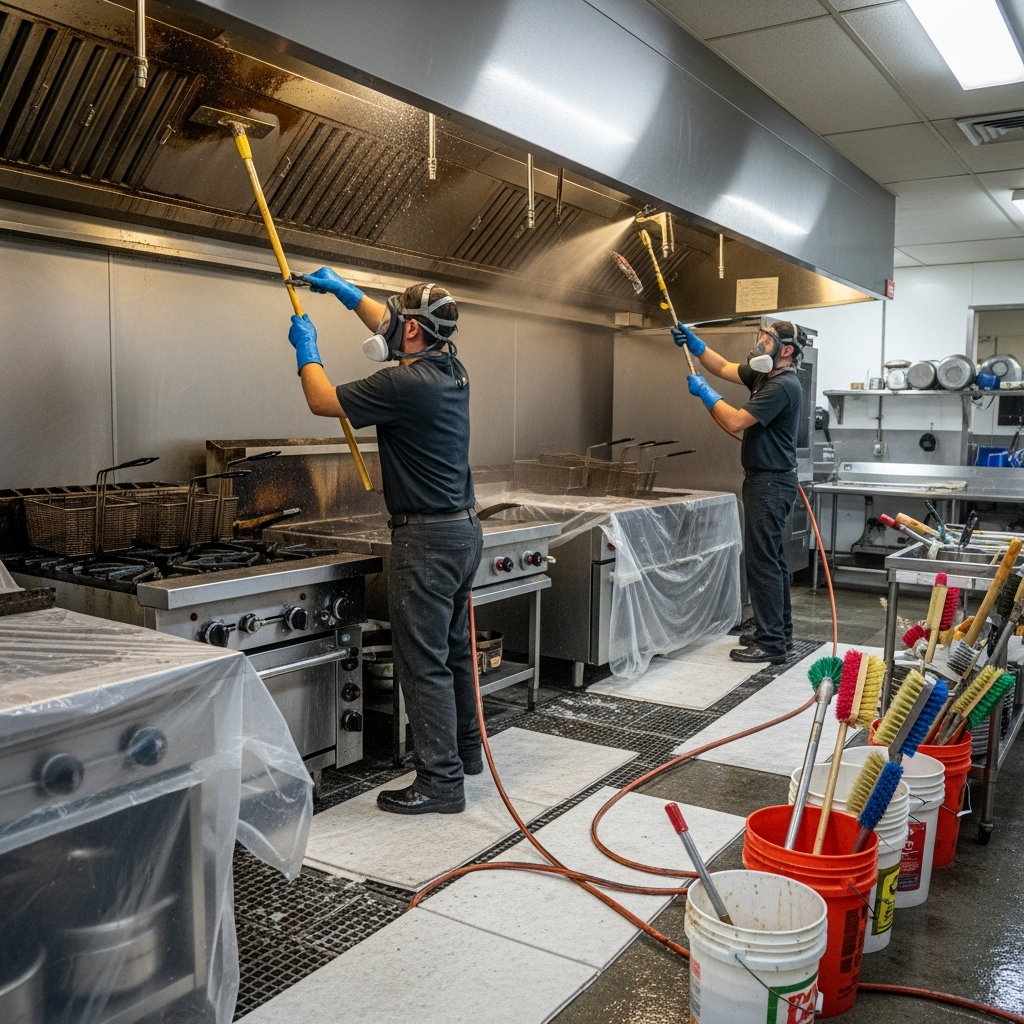
Before the crew arrives, cool down appliances and clear the line to create space to work. Cover cooking equipment, counters, and floors with plastic sheeting and place absorbent pads where drips may occur. Confirm that electrical to the fan can be locked out and tagged out, and make a Class K extinguisher readily available. Good preparation increases safety and ensures the crew can focus on cleaning rather than moving obstacles.
Filter Removal and Hood Interior
The process begins by removing baffle or mesh filters. These are soaked in hot, degreasing solution and scrubbed with nylon brushes to remove embedded oils. While filters soak, technicians apply a compatible degreaser to the hood interior and plenum. Dwell time allows the product to break down baked-on films. Manual scraping follows, then additional foam or solution as needed until the stainless is clean to the touch. This step restores the immediate capture zone where grease-laden vapors first condense.
Attention to detail matters. Edges, seams, and corners can trap residue that later drips onto appliances. A deep clean addresses these areas thoroughly, followed by a careful rinse or wipe-down so that no cleaner residue remains. Finally, the exterior of the hood is polished to remove fingerprints and smudges, enhancing both hygiene and appearance.
Ductwork Access and Cleaning
With the hood area clean, the team turns to the ducts. Access panels are opened, and degreasing foam is applied inside the duct run as far as reachable. On heavy accumulations, technicians alternate scraping and heated rinsing to remove layers of buildup. If parts of the duct are inaccessible due to missing panels or complex routing, the deficiency is documented with photos and recommendations to install additional access points. Complete removal of grease inside the ducts is crucial to reducing fire risk.
In multi-tenant buildings common around Somerville, ducts may travel long distances to a shared roof area. The crew coordinates with building management for safe, timely access and ensures that roof surfaces are protected against overspray and runoff. Proper containment and cleanup prevent staining and protect membranes from chemical contact.
Rooftop Fan Service
The exhaust fan is the endpoint of the grease path—and one of the most important parts to service deeply. After locking out power, technicians open the fan on its hinge or carefully lift it clear of the curb. They apply degreaser to blades, the scroll, and the housing, loosening accumulated residue. Scraping and heated rinsing follow, with particular attention to balance and weight distribution on the blades. Clean blades reduce vibration and noise and improve airflow efficiency.
The crew inspects belts, pulleys, and bearings, verifying tension and alignment. They check the drain or weep holes to ensure liquids do not pool inside the housing. Grease containment is examined and emptied or replaced if saturated. After cleaning, the fan is reassembled, and the roof area is wiped clean so no slippery residue remains.
Containment, Rinse Water, and Cleanup
Deep cleaning uses solutions and heated rinses that must be contained. The team sets up a wrap-and-funnel system at the hood to direct runoff into collection containers. On the roof, pads and trays capture residue near the fan. Proper handling of the collected material prevents slips and protects surfaces. After cleaning, floors and counters are wiped dry, plastic sheeting is removed, and the area is left ready for reopening.
A final polish on the hood exterior provides a professional finish and helps resist fingerprints. Just as important, the crew verifies that all switches and lights are in working order and that the fan starts smoothly without vibration or unusual noise.
Verification and Documentation
Photo documentation confirms that the system is clean from the plenum through ducts to the fan. Technicians place a dated tag at the hood with the service interval and next recommended cleaning window. Any needed repairs—such as installing access panels, adding a hinge kit, or replacing damaged filters—are listed in the report so you can plan improvements and maintain compliance with recognized standards referenced in Somerville inspections.
Documentation becomes your evidence during inspections, demonstrating that your cleaning plan is consistent, thorough, and aligned with real operating conditions. Keeping these records on file helps speed approvals and reduce re-inspections.
Scheduling and Frequency
High-grease cooking lines, charbroilers, and fried menus accumulate residue quickly and may require monthly or quarterly deep cleaning. Lighter-use kitchens sometimes extend intervals, but only if inspections of filters and the plenum show minimal buildup between services. Seasonal shifts in business, menu changes, and extended hours all warrant a schedule review. The best approach is to set an initial cadence, monitor grease levels, and adjust to protect airflow and safety.
To minimize disruption, schedule deep cleanings during off-hours, coordinate roof access in advance, and stage equipment the day before. Inform staff about reopening times so the line can heat safely after the cleaning is complete.
Benefits Beyond Fire Safety
While fire prevention is the primary reason for deep cleaning, operators see other advantages. Airflow improves, making the line cooler and more comfortable. Odors dissipate as residue disappears from the ducts and fan. Mechanical components last longer when they are clean and balanced, reducing emergency calls and unexpected downtime. A well-maintained hood system also improves the overall impression of your kitchen during health and fire inspections.
When to Bring in Professionals
Some deep-clean steps demand specialized equipment and training. Long or vertical duct runs, multi-story pathways, and tight mechanical rooms all benefit from experienced hands. Professionals can retrofit access panels, install a fan hinge, and implement robust containment to protect your building. Many Somerville operators rely on teams dedicated to kitchen hood cleaning for photo-verified results and efficient scheduling that fits overnight or off-day needs.
Frequently Asked Questions
How long does a deep cleaning take? The timeline varies with system size, grease load, and access. Many services are completed overnight to avoid affecting meal periods.
Will deep cleaning damage my equipment or roof? It should not. Proper containment, protective pads, and careful chemical use prevent damage. A hinge kit for the fan also protects wiring and the curb during service.
Do I need to replace filters during a deep clean? Not always, but damaged or warped filters reduce capture efficiency and may require replacement. Clean, correctly seated filters are essential after service.
How will I know the ducts are really clean? Photo documentation and a clean white-glove test on accessible surfaces are strong indicators. A reputable crew will show before-and-after images of key points along the air path.
What if my ducts lack access panels? Panels are often necessary for a true deep clean. Your provider should document limitations and recommend locations for new panels to reach the full run.
Keeping Results Lasting Longer
Support deep cleaning with daily wipe-downs and weekly filter washing. Train staff to recognize early signs of declining performance, such as increased smoke or heat at the line. Record service dates, review reports, and schedule follow-ups before grease levels become significant again. This proactive approach maintains airflow and protects your operation from surprise issues.
Ready to elevate your ventilation system?
Make the next service count with a thorough, well-documented process that protects your kitchen end to end. Arrange expert kitchen hood cleaning to reduce fire risk, improve airflow, and keep your Somerville operation inspection-ready year-round.
