
How to Recognize Leaky Ducts Before Problems Spread
Leaky air ducts are silent disruptors. They siphon conditioned air into attics or crawlspaces, invite unfiltered air into living spaces, and make temperature control harder than it should be. In Somerville, New Jersey homes, seasonal humidity, attic heat, and older renovations can all contribute to seams that separate and flexible runs that sag. Catching leaks early limits wasted energy and helps your system deliver consistent comfort room to room. If you suspect a leak, contacting a local specialist for targeted evaluation and repair is a smart first step. For many homeowners, fast professional air duct repair prevents small gaps from turning into wide separations that are harder to reach and seal later.
While leaks can happen anywhere along a duct run, they frequently appear at boots, seams, takeoffs, and transitions between rigid and flexible sections. Over time, tape can dry out, mastic can crack, or supports can loosen, allowing air to escape or unconditioned air to be pulled in.
Common Signs You May Have a Duct Leak
Not every comfort problem points to a leak, but a combination of these clues makes a strong case for a focused inspection:
- One room is chronically warmer or cooler than others despite similar exposure
- Noticeable airflow at a few registers but weak or uneven flow at others
- New dust accumulation around supply vents shortly after cleaning
- Whistling, fluttering, or faint hissing near ceiling or floor registers
- Visible gaps, sagging, or kinks in accessible flexible runs
- Strong odors that appear only when the blower is running
These symptoms suggest air is finding unintended pathways. Addressing them reduces strain on the blower and helps stabilize your indoor environment.
How Pros Diagnose Leaks
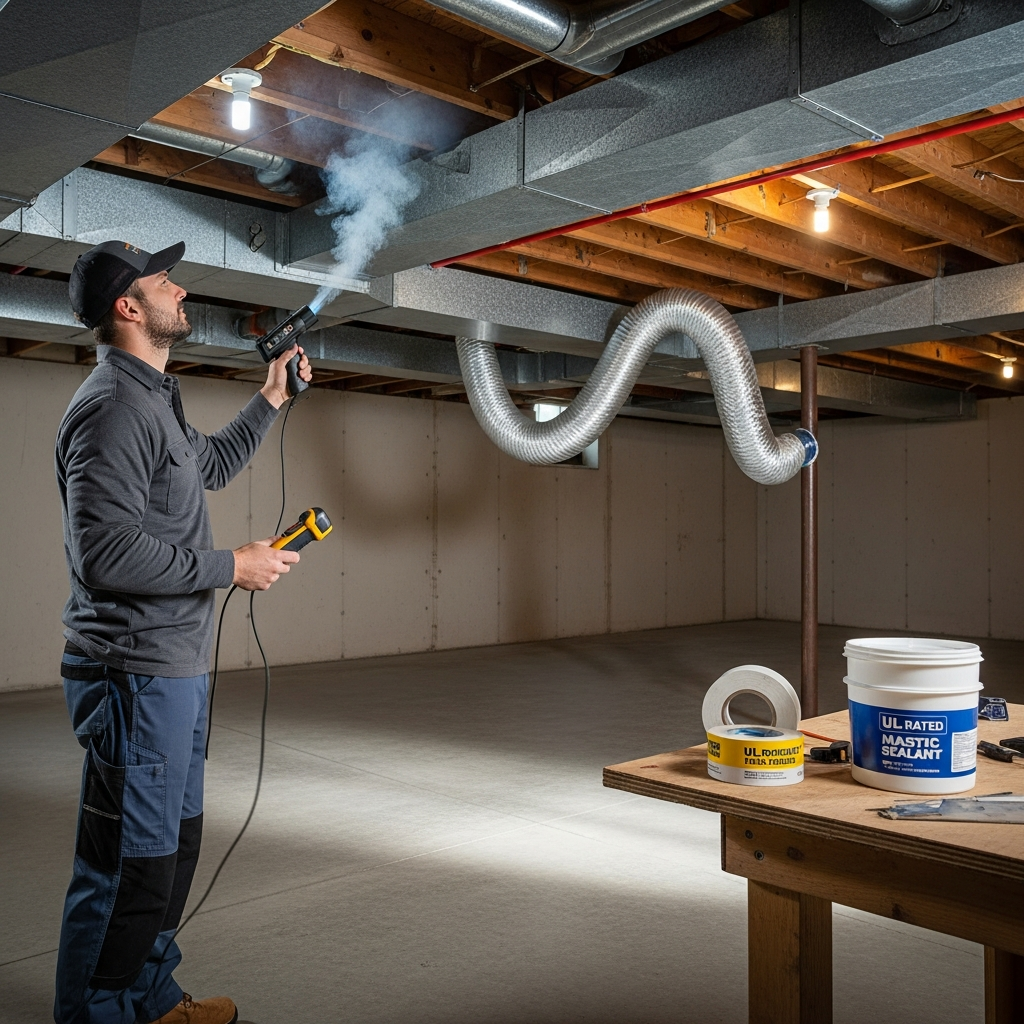
Professionals use a blend of observation and testing to locate the most consequential leaks first. Visual inspection targets obvious separation points. From there, teams may perform simplified pressure or airflow checks, smoke tracing, and register‑by‑register temperature measurements. In some homes, a more comprehensive whole‑house test can be planned for a later visit, but most leak sources can be identified and addressed with practical, high‑value fixes on the spot.
Somerville homes often feature a mix of older rigid trunks and newer flexible branches added during remodeling. That blend makes careful transitions and secure supports crucial. Where flexible duct meets a metal collar, technicians use mechanical fasteners and mastic, not just tape, to ensure a durable seal.
What Gets Repaired During a Typical Leak Visit
Leak repair focuses on sealing, securing, and gently reshaping duct pathways to restore intended airflow. Common tasks include:
- Applying UL‑rated foil tape and mastic to joints, seams, and takeoffs
- Reinforcing connections with proper clamps or screws where appropriate
- Straightening crushed or kinked flexible runs to remove airflow bottlenecks
- Adding hangers to sagging spans to reduce stress on connections
- Re‑seating boots to drywall or flooring and sealing gaps to prevent leakage
When insulation sleeves are compromised or saturated, a follow‑up may include refreshing those sections to prevent condensation and heat gain or loss around the duct shell.
Planning Your Budget Without Guesswork
Homeowners naturally want clarity about the financial side of leak repair, but it is more productive to focus on what influences the overall scope. The size of your system, number of leaks found, ease of access to attics or crawlspaces, and whether any flexible sections need replacement all guide the level of work involved. A transparent assessment with clear photos and a prioritized action list helps you align decisions with your goals, whether that is restoring comfort to a single room or optimizing the entire distribution network. Gathering this information during an initial visit allows you to plan confidently without surprises.
It is also wise to consider long‑term value. A carefully sealed duct system can reduce unnecessary runtime, improve indoor air quality by limiting infiltration, and extend the life of your equipment. These benefits compound over time and enhance daily comfort in every season.
DIY Versus Professional Leak Repair
Some homeowners attempt simple fixes with basic materials, but sealing that lasts requires experience and the right products. Cloth or general‑purpose tapes dry out and fail, while mastic and foil tape designed for ducts remain durable under heat and movement. Pros also identify subtle issues—such as poorly aligned boots or undersized returns—that DIY efforts can miss. If you are comfortable inspecting visible runs and reporting specific symptoms, a professional can take that information and deliver a focused plan for dependable, code‑aware repairs.
Mid‑project decisions matter, too. If a flexible section is brittle or repeatedly kinked, it may be more effective to adjust routing or replace a short segment than to keep sealing the same weak spot. A seasoned technician will explain tradeoffs and show how each step supports airflow and cleanliness.
Keeping Leaks From Coming Back
Once your system is sealed, a few habits help preserve results: change filters regularly, keep storage boxes clear of attic ductwork to prevent crushing, and avoid closing too many supply registers at once. During seasonal checkups, ask your technician to review supports, boots, and any areas near recent renovations. Minor tune‑ups keep everything tight and quiet.
If you have been researching solutions on your own and want a reliable next step, consider scheduling professional air duct repair with a local team familiar with Somerville’s housing styles and access challenges. A well‑executed repair not only restores comfort but also reduces dust and odor movement through the home.
Frequently Asked Questions
Q: Can leaky ducts affect indoor air quality? A: Yes. Leaks can pull in attic or crawlspace air, carrying dust, insulation fibers, and odors into living spaces. Sealing restores control over what the system moves and where it moves it.
Q: Why do leaks return after being taped? A: Many tapes are not rated for duct use. Heat, humidity, and flexing cause them to fail. Proper mastic and UL‑rated foil tape are designed for long‑term adhesion.
Q: Do I have to access every run to get results? A: No. Focusing on the most significant leaks—boots, takeoffs, and key seams—often delivers substantial improvement even if some concealed areas remain untouched.
Q: Will sealing change the sound of my system? A: In many cases, yes. Removing whistling and fluttering at leaks often makes operation noticeably quieter.
Q: How often should I recheck for leaks? A: Include a quick review during seasonal maintenance or after any renovation that might disturb ceilings, soffits, or attic pathways.
Take the Next Step Toward Tighter Ducts
Ready to stop unwanted air movement and restore steady comfort? Call a Somerville specialist to evaluate your system and provide a clear plan tailored to your home. Schedule professional air duct repair and enjoy cleaner, quieter, more dependable airflow throughout the seasons.
