
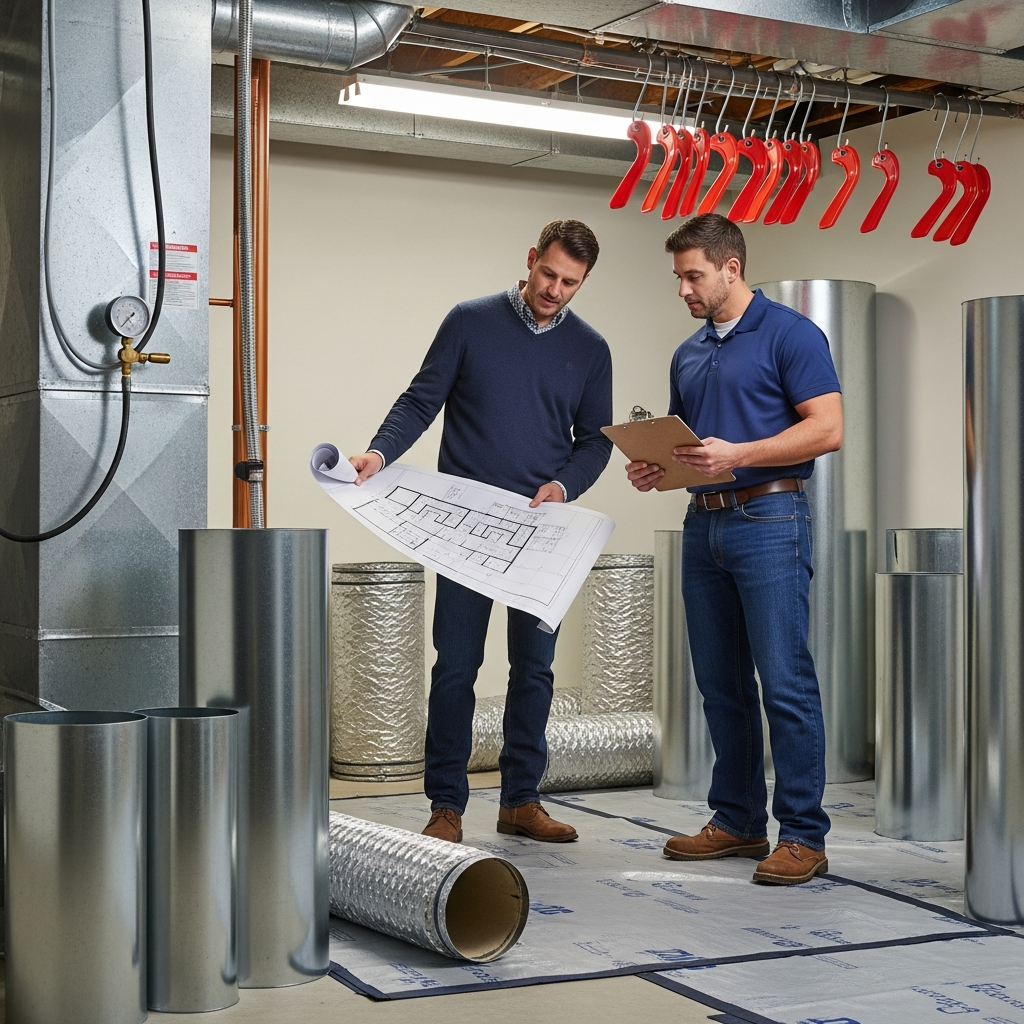
Selecting the right air duct contractor in Somerville, New Jersey can determine whether your HVAC system runs quietly and efficiently for years or struggles with uneven temperatures and frequent service calls. Beyond basic credentials, you need a partner who listens to your comfort goals, understands local codes, documents the work, and verifies results with measurements—not guesswork. This guide outlines how to evaluate candidates, compare proposals, and set expectations for communication, cleanliness, and commissioning. If you prefer a start-to-finish team already proven in the community, consider a local provider experienced in air duct installation who can tailor designs to Somerville’s housing stock and climate.
The best contractor relationship starts with clarity. A strong pre-qualification process helps you distinguish between similar-sounding offers. While many teams can deliver duct materials and connect them, not every team emphasizes load calculations, quiet fittings, airtight sealing, and balancing. These details define comfort. When you understand what to ask and what to look for in proposals and jobsite behavior, you dramatically increase the odds of a smooth project and durable results.
Verify licensing, insurance, and safety practices
Begin by confirming that each contractor holds appropriate licensing and carries liability and workers’ compensation coverage. Request certificates and verify them. Safety culture matters too: project-specific safety plans, PPE use, and clean, organized work areas protect your home and schedule. Ask how the team prevents dust from entering the duct system during installation and how they protect finished surfaces while moving materials through the space.
Local code familiarity is critical. Somerville inspectors expect sealed penetrations, correct support spacing, rated assemblies to be maintained, and accessible filters and dampers. A contractor who demonstrates comfort with these topics early in the conversation reduces risk later.
Ask about design process and calculations
Quality ductwork starts on paper. Your contractor should discuss room-by-room load calculations, total system airflow, and static pressure budgets. Ask how they determine duct sizes, choose register types, and set target cfm for each space. In homes with additions, basements, or unusual layouts, listen for strategies like long-radius fittings, strategic use of rigid trunks with short flex connections, and balanced return paths. You want a partner who explains tradeoffs clearly and tailors solutions to your goals.
Noise control is part of the design conversation. Thoughtful contractors limit velocities in sensitive areas, select quiet grilles, and consider lined returns where needed. They should also explain how filtration choices affect resistance and what that means for duct sizing.
Evaluate proposals beyond the bottom line
Compare scope and assumptions line by line. Look for documented duct sizes, material types, insulation levels, sealing methods, and testing and balancing commitments. Vague proposals often conceal shortcuts. A thorough proposal will specify how boots will be sealed to the envelope, how returns will be distributed, and what commissioning tests will be performed before closeout.
Ask for examples of past projects similar to yours—finished attics, additions over garages, or older homes with tight framing. Good contractors can describe challenges they encountered and how they resolved them without compromising airflow or code compliance.
Check references and site photos
References provide insight into communication, cleanliness, and follow-through. Ask prior clients whether the crew protected floors and furnishings, maintained a tidy site, and delivered the promised results. Photos of completed work can be revealing: look for straight, well-supported trunks; carefully sealed joints; smooth transitions; and organized equipment rooms. Avoid contractors whose photos show crushed flex runs, haphazard supports, or messy mechanical spaces.
When possible, visit a current jobsite. You will quickly see whether the team labels dampers, caps open ducts, and stores materials to keep interiors clean—habits associated with systems that perform well after the project ends.
Discuss testing, balancing, and documentation
Insist on measurable results. A strong contractor will pressure test ducts, measure register airflow, and adjust dampers to meet targets. They will verify equipment airflow and static pressure, confirm temperature splits, and document final settings. Ask how you will receive records: a simple report with airflow by room, damper positions, and any design variations protects your investment and informs future changes.
Mid-project check-ins are invaluable. Invite the contractor to walk you through trunk routing and key fittings before ceilings close. If you are unsure about any detail, ask for a brief rationale. Many problems are easiest to fix when framing is still open.
Set expectations for communication and cleanliness
Agree on a single point of contact, regular updates, and a process for addressing surprises. Good teams explain what will happen each day, how areas will be protected, and what to expect in terms of noise and access. They also maintain a courteous, careful presence in your home. Small disciplines—like capping open ducts overnight and cleaning up debris—prevent dust issues and protect finished spaces.
In occupied homes, phasing and temporary comfort are worth discussing. Clarify which rooms will be affected and when. If pets or small children are present, plan safe boundaries and temporary barriers.
Recognize red flags
Be cautious with contractors who dismiss load calculations, downplay return sizing, or avoid discussions about testing and balancing. Promises of quick timelines without acknowledging complexity can signal a focus on speed over quality. Another warning sign is reluctance to provide documentation of licensing, insurance, or references.
Pressure to sign immediately or vague answers about materials and methods are other cues to slow down. A thoughtful team will welcome your questions and respond with specifics.
Somerville-specific insights
Older Somerville homes may feature unique framing and limited chases, which call for creative yet code-compliant routing. Basements that double as living spaces benefit from quiet returns and careful insulation of ducts that pass through unconditioned areas. Homes near busier streets may warrant additional attention to noise, with lined return trunks and lower velocities through key rooms. In all cases, the contractor’s familiarity with local inspection priorities helps you avoid callbacks and delays.
Weather matters too. Designs should account for humid summers and cold winters, ensuring that ducts are insulated and sealed where needed to prevent condensation and energy losses. Proper register placement for both heating and cooling comfort makes a noticeable difference during seasonal extremes.
FAQ
Q: How many proposals should I gather? A: At least two or three detailed proposals help you compare scope, materials, and commissioning plans. Focus on clarity and completeness over headline promises.
Q: What proves a contractor’s quality? A: Evidence includes documented calculations, clear drawings, photos of tidy installations, airtightness test results, and references who report even temperatures and quiet operation after completion.
Q: Can contractors reuse existing ducts? A: Sometimes, but only after verifying condition, sizes, and routing against your home’s current loads and layout. Partial reuse coupled with strategic redesign can work well when tested and sealed properly.
Q: What if I plan future renovations? A: Ask your contractor to design with expansion in mind, reserving space for returns or stubbing out trunks to serve future rooms. Good documentation preserves today’s performance when changes come later.
Q: How do I keep the project on schedule? A: Early decisions, prompt communication, and on-site coordination with other trades minimize delays. Clear milestones, like pre-close inspections and balancing sessions, help the team stay aligned.
Make a confident choice
When you are ready to interview contractors and move your project forward, focus on measured performance, airtight workmanship, and thoughtful communication. A trusted Somerville partner skilled in air duct installation can translate your comfort goals into a quiet, reliable system, backed by documentation that makes future service straightforward.
