Inspection Essentials for Somerville Hood and Duct Systems
Passing inspection starts long before an official arrives. A strong internal inspection routine verifies cleanliness, functionality, and documentation so your kitchen operates safely and efficiently every day. In Somerville, New Jersey, where a range of eateries serve locals and visitors alike, a consistent hood inspection process minimizes fire risk, improves airflow, and ensures your team is always ready for the Authority Having Jurisdiction (AHJ). This guide breaks down what to check, how to document, and when to escalate issues. If you need a partner to perform or verify deep-clean levels, coordinate with local experts in kitchen exhaust hood cleaning who can supply thorough reports and photos.
Think of inspections as a loop: observe, measure, document, and act. The loop repeats at intervals that match your cooking load, with quick daily observations and more detailed monthly or quarterly reviews. Your goal is a clean, balanced system that captures grease-laden vapors effectively, reduces odor, and satisfies fire safety benchmarks.
Daily Visual Inspection Checklist
Before service, confirm the hood lights operate and the fan starts smoothly without unusual noise. Scan the canopy’s exterior and nearby backsplash for new residue that could drip during a rush. Look at grease cups or troughs if present and empty them as needed. Ensure baffle filters are seated correctly and oriented for proper airflow. Check that suppression nozzles are clear and caps used during cleaning have been removed. A 60-second daily pass catches small issues before they grow.
Weekly Functional Inspection
During a low-volume period, test capture performance. Fire up a pan with steam or gentle smoke and confirm that the hood pulls it inward without spillover. Hold a lightweight paper strip under the capture zone to observe steady draw. Note any drafts near the hood that could disrupt capture, such as open doors or misdirected HVAC diffusers. Remove baffle filters for cleaning, inspect for dents or broken welds, and ensure that tracks are clean so filters sit flush when reinstalled.
Monthly Condition Review
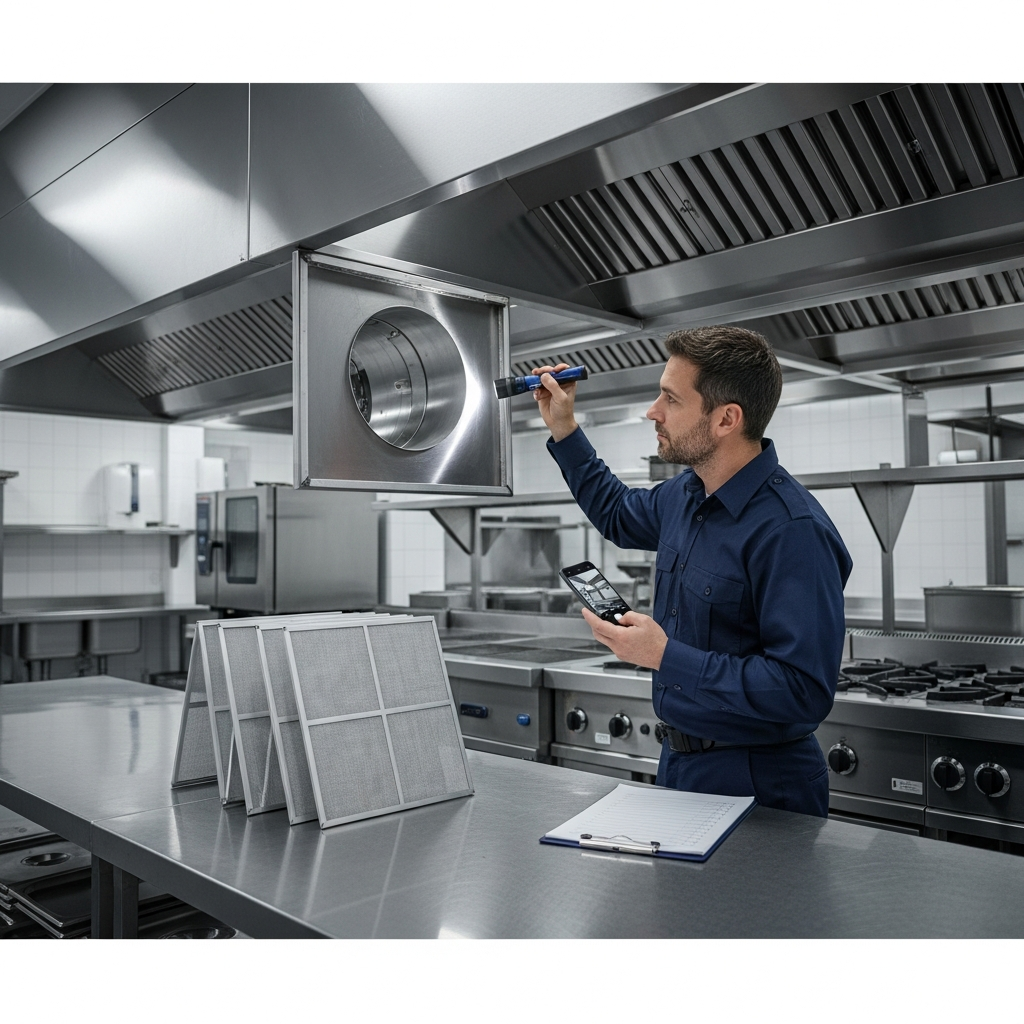
Open the canopy interior and plenum for a closer look using a flashlight. Even with regular cleaning, seams and corners can hold a thin film. If you see an oily sheen, schedule a canopy and plenum clean. Inspect light lens covers and gaskets for cracks or yellowing; replace if needed for visibility and hygiene. Note the condition of caulks and seals around access panels to keep the system airtight and efficient.
Quarterly Duct and Fan Inspection
Every quarter—or more often for heavy, high-heat cooking—open duct access panels and examine the interior surfaces. Look for sticky films, puddling, or carbonized layers. Inspect the fan assembly on the roof: blades, housing, hinge kit, belt tension, and grease containment. Saturated absorbent media should be replaced, and any roof staining should be cleaned and documented. If you lack access panels or encounter long vertical runs, schedule a professional service to ensure full-length coverage in line with NFPA 96.
Inspection Tools and Indicators
Outfit your inspection kit with a strong flashlight, inspection mirror, degreaser test wipes, a simple airflow indicator (paper strip), a camera or phone for photos, and a small socket set for access panels. Indicators of concern include persistent odors despite cleaning, visible smoke spillover during service, fan vibration or squeal, and grease tracks on the roof. Any of these warrant immediate follow-up to avoid fire hazards and performance dips.
Documentation That Satisfies Audits
Maintain a log detailing inspection dates, inspectors, findings, corrective actions, and next steps. Include clear photos of canopy interiors, ducts through access panels, fan blades, and roof containment. Keep invoices and reports from third-party cleanings. Organize records by hood number or location so you can quickly demonstrate compliance during AHJ visits. Good documentation reduces stress and accelerates the inspection process.
Coordination with Cleaning Schedules
Link your inspection calendar to your cleaning and maintenance plan. The best time to inspect is just before a scheduled cleaning, so findings immediately become work orders. After cleaning, re-inspect a sample of areas to confirm the scope was completed and to catch any misses in corners or behind lights. This feedback loop keeps your vendors and team aligned, producing better results over time.
Common Findings and Corrective Actions
Finding: Filters dripping after cleaning. Action: Extend drying time, ensure vertical air-dry, and wipe tracks before reinstalling. Finding: Smoke spills from the front of the hood. Action: Verify make-up air supply, adjust diffusers, and confirm filters are oriented correctly. Finding: Vibrating or noisy fan. Action: Inspect for residue on blades, check belt tension, and document wear for timely replacement.
Roof and Surroundings
Inspect the roof curb and adjacent surfaces. Grease staining indicates overflow or saturated containment. Replace media and clean the surrounding area to prevent tracking and slip hazards. Confirm the fan hinge operates smoothly and that wiring is secure with adequate slack when the lid is opened. Check that drains, where equipped, are clear and direct residue into proper containment rather than onto the roof surface.
Training Staff to Inspect
Train supervisors and closing staff to perform quick daily checks and escalate concerns. Use laminated reminder cards posted near the hood that highlight the top five items to verify: lights, noise, filter seating, visible residue, and grease cups. Practice the airflow paper test during orientation so everyone recognizes healthy capture versus weak pull or backflow. Empower staff to log anomalies immediately so the maintenance lead can respond before service is affected.
When to Involve Professionals
Bring in outside experts for long ducts without access, heavy vertical runs, fans with hardened deposits, or any condition that persists after an in-house cleaning. Reliable technicians use high-flow hot water, rotary tools, and full containment to reach difficult areas. They deliver photo-rich reports that complement your inspection log and help demonstrate compliance.
If you want independent verification of cleanliness or need deep-service coverage aligned to inspection cycles, coordinate with a Somerville provider specializing in kitchen exhaust hood cleaning. This support reinforces your internal process and provides the documentation inspectors expect.
Frequently Asked Questions
Q: What do inspectors focus on first? A: Documentation and visible cleanliness. Expect questions about frequency, records, and evidence that ducts and the fan were serviced, not just the canopy.
Q: How can I prove the ducts are clean? A: Provide dated photos through access panels and of the fan interior. Keep third-party reports and invoices with your logs.
Q: What if I have no access panels? A: Install panels as required by code to permit full-length service. Without access, hidden buildup can persist and jeopardize compliance and safety.
Q: How often should I inspect? A: Perform daily visual checks, weekly functional tests, monthly condition reviews, and quarterly duct and fan inspections, adjusting frequency for heavy cooking loads.
Q: Why does my hood still smell after cleaning? A: Check make-up air filters, roof containment, and nearby surfaces. Odors can linger if supply air is dirty or if absorbent media is saturated.
Strengthen Your Inspection Readiness
A disciplined inspection routine keeps your kitchen safe, efficient, and audit-ready. By observing, measuring, documenting, and acting on findings, you create a continuous improvement loop that reduces risk and improves performance. When you are ready to reinforce your internal checks with expert verification and comprehensive reports, schedule service with local professionals in kitchen exhaust hood cleaning. Together, you can align maintenance and inspections, prevent surprise deficiencies, and keep your operation running smoothly.
