Introduction: Finding the Right Dryer Vent Cleaning Partner Near Somerville, New Jersey
Choosing a trustworthy service for dryer vent maintenance is as important as the cleaning itself. The right provider brings the tools, training, and experience to reach complex elbows, roof terminations, and long runs common in some Somerville homes. A careful selection prevents repeat clogs, protects your dryer, and preserves safety. This guide shows you how to evaluate nearby options, what questions to ask, and how to gauge quality from first call to final airflow check. Whether you prefer to alternate DIY care with periodic professional dryer vent cleaning or want a full-service partner, the steps below will help you choose with confidence.
Somerville’s seasonal humidity and winter cold can impact exterior dampers and encourage lint to cling inside ducts, so a provider familiar with local conditions is an advantage. The best technicians understand how climate, building age, and layout affect airflow. They will examine the route, discuss potential bottlenecks, and propose improvements that keep your system resilient all year.
What to Look For in a Dryer Vent Cleaning Company
Start with specialization. A company that routinely cleans dryer vents will own purpose-built brushes, rotary systems, and high-powered vacuums designed for lint removal. Ask about training and safety practices—particularly for roof work—and whether technicians follow manufacturer guidelines for maximum equivalent lengths and transition duct standards. A quality-focused provider inspects the entire path: dryer exhaust collar, transition duct, interior run, and exterior termination. They also confirm damper operation and look for poor hardware choices like foil transition ducts or screened hoods that trap lint.
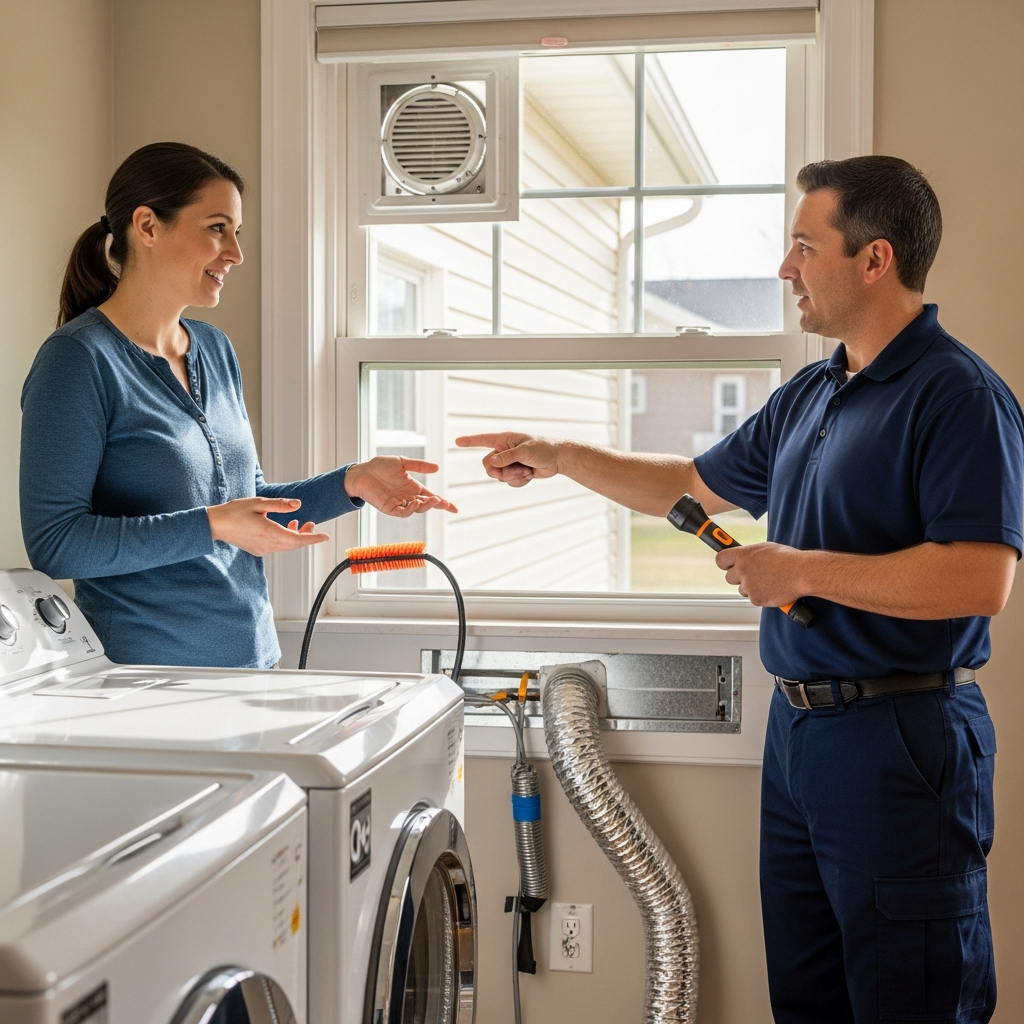
Responsiveness and communication matter. Reputable teams explain their process, outline what access they need, and describe how they verify results. They should be willing to answer your questions about tools, expected duration, and how they will protect your home during the job. Transparency builds trust and gives you a clear picture of what to expect.
Questions to Ask Before You Book
Ask how the technician will access both interior and exterior points. Inquire about methods for long or complex runs and whether they have solutions for elbows that trap lint. If your vent terminates on the roof, ask about safety equipment and experience with roof caps designed for dryers. Discuss how they handle damaged transition ducts—will they replace foil with semi-rigid aluminum as part of the visit? Clarify what verification steps they perform: airflow checks, visual inspection of the hood, and post-cleaning guidance tailored to your layout and usage.
It is also helpful to ask about documentation. A short report with photos and notes on problem areas is valuable for homeowners and property managers. Records make it easier to schedule future visits and track how long cleanings remain effective. Providers who are comfortable documenting findings tend to have consistent procedures and pride in quality.
Evaluating Professional Process and Quality
During the visit, look for a structured approach: safety prep, protection of floors and walls, removal and inspection of the transition duct, interior brushing with periodic vacuuming of the brush, exterior hood cleaning, and a final reassembly with correct clamps. Afterward, the dryer should run on a test cycle while the technician checks damper movement and airflow. Good providers will point out opportunities for upgrades—such as replacing a restrictive hood or insulating duct sections in unconditioned spaces—without pressuring you.
If the vent route is unusually long, the technician may discuss advanced options, like creating an accessible cleanout in a utility area or addressing elbows that repeatedly trap lint. You should feel informed about the condition of your system and confident that the work addressed the full path, not just a portion of it.
Red Flags to Avoid
Be wary of anyone who suggests cleaning exclusively from one side without inspecting the exterior termination. Avoid services that rely on general-purpose tools not intended for dryer ducts or that propose leaving a screen over the hood opening. Another red flag is reluctance to replace a crushed or foil transition duct, or to explain how they will prevent brush heads from detaching in the line. Vague timelines, rushed walkthroughs, and minimal verification steps at the end of the job also indicate corners may be cut.
Pressure tactics or promises that seem too good to be true are warning signs. A solid provider focuses on safety, clear communication, and measurable results rather than flashy claims. You should never feel hurried into decisions; a thorough explanation is a hallmark of professionalism.
How to Compare Proposals
When comparing options, assess scope rather than just headline details. Look for proposals that include interior and exterior access, transition duct replacement if needed, verification of damper movement, and written observations. Ask how they will handle difficult elbows or roof caps and whether they have a plan for safe access. Consider availability that aligns with your maintenance schedule, especially if you plan spring and fall cleanings to match Somerville’s seasonal shifts.
Ask each provider how long the typical service takes for configurations like yours. While duration varies, a methodical process takes time. A precise but unhurried approach tends to yield better long-term results, especially when the vent run is near manufacturer length limits or passes through multiple elbows.
Preparing Your Home for the Appointment
Clear the path to the laundry area and the exterior hood. Move fragile items away from the work zone and ensure adequate lighting. Inform the technician of any known issues—like a roof termination, a booster fan, or previous brush snags—so they can plan appropriate tools. If parking access affects equipment setup, provide guidance. Small details reduce setup time and help the appointment proceed smoothly.
Secure pets and share any relevant building access instructions, especially in townhomes or multifamily properties. If the vent path crosses shared spaces, coordinate with neighbors or building management so the technician can reach all necessary areas safely and efficiently.
Aftercare and Ongoing Maintenance
Following a professional service, establish a maintenance rhythm aligned with your household’s laundry volume. Empty the lint screen each load and vacuum around the lint housing periodically. Keep an eye on the exterior hood monthly—observe airflow strength and damper motion while the dryer runs. If your drying times creep upward or you notice odors or heat buildup, schedule an earlier follow-up.
Consider small upgrades that extend the benefits of a professional cleaning. Replace a flimsy transition duct with semi-rigid aluminum, choose a low-restriction hood that opens fully, and insulate duct sections in unconditioned areas. Document the service date and notes so you can compare performance over time and catch patterns early.
Frequently Asked Questions
Q: How often should I hire a professional if I also do some DIY maintenance? A: Many homeowners alternate a DIY refresh at six months with a professional visit annually. This cadence keeps airflow strong and catches hidden issues before they become disruptive.
Q: What if my vent terminates on the roof? A: Prioritize safety. If roof access is risky, select a provider with appropriate training and equipment. They should be comfortable servicing roof caps designed for dryers and verifying operation after cleaning.
Q: Should the technician replace my foil transition duct? A: Yes—best practice is to use semi-rigid aluminum or rigid metal transition pieces. They resist crushing and reduce snag points for lint.
Q: Are exterior screens acceptable on dryer hoods? A: No. Screens trap lint and quickly create blockages. Choose a hood with a free-swinging damper and inspect it regularly.
Q: How can I tell the job was done well? A: You should see a clean transition duct, feel strong airflow outside with the damper fully open, and experience reduced drying times. A brief written summary or photos of problem areas provide additional assurance.
Make an Informed Choice and Keep Airflow Strong
Selecting a qualified provider near Somerville, New Jersey ensures your dryer vent is cleaned thoroughly from end to end, with safety and verification built into every step. The right partner will explain the route, address bottlenecks, and recommend improvements that keep performance high through seasonal changes. When you are ready to secure consistent results and lasting peace of mind, schedule professional dryer vent cleaning and enjoy reliable airflow, faster cycles, and a safer laundry room.
