Safe dryer vent installation is essential for every Somerville, New Jersey household. A well-designed and carefully executed vent keeps lint moving to the exterior, controls moisture, and reduces fire risk. By focusing on route planning, proper materials, airtight sealing, and thorough testing, you can create a safer home environment and a more efficient laundry routine. If you decide the risk and detail are more than you want to manage yourself, consider a professional partner experienced in local standards for dryer vent installation who can deliver a code-conscious, high-performance result.
This safety-first guide explains the principles that matter most. Use it to plan a new installation, evaluate an existing vent, or discuss options with a local expert.
Understand the Hazards You Are Preventing
Dryer exhaust is warm, moist, and lint-laden. If it is not routed outdoors through smooth, properly sized duct, lint can accumulate and create a fire hazard. Moisture that does not leave the house can condense on building surfaces, driving mold growth and damaging finishes. A safe installation minimizes these risks by supporting strong airflow, avoiding obstructions, and ensuring a clean termination at the exterior.
In addition to fire and moisture, negative pressure issues can arise if the dryer competes for air with other exhaust appliances. A safe plan maintains good makeup air and avoids routes that could depressurize tight spaces.
Plan a Short, Straight, Accessible Route
The safest route is the one that is shortest and has the fewest elbows while still exiting to the outdoors in a suitable location. Long or convoluted routes restrict airflow and create cleaning challenges. If your current laundry space forces a difficult path, consider modest changes such as shifting the dryer a few inches, reframing a small chase, or choosing a different termination face that preserves a low equivalent length.
Accessibility is a safety feature. If you cannot reach key points for cleaning or inspection, consider adding access panels or rerouting. A route that is easy to service stays safer over time.
Use Proper Duct Materials
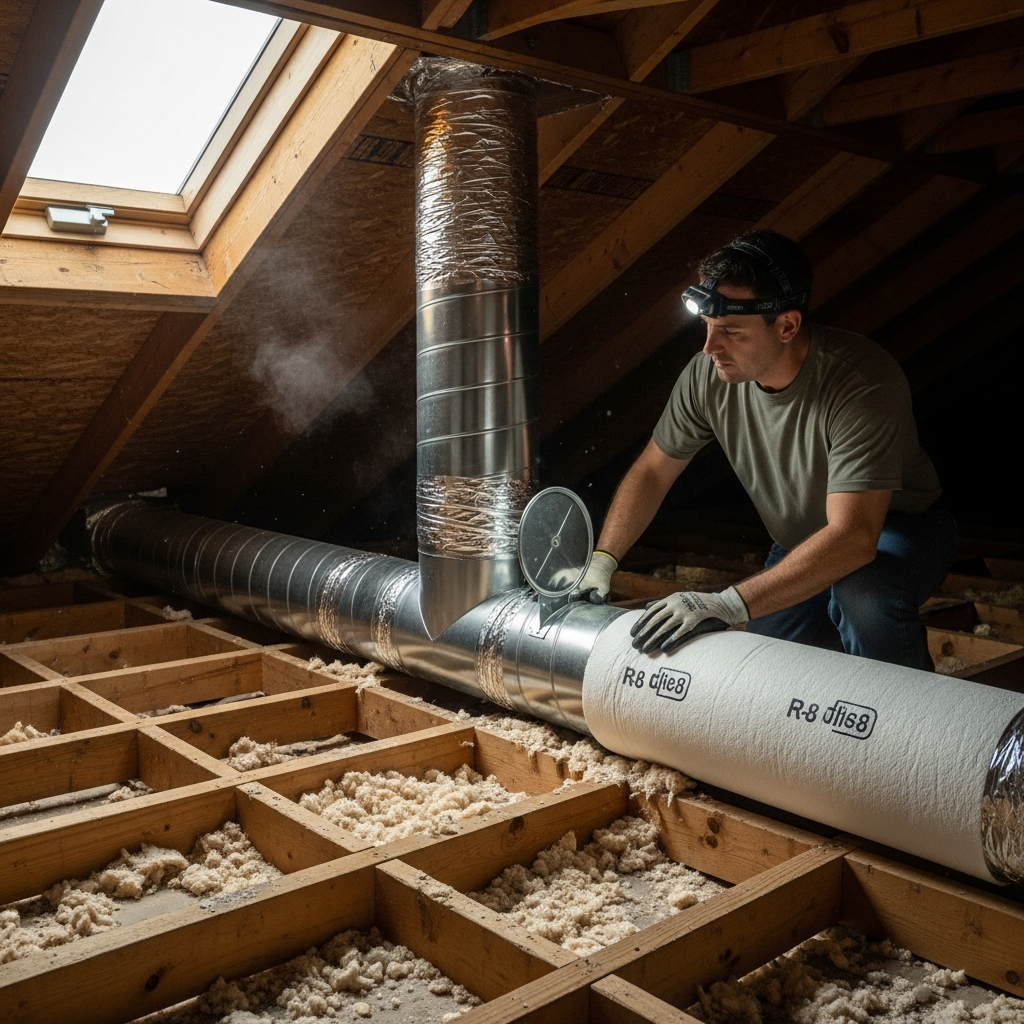
Rigid metal duct is the gold standard for the main run because it has a smooth interior, resists crushing, and reduces lint accumulation. A short section of listed flexible transition duct may be used to connect the dryer to the wall outlet, but it should be kept as short and straight as possible. Avoid plastic or thin vinyl ducts; they are prone to sagging, kinking, and trapping lint.
Choose a termination cap with an integral backdraft damper and avoid any screen that could clog. The damper should open freely when the dryer runs and close when idle to limit pest entry and unwanted air exchange.
Seal Joints Correctly and Avoid Lint Traps
Loose joints leak warm, moist air into walls and cavities. Seal connections with high-temperature foil tape rated for dryer applications rather than screws that protrude into the airstream. Screws become lint hooks and can lead to dangerous buildup. Support the duct at proper intervals to prevent sagging and ensure that elbows align smoothly without abrupt crimping.
Where feasible, maintain a slight slope toward the termination to discourage condensation from pooling. Every detail that preserves smooth airflow contributes to safety.
Protect the Building Envelope
The penetration through an exterior wall or roof must be properly cut, flashed, and sealed for weather resistance. On wood, fiber-cement, or vinyl siding, a well-sized hole saw and compatible sealant create a neat, durable opening. On brick or masonry, take care with drilling to avoid cracking and to maintain a clean edge. The exterior cap should sit flush, be square to the wall, and be secured to resist wind without compressing the duct.
In colder parts of a home—such as basements, garages, or unconditioned attics—condensation risks rise. Follow manufacturer guidance to address cold-space transitions and avoid routes through areas that would routinely collect moisture.
Respect Appliance and Manufacturer Limits
Every dryer model specifies a maximum equivalent length for the vent system. This figure accounts for straight duct plus penalties for each elbow or fitting. A safe installation stays below that threshold. If your route approaches the limit, consider reducing elbows, increasing duct diameter where permitted, or relocating the termination to maintain strong airflow.
Appliance instructions also detail acceptable transition connectors, required clearances, and testing procedures. Always align your plan with the specific dryer you own or intend to purchase.
Coordinate with Other Systems
In tight homes, exhaust appliances can compete for air. A bath fan, kitchen hood, and dryer all running at once may create negative pressure that affects combustion appliances. A safe dryer vent plan considers ventilation as a whole. Ensure the laundry area has adequate makeup air and that terminations are spaced appropriately from other inlets and outlets.
If your home includes a high-efficiency furnace or water heater with dedicated intake and exhaust, ensure the dryer termination is positioned to avoid cross-interference and recirculation of moist air.
Test, Verify, and Document
After installation, run the dryer and observe airflow at the exterior termination. The damper should open briskly, and you should feel a strong, steady exhaust stream. Listen for rattles that signal loose joints, and check for warm air leaks along the duct. Measure drying times over a few cycles to establish a performance baseline for future comparison.
Documentation—a simple sketch, photos of the route, and a note of the total equivalent length—supports future maintenance and helps any service technician quickly understand the system.
Maintenance Is Part of Safety
Even a perfectly installed system needs periodic cleaning. Lint accumulates over time, especially at elbows and terminations. Clean the lint trap every load, vacuum around the dryer periodically, and schedule professional vent cleaning as needed. Seasonal checks in Somerville—after heavy snows, spring rains, and autumn leaf drop—help keep the termination functional and clear.
Teach household members to recognize early warning signs: increased drying times, a hotter-than-normal laundry room, or a damp, musty smell near the dryer. Quick attention prevents minor issues from becoming hazards.
When to Call a Professional
If your route would be long, requires multiple tight elbows, or includes penetrations through difficult materials, a professional can reduce risk with better planning and tools. Complex scenarios such as interior-wall laundries in older homes or venting through thick masonry are best handled by trained installers. The right expert will explain options, provide a safe, direct route, and verify performance at completion.
Mid-project discoveries—like hidden obstructions, prior improper venting, or inaccessible cavities—are also signals to bring in help. Engaging a local specialist for dryer vent installation ensures your final system meets the appliance maker’s limits and supports long-term safety.
Frequently Asked Questions
Q: Is roof venting safe? A: Roof terminations can be safe if installed correctly, but wall terminations are often easier to maintain and inspect. Roof caps require secure flashing, careful routing, and regular checks to keep the damper free and the passage clear.
Q: Can I share a vent with another appliance? A: No. A dryer requires its own dedicated vent to the outdoors. Sharing creates cross-contamination and backflow risks.
Q: Are screens allowed on exterior caps? A: No. Screens collect lint and block exhaust. Use a termination with an integral damper designed for dryer use.
Q: What indicates a dangerous restriction? A: Clothes that take longer to dry, a hot or humid laundry area, a burnt-lint smell, or a damper that barely moves during operation. Investigate immediately if you notice any of these signs.
Q: How often should I clean the vent? A: Many homes benefit from annual cleaning, but frequency depends on laundry volume and vent complexity. Track drying performance and inspect the termination seasonally.
Q: Is flexible foil duct safe for the entire run? A: No. Keep flexible transition pieces short and use rigid metal for the primary run to support safe, efficient airflow.
Make Your Somerville Home Safer Today
Protect your home by investing in a careful, code-conscious installation backed by routine maintenance. When you want expert planning, precision workmanship, and verified performance, schedule local dryer vent installation and enjoy a safer, more efficient laundry routine year-round.
