This homeowner-focused guide explains exactly how to plan and install a safe, efficient dryer vent in Somerville, New Jersey. You will learn how to choose materials, route ducts, seal joints, and test performance, all with local weather and housing styles in mind. If you prefer a hands-off approach, start with home dryer vent installation by a qualified local pro so your system meets airflow, safety, and durability expectations from day one.
Somerville offers a mix of historic homes, post-war capes, and newer infill builds. That diversity means dryer vent installations vary widely: some benefit from short wall runs through rim joists, others need careful roof terminations or masonry penetrations. The guidance below helps you pick the best path for your home’s layout, keeping bends minimal, joints tight, and maintenance easy.
How a Dryer Vent Works
Your dryer heats air and tumbles clothes while a blower pushes moist, linty air out through the vent. The less resistance that air meets, the quicker clothes dry and the less energy is used. Long runs, sharp bends, and rough interior surfaces slow airflow and trap lint, which increases cycle times and risk.
Essential Materials and Tools
- Smooth-walled rigid or semi-rigid metal ducting, 4-inch nominal diameter
- UL-listed transition duct from dryer outlet to first hard duct
- Dryer-specific exterior hood with backdraft damper (no screen)
- Foil-faced aluminum HVAC tape, metal clamps, and metal hanging straps
- Hole saw or core drill, drill/driver, tin snips
- Stud finder, level, measuring tape, marker
- Weatherproof sealant and flashing components suitable for siding or masonry
- Insulation sleeve for cold or unconditioned spaces
Planning the Best Route
Choose the shortest, straightest path to the outdoors. Wall terminations are commonly simpler, but roof terminations are possible with the right cap and flashing. Limit elbows—every 90-degree bend adds resistance. Two 45-degree bends may be better than one 90 when space permits.
Consider accessibility for future cleaning. If the run must pass behind finished areas, document the path with photos before closing walls. Avoid running the duct through garages, crawlspaces without termination, or interior spaces where moisture could cause damage.
Step-by-Step Installation for Homeowners
- Pre-check the Dryer: Confirm the outlet size and location. Move the dryer enough to work comfortably and protect the floor.
- Mark the Exit Point: From inside, pick a location clear of studs, pipes, and wires. Drill a pilot hole to confirm position and exterior clearances.
- Cut the Opening: Use a hole saw or core bit sized for the termination collar. For brick or stone, proceed slowly and support the work to avoid cracking.
- Install the Exterior Hood: Dry-fit, then apply exterior-grade sealant. Fasten per instructions, integrate flashing, and verify the damper swings freely.
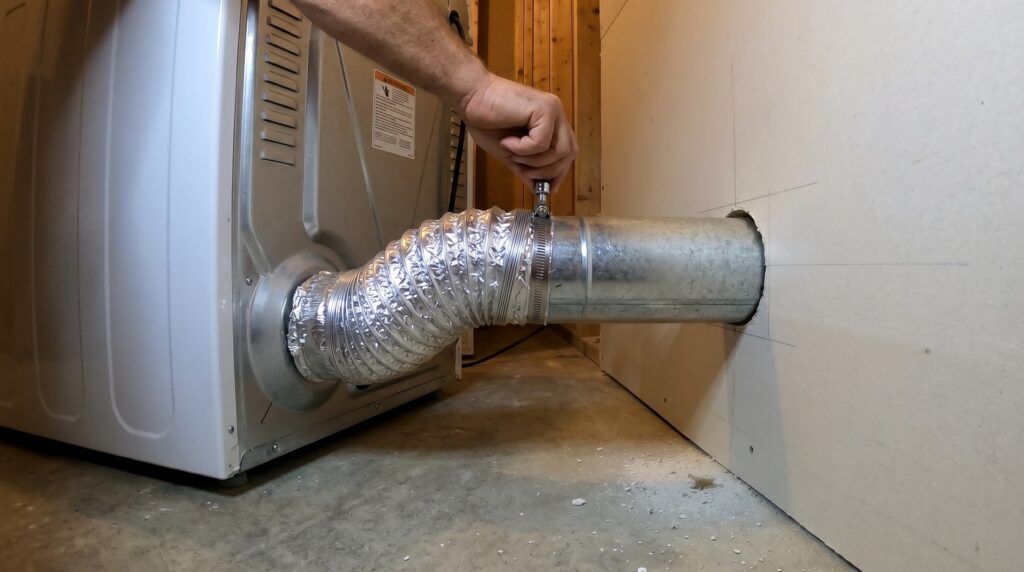
- Assemble the Duct Run: Connect a short UL-listed transition duct to a rigid starter collar, then build outward with rigid or semi-rigid sections, orienting male ends in the airflow direction.
- Secure and Seal: Use metal clamps as needed, then seal seams with foil-faced tape. Do not use screws that protrude into the airstream.
- Support the Run: Install metal hangers every few feet to prevent sagging and maintain a gentle downward slope toward the exterior.
- Reconnect and Test: Slide the dryer back carefully to avoid crushing the transition. Run a test cycle and feel for strong airflow at the exterior hood.
Weather and Building Details for Somerville
Central New Jersey’s humid summers make good ventilation crucial to prevent musty laundry rooms. In winter, cold exterior walls and shaded sides of homes can cause condensation inside ducts. To manage this, insulate sections in unconditioned spaces and keep the run sloped. Choose a robust exterior hood that sheds rain and snow and seals well against wind-driven drafts.
Safety and Performance Guidelines
- Use only smooth metal duct for permanent runs; never use plastic for a dryer vent.
- Keep the transition duct short and avoid crushing it when positioning the dryer.
- Eliminate screens at the exterior termination; they trap lint.
- Maintain adequate makeup air in tight laundry rooms by ensuring a door undercut or louvered door as appropriate.
- Label hidden routes or snap photos before closing walls for easier future service.
When to Call a Professional
Complex routing, masonry penetrations, or suspected make-up air issues may warrant a pro. Homes with long vent runs or past lint fires also benefit from expert design. If you need a mid-project check or a turnkey solution, consider a site visit focused on dryer vent installation services to validate airflow, termination choice, and safety practices.
Maintenance for Long-Term Reliability
- Clean the lint filter before every load.
- Inspect the exterior hood monthly to ensure the damper opens and closes freely.
- Brush-clean the duct annually or more often for high-use households or homes with pets.
- Watch for warning signs: longer dry times, unusually hot dryer surfaces, or musty odors near the laundry area.
- After renovations, recheck vent alignment and seals—contractors may inadvertently shift ducts.
Troubleshooting Tips
- Weak airflow at the hood: Look for crushed transition duct or a slipped joint behind the dryer.
- Damper sticks open or closed: Clean lint from the hinge area and check that sealant or paint is not binding the flap.
- Condensation or water drips: Add insulation around cold sections and confirm the slope toward the termination.
- Lint on siding: Ensure the damper is working and that the termination is angled correctly. Check for tears in the transition duct.
Frequently Asked Questions
Q: What duct diameter should I use? A: Most residential dryers call for a 4-inch duct. Follow your dryer manufacturer’s specifications.
Q: Can I vent into a crawlspace or attic? A: No. Always vent to the outdoors using a proper termination hood with a backdraft damper.
Q: Is a booster fan allowed? A: Only when the route length and elbow count exceed the dryer’s allowable limits and when the booster is rated for dryer exhaust and remains accessible for service.
Q: How often should I clean the vent? A: At least annually; more often for large families or if you notice slower drying.
Q: Are screws permitted at joints? A: Avoid fasteners that penetrate the duct interior. Use slip-fit connections, clamps, and foil-faced aluminum tape to secure and seal.
Q: Can I use the old foil flex duct I found in the basement? A: Use rigid or semi-rigid metal for the fixed run and a short UL-listed transition duct at the dryer. Replace older, damaged, or non-compliant materials.
Make Your Dryer Safer and Faster
A well-planned vent not only improves performance but also protects your home. If you want your installation done neatly with attention to airflow, weatherproofing, and easy maintenance, connect with a local specialist to book your dryer vent installation and enjoy reliable drying season after season in Somerville.
PREVIOUS: Dryer Vent Installation Checklist For Somerville New Jersey Homes
