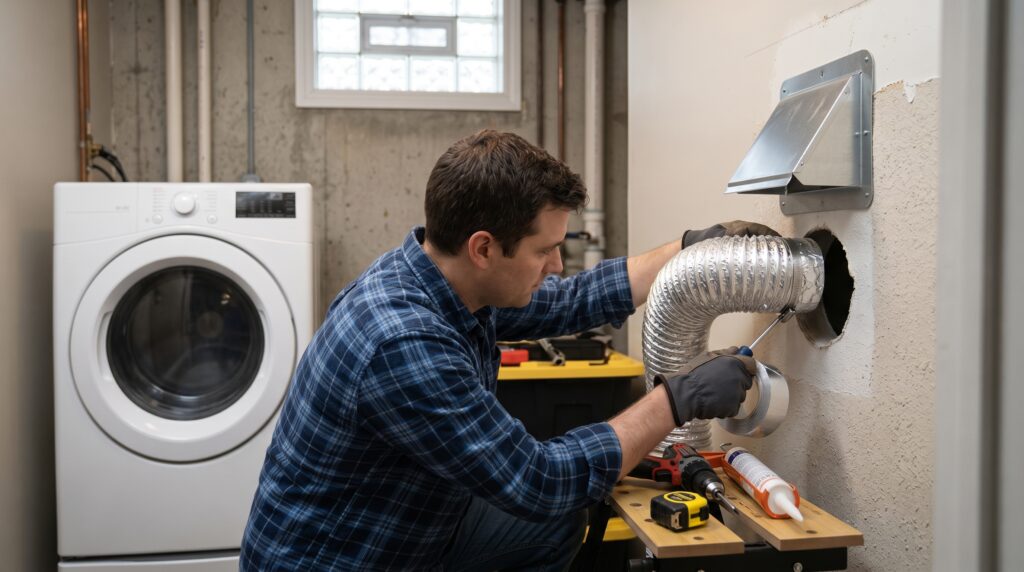
Commercial and multi-unit properties in Somerville, New Jersey demand robust dryer vent systems that support higher usage, rigorous cleaning routines, and safety-focused best practices. This guide explains key rules of thumb, widely adopted standards, and practical steps to help businesses, property managers, and facility teams install and maintain effective dryer exhaust. For complex facilities, or when you want a turnkey solution aligned with industry guidance, consider engaging commercial dryer vent installation support from local specialists with experience in high-demand environments.
What Makes Commercial Installations Different
- Higher duty cycles: On-premise laundries, salons, gyms, and hospitality settings run dryers frequently, increasing lint production and heat load.
- Longer or shared pathways: Multi-story buildings and laundry rooms set far from building perimeters often require long runs or multiple risers.
- Accessibility and service: Routine inspection and cleaning are business-critical to maintain throughput and reduce downtime.
- Documentation and training: Staff should understand basic operation, signs of restriction, and how to report issues quickly.
Core Principles for Business-Grade Dryer Venting
- Dedicated exhaust: Each dryer should discharge to the exterior through a system designed for dryer use. Avoid combining with other exhaust streams unless a listed, engineered manifold system is used.
- Smooth metal ducting: Use rigid or semi-rigid metal for low friction and durability. Maintain the manufacturer’s specified diameter throughout.
- Shortest, straightest route: Minimize elbows and long horizontal runs. When elbows are unavoidable, use large-radius fittings where possible.
- Termination without screens: Exterior outlets must include backdraft dampers and no screens, which can trap lint and cause blockages.
- Secure, sealed joints: Use clamps and foil-faced aluminum tape; avoid fasteners that protrude into the airstream.
- Support and labeling: Strap ducts at regular intervals and label accessible portions to aid service teams.
Planning and Design for Facilities
- Load assessment: Estimate cycles per day per dryer to size the system and determine cleaning frequency.
- Route mapping: Create scaled drawings showing duct sizes, lengths, and fittings. Identify access points for inspection and brushing.
- Equipment compatibility: Verify each dryer’s maximum equivalent length and outlet size; match duct design accordingly.
- Make-up air: Ensure adequate airflow to the laundry area so exhaust fans and dryers do not compete for air and cause negative pressure.
- Fire and compartmentation: Where ducts penetrate rated assemblies, use appropriate firestopping methods per product data and authority guidance.
Installation Best Practices
- Use listed transition connectors from each dryer to the trunk or dedicated run.
- Orient male-to-female joints in the airflow direction to minimize lint snags.
- Support vertical risers and long horizontals at intervals that prevent sagging and vibration.
- Provide cleanout access at changes of direction or long runs to facilitate routine lint removal.
- Weatherproof exterior terminations using durable hoods and flashing suitable for Somerville’s seasonal conditions.
Commissioning and Documentation
- Airflow verification: Measure or qualitatively confirm strong discharge at each termination during initial startup.
- Damper action: Confirm each backdraft damper opens fully and closes cleanly.
- Leak check: Inspect seams and joints for escaping air; reseal as needed with foil-faced tape.
- Records: Maintain a log of installation details, cleaning schedules, and any modifications.
Maintenance and Cleaning Routines
- Daily or weekly visual checks of lint screens and exterior outlets, depending on usage.
- Scheduled duct brushing and vacuuming based on cycle counts and lint accumulation patterns.
- Post-maintenance verification of damper action and airflow at terminations.
- Staff training on early warning signs: extended dry times, hot dryer cabinets, or unusual smells.
Common Pitfalls in Commercial Settings
- Excess elbows and long horizontal runs that starve airflow and overload dryers.
- Shared exhausts without appropriate engineered components or controls.
- Screened exterior caps that trap lint and create hazards.
- Poor access for cleaning, forcing partial maintenance and leaving hidden sections clogged.
- Crushed or undersized transitions at the appliance connection.
Mid-Project Review and Risk Reduction
Before finishes go back in place, walk the route and verify elbow counts, support spacing, and access points. If you are unsure about airflow margins or the practicality of your cleaning plan, bring in a service provider specializing in business dryer vent installation standards to validate the layout. A short review can prevent recurring downtime and expensive rework.
Somerville and Central New Jersey Considerations
- Weather durability: Choose rugged exterior hoods that handle wind, snow, and rain without sticking or corroding.
- Noise control: In mixed-use buildings, isolate ducts acoustically where they pass close to quiet spaces.
- Space constraints: Older buildings may require creative routing; keep documentation current and accessible.
- Tenant coordination: In multi-unit properties, schedule maintenance with minimal disruption and clear communication.
Frequently Asked Questions
Q: How often should commercial vents be cleaned? A: Cleaning frequency depends on usage. Establish a schedule based on cycle counts and lint accumulation trends, then adjust as needed to maintain strong airflow.
Q: Can multiple dryers share a common exhaust? A: Only with an engineered, listed manifold or control system designed for that purpose. Otherwise, provide dedicated runs.
Q: Are screens ever acceptable on terminations? A: No. Screens catch lint and quickly restrict airflow. Use backdraft dampers without screens.
Q: What indicates a problem in a business setting? A: Longer dry times, frequent high-heat shutdowns, visible lint at terminations, or damp laundry rooms signal restriction or design issues.
Q: Do I need special components for fire-rated assemblies? A: Use compatible firestopping and follow product instructions where ducts penetrate rated barriers. Keep documentation on file.
Q: Should I include monitoring? A: Consider periodic airflow checks or simple differential pressure indicators in high-usage facilities to catch restrictions early.
Strengthen Safety and Uptime
Well-designed dryer exhaust protects equipment, saves energy, and supports reliable operations. For layout refinement, clean routing, and durable weatherproofing suited to New Jersey conditions, connect with a local specialist to consult on your dryer vent installation and keep your facility running smoothly.
PREVIOUS: Dryer Vent Installation How To In Somerville New Jersey
NEXT: Dryer Vent Installation Checklist For Somerville New Jersey Homes
