A professional dryer vent cleaning service in Somerville, New Jersey is more than a quick sweep of lint. It is a systematic process designed to restore safe, efficient airflow from your dryer to the exterior of your home. When performed by trained technicians, the service reduces drying times, helps protect against overheating, and supports better indoor air quality by preventing lint and moisture from lingering where they do not belong. If your laundry routine has slowed to a crawl or the dryer feels hotter than it should, consider scheduling expert dryer vent cleaning to bring performance back to baseline.
Why Professional Service Matters
Dryer vents are often longer and more complex than they appear. Behind the wall, many homes have runs that snake through joist bays, up utility chases, or out through the roof with multiple elbows. Each bend becomes a lint trap and a point of resistance. Professionals arrive with purpose-built brushes, flexible rods, and vacuums to reach and remove obstructions throughout the entire line. They also verify that the transition duct is safe (metal, not plastic), confirm that the exterior hood opens freely, and check that the vent path has an appropriate slope to prevent moisture pooling.
The Professional Process Step by Step
- Interview and inspection: A technician asks about dry times, odors, or hot surfaces and examines the dryer’s location, transition duct, and visible portions of the vent line.
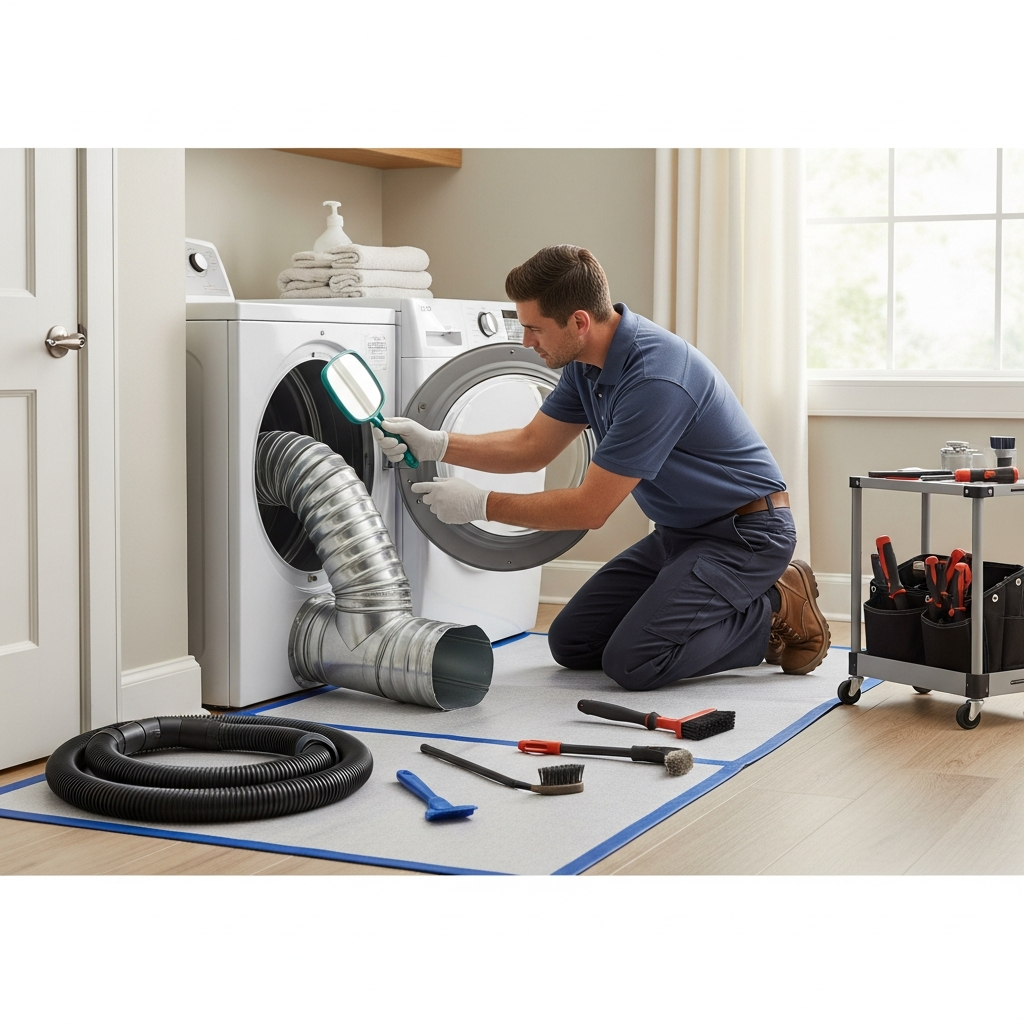
- Preparation: They protect surrounding surfaces, shut off power or gas as appropriate, and move the dryer only as much as needed to avoid damaging flooring or connections.
- Mechanical agitation: Using rotating brushes on flexible rods, they sweep lint from the interior of the duct, carefully working through elbows and long horizontal runs.
- Debris capture: Lint is gathered with an appropriate vacuum and containment method, maintaining a clean workspace inside your home.
- Termination check: At the exterior hood, they confirm that the damper opens and closes freely and is not obstructed by nests or landscaping.
- Transition upgrade where needed: If the dryer is connected with thin foil or plastic, they recommend a safer semi-rigid or rigid metal alternative.
- Airflow verification: They finish by testing airflow to confirm that performance is restored and the system exhausts properly.
Safety First: Reducing Overheating and Lint Ignition Risks
Lint is lightweight, fibrous, and flammable. When it accumulates in elbows and long vent runs, drying cycles lengthen and temperatures inside the duct can rise. Reduced ventilation also increases humidity near the laundry area. A professional cleaning removes that fuel source, clears blockages, and helps your dryer operate within its designed temperature range. The result is a safer home and a more reliable laundry routine.
Performance Gains You Can Feel
- Shorter drying times as hot, moist air exits the drum more freely.
- Less wear on fabrics and colors thanks to fewer, shorter cycles.
- Lower strain on the dryer motor and heating element, supporting appliance longevity.
- Reduced humidity and odors in the laundry area.
Special Considerations for Somerville Homes
In Somerville, many homes feature basement laundry rooms with long horizontal runs to exterior walls, while townhomes may route vents vertically through roofs or shared chases. Seasonal humidity in the summer can cause lint to clump, and winter ice can restrict exterior hoods if they sit near the ground. A local professional accounts for these conditions by verifying termination height and clearance, ensuring dampers move freely, and advising on maintenance intervals that match your home’s layout and laundry habits.
DIY vs. Professional: When to Call in the Pros
Home maintenance kits can help with short, straight vents, but they are limited by reach and power. If your vent path includes multiple elbows, runs through finished walls or ceilings, or ends on a second-story exterior, a professional is the safer, more reliable choice. Additionally, if you have a gas dryer, disconnection and reconnection should be handled carefully to avoid leaks or backdrafting issues. A professional cleaning ensures you get a top-to-bottom result without the risks of partial or improper DIY attempts.
Mid-Process Checks: The Professional’s Secret to Consistency
Great technicians do not simply push a brush and call it a day. They confirm progress at key points: visually checking lint volume during extraction, assessing elbow resistance as the rods advance, verifying the condition of the transition duct, and testing the exterior flap. If the vent design allows, they may clean from both ends to guarantee full coverage. For many homeowners, a thorough mid-process verification—paired with a final airflow test—is the difference between a basic and a professional-grade service. If your last appointment lacked this rigor, make sure to request complete dryer vent cleaning with objective post-clean results next time.
How Often Should You Schedule Service?
Most households benefit from annual cleaning. High-usage homes—large families, frequent athletic laundry, or heavy towel loads—may prefer every six to nine months. If your vent line is especially long, includes several elbows, or terminates on the roof, a shorter interval can prevent performance dips between cleanings. Always schedule sooner if you notice longer dry times, hotter surfaces, or musty odors during operation.
Common Pitfalls to Avoid
- Using plastic transition ducting, which is not code-compliant and poses a safety risk.
- Relying only on the removable lint filter and assuming the vent line stays clean.
- Ignoring the exterior termination hood, where nests, debris, or stuck dampers can block exhaust.
- Pushing the dryer too far back, crushing the transition duct and choking airflow.
Frequently Asked Questions
Q: How long does the appointment take? A: Many visits take under two hours, depending on access, vent length, and the volume of lint. More complex systems take longer, and that additional time is a sign of thoroughness, not delay.
Q: Will the service be messy? A: Professional crews prepare the space and capture lint so that your home stays tidy. Any debris is contained and removed.
Q: What if my vent exits on the roof? A: Experienced teams can handle roof terminations safely, bringing proper ladders and verifying that the cap allows free airflow.
Q: Do I need to move the dryer beforehand? A: Not usually. Technicians move the unit as needed, protecting floors and reconnecting safely when finished.
Q: How will I know it worked? A: You should feel stronger airflow at the exterior hood, notice shorter drying times, and see the vent flap open widely during operation.
Simple Habits That Support a Professional Cleaning
- Clean the lint screen before every cycle and wash it periodically to remove softener residues.
- Avoid overloading the drum; it increases dry times and lint production.
- Keep the area behind the dryer clear to prevent crushing the transition duct.
- Check the exterior hood each season to make sure it moves freely.
Bring Back Safe, Efficient Drying
Your dryer should perform reliably without excessive heat, long cycles, or persistent lint around the laundry area. If it does not, a skilled team can diagnose and correct what you cannot see inside the ductwork. For peace of mind and smoother laundry days, schedule professional dryer vent cleaning with a trusted Somerville provider and enjoy stronger airflow, safer operation, and a more efficient home.
