Finding the best dryer vent cleaning near you in Somerville, New Jersey starts with understanding why the job matters as much as who performs it. Lint, dust, and moisture gradually accumulate inside your vent line, hampering airflow, forcing your dryer to work harder, and raising the risk of overheating. In a busy household where laundry is a constant, those small inefficiencies can turn into slow dry times, higher utility usage, and potential safety concerns. If it has been a year or more since your last service, or if your dryer seems to be laboring, consider scheduling professional dryer vent cleaning to restore safe, strong airflow and protect your home.
What “Best Near You” Really Means in Somerville
The phrase “best near you” can be misleading if you measure only by distance or speed of arrival. For homeowners in Somerville, the best provider balances proximity with proven skill, safety protocols, and consistent results. Local expertise matters because housing styles and vent configurations vary widely—from older capes and colonials with long basement runs to townhomes and condos with interior laundry closets and tight vent chases. A technician who regularly services Somerville homes will come prepared for these layouts and know the common pinch points that trap lint, moisture, and even pests.
Because Somerville experiences humid summers and chilly winters, vents can collect damp lint in warmer months and face contraction in winter, which can loosen joints if they were improperly secured. The right local expert understands seasonal impacts, inspects for backdrafting on gas dryers, confirms clear termination at the exterior hood, and leaves you with recommendations tailored to your specific home and routine.
Clear Signs You Need Local Dryer Vent Cleaning
- Loads take longer than usual to dry, even after you’ve cleaned the removable lint filter.
- The top or sides of the dryer feel unusually hot to the touch during a cycle.
- You notice a musty or burning-lint odor when the dryer runs.
- There is visible lint buildup around the exterior vent hood or flap.
- Clothing comes out excessively hot or with more lint than normal.
- The vent flap outside does not open fully during operation, indicating weak airflow.
- It has been 12 months or more since your last professional cleaning, or you run frequent loads (large families, athletes, pet owners).
Why Choosing the Best Team Matters for Safety and Efficiency
Dryer lint is highly combustible, and restricted ducts can allow heat to build. Beyond the essential fire safety aspect, poor airflow wastes energy and time. Quality technicians don’t just vacuum the first few feet; they disassemble where necessary, brush and sweep the entire duct path, verify the condition of the transition hose, inspect the exterior termination hood, and test the finished airflow. They also educate you about maintenance intervals based on your usage and the specific construction of your vent system.
How the Best Pros Approach a Somerville Service Call
- Initial conversation: They ask about dry times, odors, and any past vent issues, plus the age/type of your dryer and typical laundry volume.
- Site assessment: They locate the full vent path, measure run length, note elbows, check for screws in joints (which can snag lint), and look for crushed or overly long transition hoses.
- Safety prep: They confirm power or gas shutoff as needed, protect nearby surfaces, and ensure safe access.
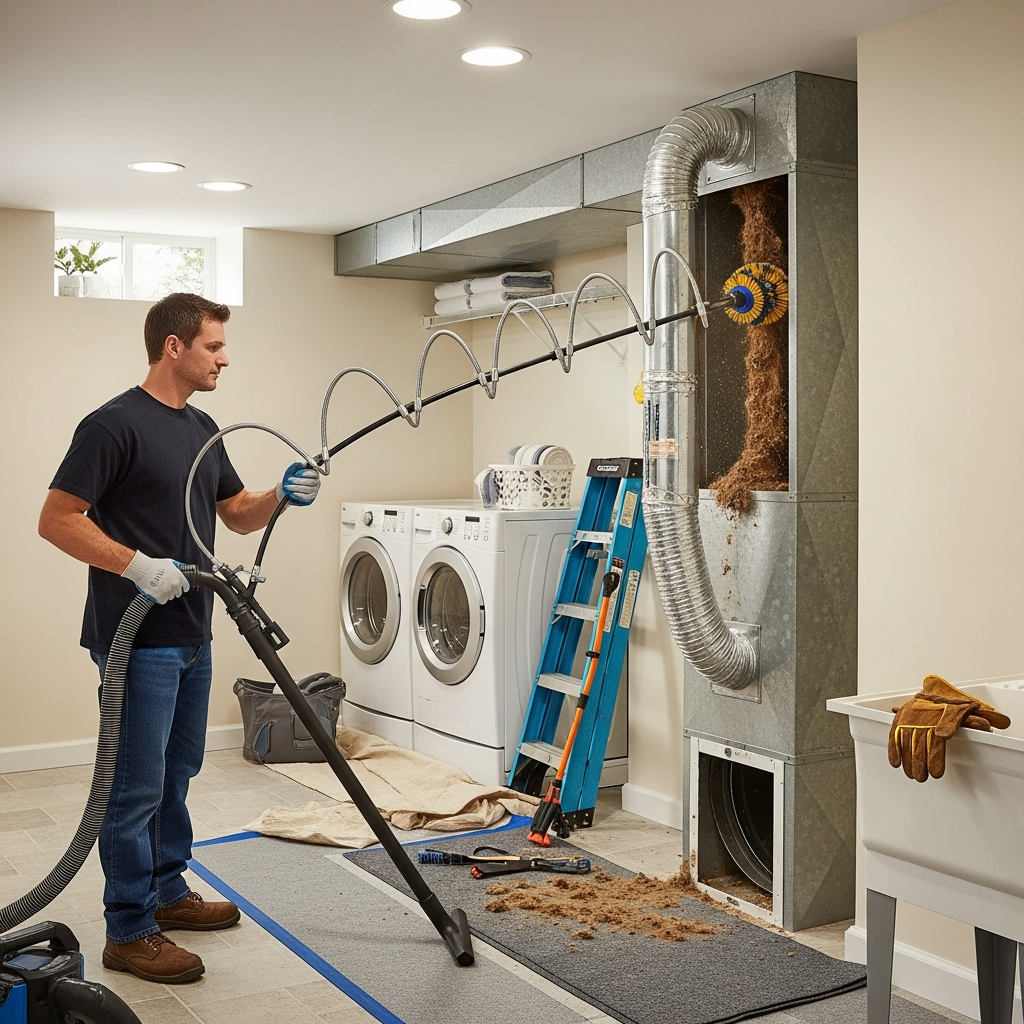
- Mechanical cleaning: Using flexible rods and brush heads, they scrub the line from the interior and, when appropriate, from the exterior hood back toward the dryer to fully dislodge lint.
- Debris capture: Lint is collected using a controlled method to prevent indoor mess, often aided by a vacuum with adequate filtration.
- Component check: They evaluate the transition hose (preferably semi-rigid or rigid metal, not plastic or thin foil) and the exterior hood flap or damper.
- Airflow verification: They test airflow at the termination and may use anemometer readings or a practical flow assessment to confirm improvement.
- Recommendations: You receive maintenance guidance, notes about any bends that could be reconfigured, and a suggested re-cleaning interval.
Local Considerations in Somerville Homes
Somerville’s varied housing stock includes single-family homes with laundry in the basement as well as townhouses and multi-unit buildings where dryer vents may share common shafts or tight horizontal runs. Long vent paths with multiple elbows need more frequent service because each bend slows airflow and is a collection point for lint. Exterior terminations that sit low to the ground can be impacted by landscaping, mulch, or winter snow, while higher terminations may need ladder access. The best local technicians anticipate these access issues and bring the right ladders, rods, and safety equipment.
Preventive Steps You Can Take Between Cleanings
- Always clean the dryer’s lint screen before each load.
- Run smaller, similar-fabric loads to reduce lint production.
- Avoid overloading; it strains the motor and airflow.
- Do not operate the dryer without the lint screen in place.
- Periodically check the exterior vent hood to ensure the flap moves freely.
- Keep the area behind the dryer clean and the transition hose uncrushed.
- Use only metal transition ducting—rigid or semi-rigid—for better safety and durability.
What Sets the Best Providers Apart
- Demonstrated experience with diverse vent configurations common in Central New Jersey homes.
- Clear explanations of the cleaning process and the reasons behind each step.
- Respect for your home—protective measures, tidy work practices, and proper debris removal.
- Verification of airflow improvements before they leave.
- Actionable maintenance suggestions tailored to your laundry habits.
Common Problems a Thorough Cleaning Can Solve
- Slow drying times caused by lint-packed elbows and long horizontal runs.
- Heat alarms or auto shutoffs due to restricted exhaust.
- Condensation inside the vent from humid weather and poor slope, leading to lint clumping.
- Bird or rodent nesting behind exterior hoods that obstruct flow.
- Damaged or flimsy transition ducts that collapse under tight spaces.
How Often Should Somerville Households Schedule Service?
For the average home, annual cleaning is a responsible baseline. If you have a large family, several pets, or wash heavy lint-producing textiles like towels and fleece, consider servicing every six to nine months. Homes with long duct runs or multiple elbows may also benefit from a more frequent schedule. If you notice sudden changes—longer dry times or a stiff exterior vent flap that barely opens—don’t wait for your routine interval; call sooner.
Mid-Cycle Verification and the Value of Airflow Testing
One of the biggest differences between a basic and a best-in-class cleaning is how thoroughly the results are verified. Reliable technicians will confirm that the exterior hood opens fully during a cycle and, when appropriate, measure airflow. They will also look for subtle hints of restriction, like lint spitting out around a hood that never fully opens. If you haven’t booked service in a while, asking for comprehensive dryer vent cleaning with post-clean checks ensures you leave the appointment with confidence in both safety and performance.
DIY vs. Professional: Knowing Your Limits
Home kits can help with very short, straight runs, but most Somerville homes have multiple elbows or long paths that require specialized brushes and powered rods. If you cannot easily access the entire length, including the exterior termination, or if you have a gas dryer and are unsure how to safely disconnect and reconnect it, calling a trained pro is the best option. Additionally, DIY attempts that rely on leaf blowers can compact lint into elbows if not used correctly, or dislodge a loose termination hood.
Seasonal Tips for Central New Jersey
- Spring: Clear any landscaping, grass clippings, or mulch that may limit the hood’s motion. Pollen can also mix with lint near the termination.
- Summer: Humidity can create clumps inside long runs. Keep an eye on dry times and schedule maintenance if they creep up.
- Fall: Rodents and birds may try to nest. Confirm your hood has a proper damper and is free of obstructions.
- Winter: Ice or snow can block low-mounted hoods. Ensure adequate clearance and check after storms.
Frequently Asked Questions
Q: How long does a typical cleaning take? A: Many appointments take under two hours, but complex layouts, hard-to-reach terminations, or heavy lint loads can extend the visit. The important thing is that the full run is cleaned, components are inspected, and airflow is verified.
Q: Will cleaning reduce my dry times? A: In most cases, yes—restored airflow means more moisture leaves the drum quickly. Many homeowners notice significantly faster cycles and lower wear on fabrics.
Q: Is foil or plastic transition duct safe? A: Thin plastic is not code-compliant and should be replaced. Foil ducts crush easily; semi-rigid or rigid metal is preferred for durability and safety.
Q: Can I rely only on my lint screen? A: No. The screen captures some fibers, but plenty of lint bypasses it and collects in the vent line and elbows over time.
Q: How do I know the job was effective? A: Look for stronger airflow at the exterior hood, a flap that opens fully, noticeably shorter dry times, and a technician who explains what was cleaned and what was improved.
Maintenance Roadmap for the Year
- Before peak laundry seasons (holidays, school sports), check your dry times.
- Perform a quarterly visual inspection of the exterior hood for obstructions.
- Wash the lint screen occasionally with mild soap and water to remove fabric softener residue.
- Keep the area around the dryer clear so the appliance can vent properly and the hose is not crushed.
- Schedule professional service annually, or sooner if you notice performance changes.
Choosing With Confidence
When selecting the best provider near you, prioritize experience, thorough process, and clear communication. A trustworthy local team will respect your time, treat your home with care, and leave you with noticeable results. Remember that a great job is more than a quick sweep—it is a complete cleaning paired with validation that your system is performing at its best.
Schedule Service in Somerville Today
If your dryer is slow, running hot, or overdue for maintenance, now is the moment to act. Protect your home, your appliance, and your time by booking expert dryer vent cleaning with a trusted Somerville team. You will gain peace of mind, better performance, and a healthier laundry routine for the seasons ahead.
