Homeowners in Somerville, New Jersey often want straight answers about what goes into an effective, durable air duct repair. Transparency is more than a number on a page; it is the clarity of the process, materials, workmanship, and results. When you understand how professionals assess existing ductwork, explain their plan, and verify the outcome, you can make confident decisions for your home’s comfort and indoor air quality. If you are exploring options and want a plain-English perspective on the path forward, this guide unpacks the essentials behind truly transparent, high-quality air duct repair in Somerville.
We will look at how seasoned technicians evaluate the condition of supply and return runs, identify leakage points, test airflow, and determine which sections need sealing, reinforcement, or replacement. You will learn what belongs in a clear proposal, how to compare work scopes, and what to expect during and after the appointment. The goal is to demystify the work so you can focus on outcomes: steadier temperatures, quieter operation, better air distribution, and healthier breathing zones throughout the home.
Somerville’s mix of historic homes and newer builds means duct challenges can vary widely. Some systems have accessible basements with exposed trunks; others hide behind finished ceilings or snake through tight knee walls. Regardless of layout, transparency begins with a methodical assessment, visual documentation, and a step-by-step plan that explains exactly what will be done and why.
What Shapes a Thorough Repair Plan
Every home is different, and so is every duct network. A thorough plan addresses location, materials, and performance targets rather than generic promises. Consider the following elements that typically shape a repair plan:
- System layout: Where the air handler sits, how trunks branch to rooms, and whether returns are centralized or room-by-room.
- Accessibility: Open basements, crawl spaces, attics, and chases each require different strategies and safety steps.
- Duct material: Sheet metal, flex, ductboard, and mixed systems respond to sealing and reinforcement differently.
- Seam integrity: Elbows, takeoffs, boots, and transitions are frequent leakage points that demand careful attention.
- Insulation and vapor control: Proper insulation levels and sealed jackets reduce temperature loss and moisture issues.
- Airflow balance: Undersized or restricted runs, crimped flex, and blocked returns degrade comfort and strain equipment.
- Indoor air quality factors: Dust accumulation, microbial growth, or pest intrusion may require cleaning and sanitation steps in tandem with sealing and repair.
When these elements are measured and documented, the path forward becomes clear. You should see photos, test results, and a narrative that ties every recommended task to a specific outcome, such as restoring airflow to a distant room or stopping a whistling return.
How Professionals Evaluate the System
Transparency starts in the attic, basement, or crawl space—wherever the ductwork runs. Expect a structured process:
- Visual inspection: Identify disconnected runs, loose boots, deteriorated mastic, and crushed flex.
- Airflow checks: Compare expected airflow to actual delivery at registers, noting weak rooms and over-supplied areas.
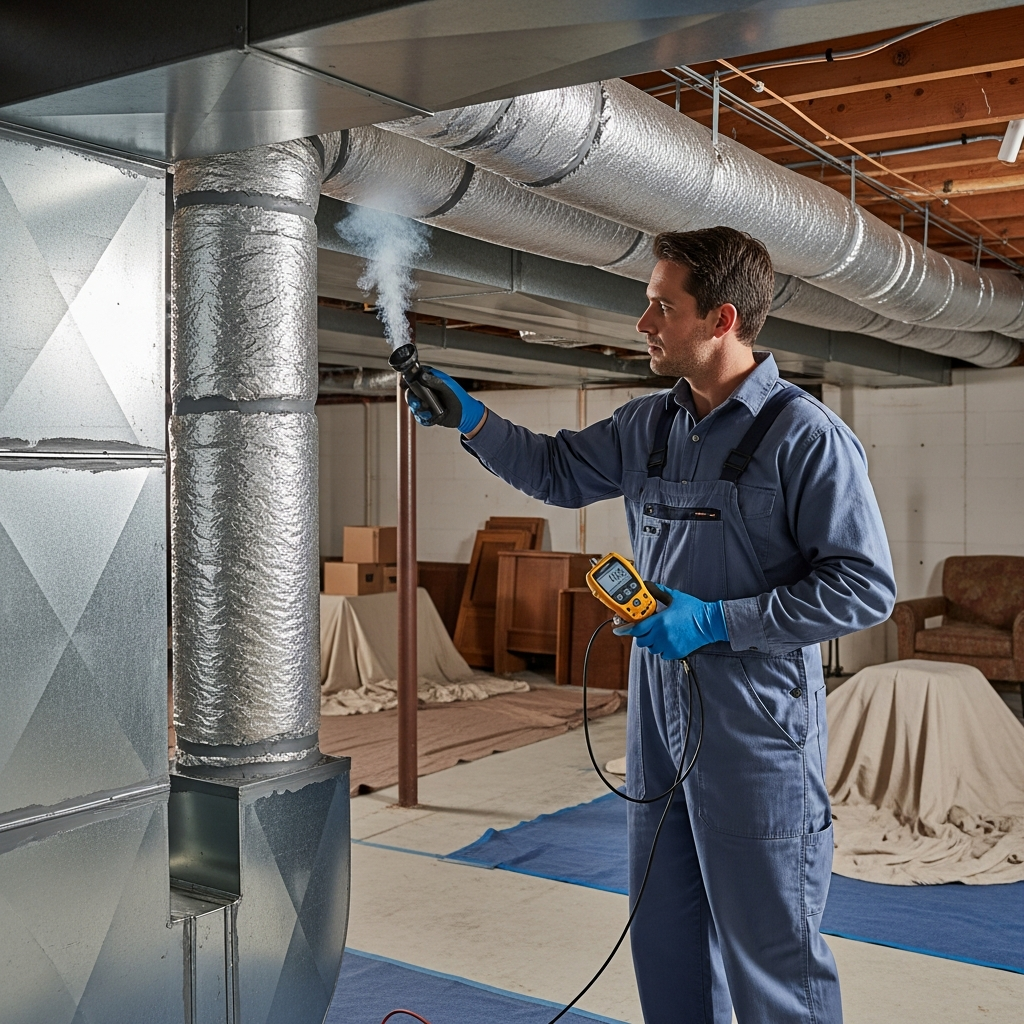
- Leak detection: Use smoke, tracer tools, or careful pressurization to spot gaps at seams and joints.
- Static pressure readings: Evaluate total external static and drop across filters, coils, and trunks to locate bottlenecks.
- Thermal scanning (when applicable): Look for temperature anomalies indicating leakage or missing insulation.
- Return-side integrity: Confirm balanced returns to prevent negative pressure issues, infiltration, and noisy operation.
These evaluations are not guesswork. They create a map of issues and a prioritized action plan. A transparent plan shows which ducts need sealing, where reinforcement is required, and whether a section should be rebuilt for lasting performance.
Materials and Methods That Matter
Clear communication includes the materials and workmanship that deliver durable results. On sheet metal, water-based mastic with fiber reinforcement at seams and elbows provides a resilient seal. On flex duct, proper inner core sealing, secure collar connections, and smooth routing protect airflow. For ductboard, compatible adhesives and properly stapled and sealed joints prevent delamination and leaks. Equally important is correct hanger spacing, straightened flex runs, and transitions sized to preserve static pressure and limit noise.
Expect technicians to describe exactly how they will handle boots, takeoffs, and plenum transitions, since these are the most common failure points. A good plan explains how returns will be tightened, how panned joists will be addressed, and how insulation will be restored or upgraded after sealing to protect temperature and condensation control.
What a Clear Proposal Should Show
A truly transparent proposal explains the work without jargon. It should outline:
- The rooms and branches to be addressed, with diagrams or photos.
- The specific tasks for each area, such as sealing, re-hanging, straightening, or replacing a section.
- The performance goals, such as quieter operation, corrected airflow to certain rooms, or reduced drafts and dust.
- The materials to be used and why they are suited to the duct type.
- The expected timeline and any access steps the homeowner should prepare for, including protection of finished areas.
- The verification process—what tests, readings, or photo proof will confirm the result.
When proposals emphasize outcomes and verification, you gain confidence that the plan addresses root causes rather than symptoms.
Somerville-Specific Considerations
Somerville homes range from classic colonials to modern townhouses. Older structures may have improvised returns or panned cavities that need proper sealing and conversion to dedicated ducted returns. Some attics have height constraints that encourage crushed flex or tight elbows, reducing airflow. Basements with mixed-use spaces may require protective measures during work, including floor covers and dust control. A transparent plan takes these local realities into account, balancing access with a clean, respectful worksite and reliable final results.
Choosing a Repair Partner
Look for technicians who invite your questions and show their reasoning. A professional should be ready to walk you through airflow readings, static pressure measurements, photos of problem areas, and the pros and cons of different solutions. If you want a quick way to orient yourself, start with a reputable local provider who can explain the difference between superficial patching and comprehensive sealing, balancing, and reconstruction where needed. Many homeowners begin by reading up on local air duct repair specialists and scheduling an in-home evaluation that includes testing and documentation.
Repair vs. Cleaning: Clarifying the Line
Cleaning can remove dust and debris, improving airflow marginally in some cases. But when ducts are leaking, crushed, or poorly connected, cleaning alone will not solve temperature swings or whistling noises. Repair steps like sealing seams, correcting transitions, and rebuilding collapsed sections are necessary to restore performance. In many homes, a combined approach is best: remove debris that could move downstream, then complete sealing and balancing so the clean system delivers the right volume of conditioned air to each room.
Red Flags to Watch For
Transparency also means spotting warning signs. Be wary of vague promises, lack of testing, or pressure to make a decision without clear documentation. Insist on before-and-after photos, understandable test results, and a description of how success will be verified. If a plan glosses over problem areas or uses generic language without specific tasks, ask for clarification before approving the work.
After the Work: Verification and Maintenance
When the job is complete, expect a walkthrough. Registers that once felt weak should now deliver steadier airflow. Noises from leaky returns should diminish. The contractor should review test results, show photos of sealed joints and corrected transitions, and explain any balancing adjustments made to fine-tune comfort. Ongoing maintenance—filter changes, occasional visual checks in accessible areas, and awareness of household changes like remodels—helps preserve performance gains.
Frequently Asked Questions
-
How long does a typical repair visit take? Duration depends on system size and access, but a transparent plan will explain the sequence of tasks and an expected timeline before work begins.
-
Do I need to be home during the appointment? It is helpful, especially for the pre-work walkthrough and the final verification so you can see results and ask questions.
-
Will my home be dusty? Professionals use floor protection, containment where needed, and tidy work practices. Ask how they protect finished areas and what cleanup steps they follow.
-
What if the technician finds additional issues? A transparent provider will document anything unexpected and explain options before proceeding.
-
Can repairs improve indoor air quality? Yes. Sealing returns, fixing leaks, and correcting airflow reduce infiltration and help your filtration work as intended.
-
What about older homes with limited access? Experienced teams plan for tight spaces, using specialized tools, carefully staged work, and clear communication about what is feasible.
-
How will I know the work was successful? Verification may include airflow readings, static pressure checks, smoke testing at previous leak points, and photo documentation of corrected areas.
Get Started With a Clear Plan
Transparent repair is about evidence, not guesswork. If your Somerville home has uneven temperatures, noisy returns, or rooms that never feel quite right, it may be time to examine the ductwork with a methodical, results-driven approach. Connect with a trusted local expert to assess conditions, explain the plan, and verify outcomes. For helpful next steps and a professional evaluation focused on clarity and results, explore local air duct repair options and schedule a convenient in-home visit.
