
Welcome to Your Somerville Air Duct Repair Guide
From historic homes near Main Street to newer builds on quieter side roads, Somerville, New Jersey offers a range of housing that shares one common need: reliable ductwork that keeps conditioned air moving efficiently and cleanly. This comprehensive homeowner’s guide explains how ducts function, the warning signs of trouble, and the most effective strategies to repair and maintain your system. If you are noticing uneven room temperatures, higher-than-usual energy use, or air that feels dusty even after regular cleaning, it may be time to take a closer look at your ducts—or to schedule expert air duct repair to restore comfort and performance.
Because Somerville experiences hot, humid summers and chilly winters, any inefficiency in your duct system has year-round consequences. Poorly sealed joints, crushed flexible ducts, or failing insulation can force your HVAC equipment to work longer and harder, affecting comfort in bedrooms and living areas while increasing wear on components. Understanding the fundamentals of air distribution empowers you to spot problems early and choose the right remedy, whether that is a quick DIY fix or professional diagnostics.
How Ducts Move Air—and Where Things Go Wrong
Air ducts form a loop. The supply side delivers conditioned air from the furnace or air handler to your rooms; the return side draws indoor air back to the equipment to be filtered and conditioned again. In an ideal system, ducts are sealed, insulated where necessary, correctly sized, and supported to prevent sagging. But reality in many homes looks different: joints loosen with age, mastic dries out, foil tape detaches, flexible ducts are compressed around obstacles, and insulation deteriorates in attics or crawl spaces.
When air escapes through leaks, less reaches your rooms. That leads to uneven temperatures, longer run times, and sometimes whistling or rattling noises. Returns that leak in basements or crawl spaces can draw in dusty, unconditioned air, aggravating allergies and causing more frequent filter changes. The good news is that many of these problems can be identified with a careful inspection and corrected with tried-and-true repair methods.
Signs Your Somerville Home Needs Duct Repair
Strong indicators include hot or cold spots from room to room, a noticeable drop in airflow at supply registers, a layer of dust forming shortly after cleaning, or strange smells when the system starts. You may also hear air movement even when vents seem closed, or feel air blowing from a seam you can reach. Visual cues like dark streaks of dust around joints and transitions point to leakage. In attics, look for crushed or kinked flexible ducts and gaps where insulation has split open at bends.
Changes after a remodeling project also merit a review. If walls were moved, a bathroom was added, or storage was placed in the attic, ducts might have been displaced or compressed. Finally, if your utility usage has climbed compared to last year despite similar thermostat settings and weather, air distribution issues may be to blame.
DIY-Friendly Repairs vs. Professional Help
Plenty of duct issues are within a careful homeowner’s capabilities: resealing a loose joint with mastic, securing a flexible duct to a collar with a proper clamp, replacing a short crushed segment, or reinsulating a small run in the basement. The keys are safety, patience, and using HVAC-rated materials that withstand temperature changes and airflow.
However, large or systemwide problems demand professional attention. If you suspect extensive leakage, significant rust, signs of pests, or mold-like growth, call a qualified Somerville technician. Professionals can test static pressure, inspect hidden runs with cameras, and perform comprehensive air duct repair that addresses root causes rather than spot symptoms.
Planning an Inspection: A Room-by-Room Strategy
Start where your comfort complaints are strongest. Note rooms that feel persistently stuffy or drafty and record the register airflow with your hand. Then move to the mechanical room and follow the main trunk outward, inspecting transitions, elbows, and branch connections. Pay close attention in basements where metal ducts meet the floor joists and in attics where insulation can slip around corners. Photograph each area you plan to repair, and label problem zones with a permanent marker for easy reference.
Check that return grilles are not blocked by furniture and that filter access panels are sealed. An unsealed filter slot can bypass filtration and pull unconditioned air into the system, exacerbating dust problems throughout the house.
Sealing and Securing Joints
After cleaning dust and residue from the seam, brush on HVAC mastic to create an air-tight seal. For gaps larger than hairline, embed fiberglass mesh tape into the wet mastic and then apply another coat. Where two metal sections meet, add sheet metal screws before sealing to tighten the connection. If you need to use foil-backed HVAC tape, treat it as a protective wrap over mastic or for securing insulation jackets—not as a replacement for mastic on pressure-bearing seams.
At flexible duct connections, ensure the inner liner is fully seated over the metal collar and secured with an approved clamp or strong zip tie. Seal the joint with mastic, then pull the insulation and jacket over the connection and close it with foil tape to maintain a continuous thermal barrier.
Straightening and Replacing Flexible Duct Runs
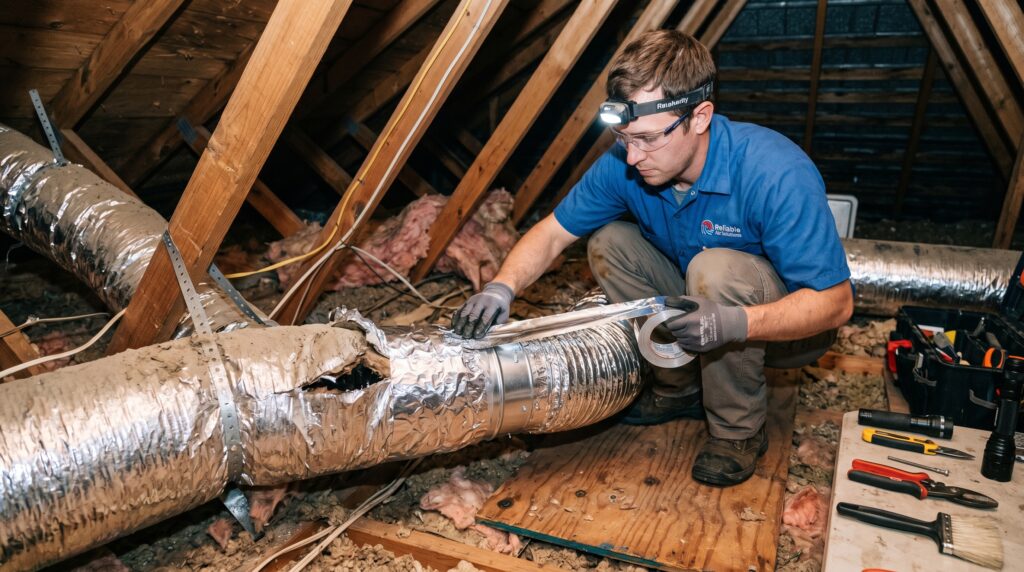
Airflow suffers when flexible ducts bend sharply, snake around obstacles, or collapse under storage boxes. In attics or crawl spaces, gently straighten runs and support them at regular intervals to remove sags. If a segment is crushed or the inner liner is torn, cut out the damaged section and install a new piece with appropriate connectors. Keep runs as short and direct as possible, with wide, gradual turns.
When replacing segments, match insulation levels to local expectations for unconditioned spaces. Insulation helps prevent condensation in the summer and heat loss in the winter—both of which are regular concerns in Somerville’s climate.
Insulating Ducts in Basements and Attics
Any duct outside the conditioned envelope should be insulated to maintain supply air temperature and reduce condensation risk. Where you find missing or deteriorated wrap, measure and reinstall new insulation carefully so seams are snug without compression. Seal the outer jacket with foil tape to prevent gaps at turns or transitions. Remember that insulation complements but does not replace air sealing. Seal first, then insulate for the best result.
In basements with higher humidity, consider monitoring the area with a hygrometer. While not part of the duct itself, managing background moisture helps preserve metal surfaces and tape adhesives over time.
Noise Reduction Tips
Rattles and whistles are often signs of loose connections or restricted airflow. Tighten hangers, secure seams with screws and mastic, and verify that dampers are open where needed. Avoid compressing flexible ducts with insulation or storage. If booming or popping persists at start-up, you may be dealing with static pressure issues best evaluated by a professional who can confirm that the blower, filter, and duct sizing are in harmony.
Once sealing is done, you might be pleasantly surprised by how much quieter and smoother the system operates, particularly during temperature swings at the start and end of each cycle.
Verifying Improvements
After repairs, run the system and revisit problem rooms. Feel for airflow at registers and check for new or lingering noises. Use a smoke pencil near previously leaky seams to ensure your seals are tight. Reinspect insulation seams a few days later to confirm that adhesives have cured and nothing has shifted. If you want a quantified assessment, ask a local pro about duct leakage testing or static pressure measurements to validate results.
Seasonal Maintenance for Long-Term Reliability
Replace filters according to your equipment’s recommendations and keep returns clear of furniture and rugs. After any attic storage changes or renovation work, do a quick visual check of nearby ducts. Document your repairs with pictures and notes, including dates and materials used. This record helps future technicians and serves as a valuable reference if you sell your home, demonstrating that your system is well cared for.
Pay special attention at the turn of the seasons. In spring, check attic insulation and jackets before humidity rises. In fall, inspect basement runs as temperatures cool and condensation patterns shift. Small checkups twice a year can prevent small gaps from turning into bigger issues.
Somerville-Specific Considerations
Many Somerville homes feature basements with mixed-use spaces—laundry, storage, and mechanical areas share square footage. That combination often means ducts are exposed to moving boxes, ladders, and tools, increasing the chance of accidental bumps and minor disconnections. In neighborhoods with mature trees, pollen and leaf debris can contribute to dust loads at returns. Addressing leaky returns and maintaining proper filtration go a long way toward keeping indoor air cleaner during peak pollen season.
Attic-accessed ductwork in capes and colonials may require careful staging with plywood for safe footing. Always prioritize safety over speed, particularly in summer, when attic temperatures soar.
Frequently Asked Questions
Q: How often should ducts be inspected? A: Perform a visual check at least once or twice a year, and after any home project that could have disturbed duct paths.
Q: What materials are best for sealing? A: HVAC mastic is the gold standard for sealing seams and joints. Reinforce larger gaps with fiberglass mesh tape and use foil-backed HVAC tape as a protective outer wrap or for securing insulation jackets.
Q: Can DIY repairs void equipment warranties? A: Basic sealing and insulation typically do not, but always review your warranty documents. Avoid modifications to equipment cabinets or controls unless done by a licensed professional.
Q: Why are some rooms still uncomfortable after repairs? A: Persistent issues can stem from design limitations, such as undersized ducts, incorrect trunk layout, or equipment mismatches. Professional testing can pinpoint the underlying cause.
Q: Are there warning signs of return-side leaks? A: Excess dust, musty odors, and visible gaps near filter access panels often signal return leaks that pull unconditioned air into the system.
Take the Next Step Toward Consistent Comfort
Armed with this guide, you can address minor leaks, crushed segments, and insulation gaps with confidence—and know exactly when a deeper evaluation is warranted. When you want a thorough assessment, targeted sealing, and lasting improvements performed by local experts, schedule professional air duct repair and feel the difference throughout your Somerville home.
PREVIOUS: Air Duct Repair Cost in Somerville, New Jersey Breakdown
