
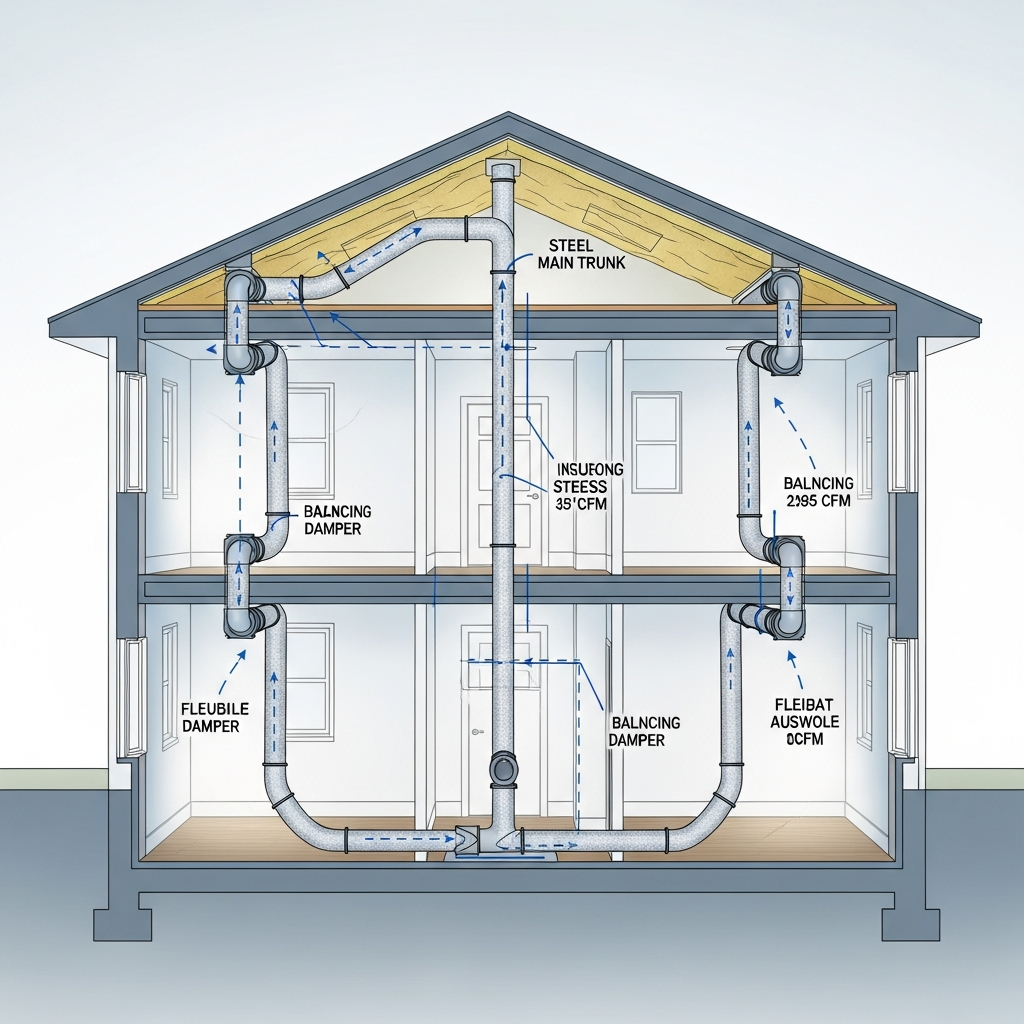
Homeowners in Somerville, New Jersey often ask what drives the overall investment when planning a new residential duct system. While it is natural to focus on a single bottom line, the smarter approach is to understand the factors that shape that outcome. By examining home size, layout complexity, material choices, accessibility, testing and commissioning needs, and code considerations, you can anticipate the scope of work and prioritize the qualities that matter most: quiet operation, even temperatures, and dependable airflow. If you are seeking a guided path from evaluation to commissioning, consider partnering with a local specialist in air duct installation who can translate your home’s details into a clear, step-by-step plan.
Discussing “cost” without numbers can still be highly practical. Rather than guessing, you can define the variables, make informed choices, and prevent expensive rework later. A well-designed duct system tailored to your home’s load requirements often reduces energy waste, noise, and equipment strain. That, in turn, can reduce service headaches and create a more comfortable, healthier indoor environment for years.
Home size and room-by-room load requirements
Larger homes typically require more total airflow and a longer network of trunks and branches. But it is not only square footage that matters. Room orientation, window quantity and type, insulation levels, ceiling heights, and usage patterns all affect how much heating and cooling each room needs. Accurate load calculations translate these factors into a target airflow (cfm) for each space. Systems designed around measured needs perform better than systems that copy pre-existing ductwork or rely on rules of thumb.
Even in smaller homes, unique features such as vaulted ceilings, sunrooms, or finished attics can change how ducts should be routed and sized. When the duct layout respects real room loads, it avoids over-supplying some spaces and starving others, improving comfort and reducing noise.
Layout complexity and accessibility
Somerville’s housing stock ranges from classic homes with tight framing to modern builds with accessible mechanical chases. The more obstacles between the air handler and your rooms, the more careful routing, transitions, and fittings are required. Work in attics, basements, or crawlspaces adds considerations for insulation and condensation control. Hard-to-reach areas can require additional planning, temporary protective measures, and meticulous sealing to ensure durability after the space is closed up.
Two-story layouts, additions over garages, and rooms over crawlspaces frequently demand special attention. Strategic placement of trunks, the use of long-radius fittings, and properly supported short flex runs can simplify complex routes while preserving airflow and keeping the system quiet.
Material selection and fittings
Residential systems often combine materials: rigid sheet metal trunks for predictable airflow and carefully installed flex runs for final connections to diffusers. Duct board can be used for plenums or trunks where sound attenuation is desired. The right combination depends on your design goals, static pressure budget, and access limitations. High-quality mastic, UL-181 tapes, hangers, and insulated boots are small components that play a large role in long-term performance.
Fittings determine how much pressure the fan must overcome. Long-radius elbows, smooth reductions, and well-angled wyes keep air moving with less turbulence and less noise. Shortcuts—such as tight, crimped bends or abrupt transitions—can increase friction and reduce delivered airflow, especially in rooms near the end of a run.
Insulation, air sealing, and condensation control
When ducts pass through unconditioned spaces like attics or crawlspaces, both insulation and air sealing are crucial. Insulation slows heat flow, while airtight joints prevent losses and infiltration of dusty or humid air. In cooling seasons, uninsulated or poorly insulated ducts can sweat, leading to moisture issues and damaged finishes. A well-executed residential system in Somerville accounts for local humidity and temperature swings by pairing the right insulation levels with thorough sealing verified by pressure testing.
Filtration, indoor air quality, and noise
The filter you choose influences resistance to airflow and, therefore, how your ducts and equipment must be configured. A high-performance media filter offers cleaner air but typically introduces more resistance, which the duct design must accommodate. Return-side strategies—such as larger return drops, multiple returns, or lined return trunks—can lower noise while supporting good filtration. Diffuser and grille selection also matters; aim for devices that spread air comfortably without drafts or whistles.
If anyone in your household is sensitive to dust or allergens, pay particular attention to return airtightness. Leaks on the return side can draw particles from attics or crawlspaces into the airstream, undermining your efforts to improve air quality.
Local codes, permits, and inspection expectations
Somerville follows building and mechanical codes that set minimum standards for materials, insulation levels, fire safety, and support spacing. In many cases, residential work requires permits and inspection. Passing inspection is easier when the design, installation, and documentation line up with code expectations. Proper clearances around the air handler, sealed penetrations, correct fire-blocking, and labeled dampers are details that help your project proceed smoothly.
Planning for inspections also supports long-term performance. For example, providing access to filters, coils, and key junctions reduces the risk that maintenance will be neglected, which protects comfort and equipment life.
Testing, balancing, and commissioning
Great ductwork is measured, not guessed. After installation, pressure testing reveals leakage points so they can be sealed. Airflow measurements at registers confirm that each room gets the intended cfm. Adjusting dampers and fan settings during balancing closes the gap between design and real-world performance. Commissioning verifies temperature splits, condensate management, and quiet operation under normal conditions. Skipping these steps often leaves comfort and reliability on the table.
Midway through your planning, it can be helpful to have a professional reality check. A seasoned Somerville contractor who regularly performs air duct installation can validate assumptions, refine layouts, and anticipate inspection points so the final system meets expectations the first time.
Phased projects and additions
Home improvements often happen in phases. If you are finishing a basement now and planning a second-floor remodel later, design with the end in mind. Stubbing out future trunks or reserving space for returns can prevent disruptive rework. Documenting damper positions, register sizes, and measured airflows makes later modifications easier and protects the performance you achieve today.
Common pitfalls to avoid
Copying old ductwork sizes without verifying loads frequently results in rooms that are too hot in summer or too cold in winter. Over-reliance on long flex runs, crushed or kinked bends, and undersized returns are other common issues. Rushing sealing and insulation can cause future moisture or comfort problems. Skipping testing and balancing is another frequent mistake; it is difficult to fix distribution problems after ceilings and walls are closed.
FAQ
Q: What is the biggest driver behind residential duct system scope? A: Layout complexity and accessibility often have the largest influence, because routing around framing and finishes affects materials, fittings, and time required to achieve airtight, quiet performance.
Q: How do I plan for good indoor air quality? A: Pair effective filtration with airtight return ducts and well-sealed boots to the building envelope. Avoid returns near pollutant sources and confirm that filters can be changed easily.
Q: Can I keep my existing registers? A: You can if they are properly sized and in good condition, but many older registers are restrictive or noisy. Upgrading can improve comfort and reduce sound.
Q: Why are testing and balancing so important in homes? A: Residential comfort depends on getting the right airflow to each room. Measuring leakage and register cfm, then adjusting dampers, ensures that design intent becomes reality.
Q: What happens if returns are undersized? A: The system can become noisy, equipment works harder, and rooms may experience pressure imbalances. Providing adequate return paths is essential for comfort and longevity.
Move forward with confidence
Whether you are renovating a Somerville cape or building an addition to a colonial, you can set expectations by focusing on design quality, airtight installation, and measured results. When you want expert guidance from assessment to commissioning, connect with a local team experienced in residential air duct installation so your home enjoys quiet comfort, steady temperatures, and reliable airflow through every season.
