Installing air ducts in Somerville, New Jersey involves more than craftsmanship and airflow math. It also requires attention to permits, inspections, and code-driven details that ensure safety, efficiency, and long-term reliability. This guide explains the typical requirements that apply to residential duct installations and how to navigate them smoothly. You will learn what documents to prepare, which details inspectors commonly check, and how to coordinate design, sealing, and insulation so your system passes on the first try. If you want professional assistance from design through inspection, consider consulting a local provider of air duct installation to align code compliance with comfort goals from day one.
Understanding the Regulatory Landscape
Duct installations are generally governed by adopted mechanical codes and local amendments. Requirements address safe clearances, materials, fastening methods, support spacing, fire-blocking, and air sealing. Inspectors also look for proper insulation and vapor barriers where ducts pass through unconditioned spaces, as well as documentation that verifies sizing and design intent. While specifics can vary, the overall goal is consistent: a safe, durable system that delivers design airflow without causing noise, moisture issues, or equipment stress.
When a Permit Is Typically Required
Most jurisdictions require a permit when installing new duct systems, replacing substantial portions of existing ductwork, or relocating equipment and major trunks. Minor repairs may be exempt, but always verify. Permit applications often ask for a scope description, basic drawings, and, in some cases, load calculations or equipment specifications. Submitting complete, legible documents shortens review time and reduces the chance of revision requests.
Documentation That Speeds Approval
- A plan view drawing showing trunk routes, branches, and return locations
- Room-by-room airflow targets with duct sizes and lengths
- Equipment data, including airflow capacity and external static pressure limits
- Details on insulation levels and vapor barrier continuity
- Notes on support spacing, fastening methods, and sealing products
- Photos of existing conditions when work involves integration with old ducts
Key Installation Requirements Inspectors Emphasize
- Support spacing that prevents sagging and does not crush ducts
- Sealing of all seams and joints with mastic and UL 181-rated foil tape
- Proper use of long-radius elbows and smooth transitions to reduce noise
- Insulation and vapor barriers in attics, crawlspaces, or unconditioned basements
- Fire-blocking at penetrations and sealed building cavities used as returns (if permitted)
- Accessible balancing dampers and filter cabinets with tight seals
- Correct clearances from combustibles and service access at equipment
Common Plan Review Questions and How to Address Them
- Are returns sized generously enough to keep static pressure within limits? Provide calculations and grille free area data.
- Do branch lengths or fittings create excessive resistance? Show long-radius elbows and short, direct runs in your drawings.
- Will ducts in unconditioned spaces be insulated appropriately? Specify R-values and vapor barrier details.
- How will vibration and noise be controlled? Note flexible connectors and diffuser selection.
- Are balancing dampers and service points accessible after finishes? Indicate access panels and locations.
Inspections: Rough-In and Final
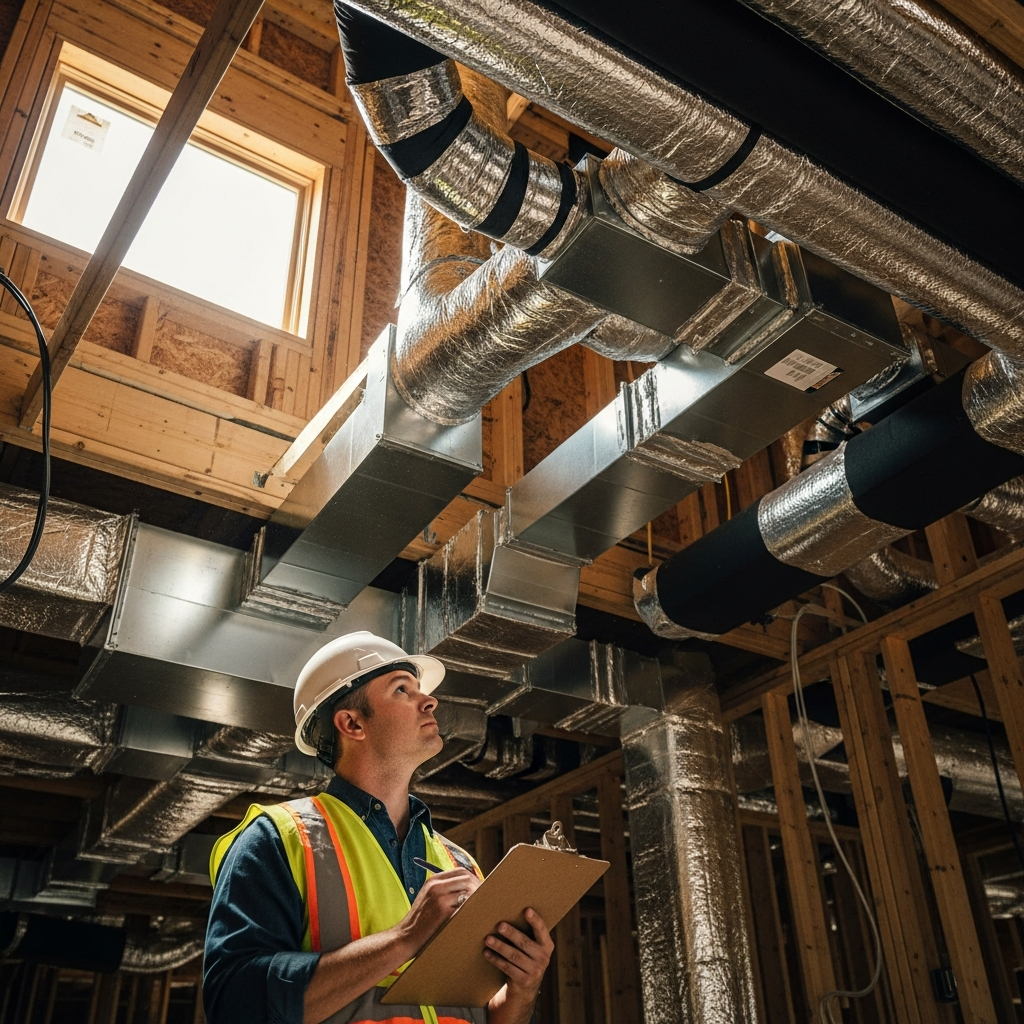
Rough-in inspections typically occur before drywall or insulation conceal ducts. Inspectors verify support spacing, sealing progress, register placements, and return strategies. Any issues are easier to correct at this stage. Final inspections confirm that boots align with finished surfaces, dampers are accessible, insulation and vapor barriers are continuous, and equipment tie-ins are sealed and supported. Having photographs of concealed work and a simple commissioning report often speeds the sign-off.
Coordination with Other Trades
Many permit and inspection challenges arise at overlaps between trades. Coordinate with framing to secure chases or soffits, with electrical to avoid conflicts in shared cavities, and with insulation contractors to protect vapor barriers. Good coordination helps avoid field changes that can trigger additional reviews or re-inspections.
Mid-Project Compliance Checks
Before you close walls, conduct an internal audit: confirm duct sizes, support intervals, and sealing coverage. Verify that return paths are unobstructed and that dampers remain accessible. If anything deviates from the plan, document the change and provide an updated sketch. Homeowners who prefer extra assurance often bring in third-party testers for duct installation services in Somerville to measure airflow and static pressure so final balancing proceeds smoothly and inspection questions are answered with data.
Homeowner Responsibilities and Best Practices
- Keep permit documents and revisions on site and accessible.
- Maintain clear access to mechanical spaces and return grilles for inspections.
- Label dampers and branches for easy identification.
- Photograph concealed ducts, supports, and sealing before they are covered.
- Schedule inspections with adequate lead time to avoid project delays.
Passing on the First Try: Practical Tips
- Seal every seam with mastic and use the correct foil tape; avoid cloth or unlisted tapes.
- Provide generous returns and verify grille free area aligns with airflow targets.
- Use long-radius elbows and avoid abrupt transitions that cause noise.
- Insulate fully in unconditioned spaces and keep vapor barriers unbroken.
- Protect ducts during construction to keep interiors clean.
- Document commissioning results to demonstrate performance.
Frequently Asked Questions
Q: Do all duct installations require a permit? A: Many new or substantially modified systems do, but small repairs may not. Always confirm specific thresholds with your local authority before beginning work.
Q: What happens if I skip the permit? A: You risk failed inspections later, complications during home sale, and potential safety issues. Unpermitted work can lead to fines or require opening finished areas to verify compliance.
Q: Which details do inspectors flag most often? A: Insufficient sealing, missing or crushed supports, undersized returns, and gaps in insulation or vapor barriers are common findings. Planning and mid-project checks prevent most of them.
Q: Do I need drawings even for a simple replacement? A: A basic sketch with sizes, lengths, and airflow targets helps reviewers and installers stay aligned and shortens on-site decision making.
Q: How does documentation help after the job? A: Photos and commissioning data create a reliable baseline for service technicians, simplify future upgrades, and can reassure buyers during resale.
Q: Can building cavities be used as returns? A: Only where permitted and when sealed and fire-blocked properly. Dedicated return ducts often deliver cleaner, quieter results and may simplify inspections.
Move Forward with Confidence
With a well-prepared permit package, clear drawings, and disciplined installation practices, you can pass inspections smoothly and enjoy quiet, efficient comfort. If you want guidance at any step—or a turnkey solution—connect with a local team for professional air duct installation and bring code compliance and performance together in one successful project.
