A reliable kitchen exhaust hood cleaning checklist helps Somerville, New Jersey operators maintain safety, airflow, and code compliance day after day. Whether you manage a neighborhood pizzeria, a hospital kitchen, or a high-volume quick-service line, a clear, repeatable process prevents grease accumulation, reduces fire risk, and ensures a comfortable environment for your team and guests. This guide provides a structured way to organize daily, weekly, monthly, and periodic tasks, with practical guidance tailored to the realities of Somerset County operations. If you would rather outsource the heavy lifting, partner with local experts in kitchen hood cleaning who are familiar with NFPA 96 and the expectations of area inspectors.
Daily Essentials
Begin with basic housekeeping. At closing, wipe the interior and exterior of the hood to remove fresh film before it hardens into a stubborn layer. Check that grease cups or troughs are not overflowing, and empty them safely to avoid drips. Confirm the hood lights are working and covered with protective shields where required. Make sure switches for the exhaust system are labeled and easy for staff to access during rush periods.
Train line cooks and dish staff to recognize early warning signs that the system is not capturing smoke well, such as haze in the kitchen, increased heat near the line, or a persistent smell of grease. When staff can report small issues quickly, you can take corrective action before a minor problem becomes a costly repair or a compliance concern.
Weekly Tasks
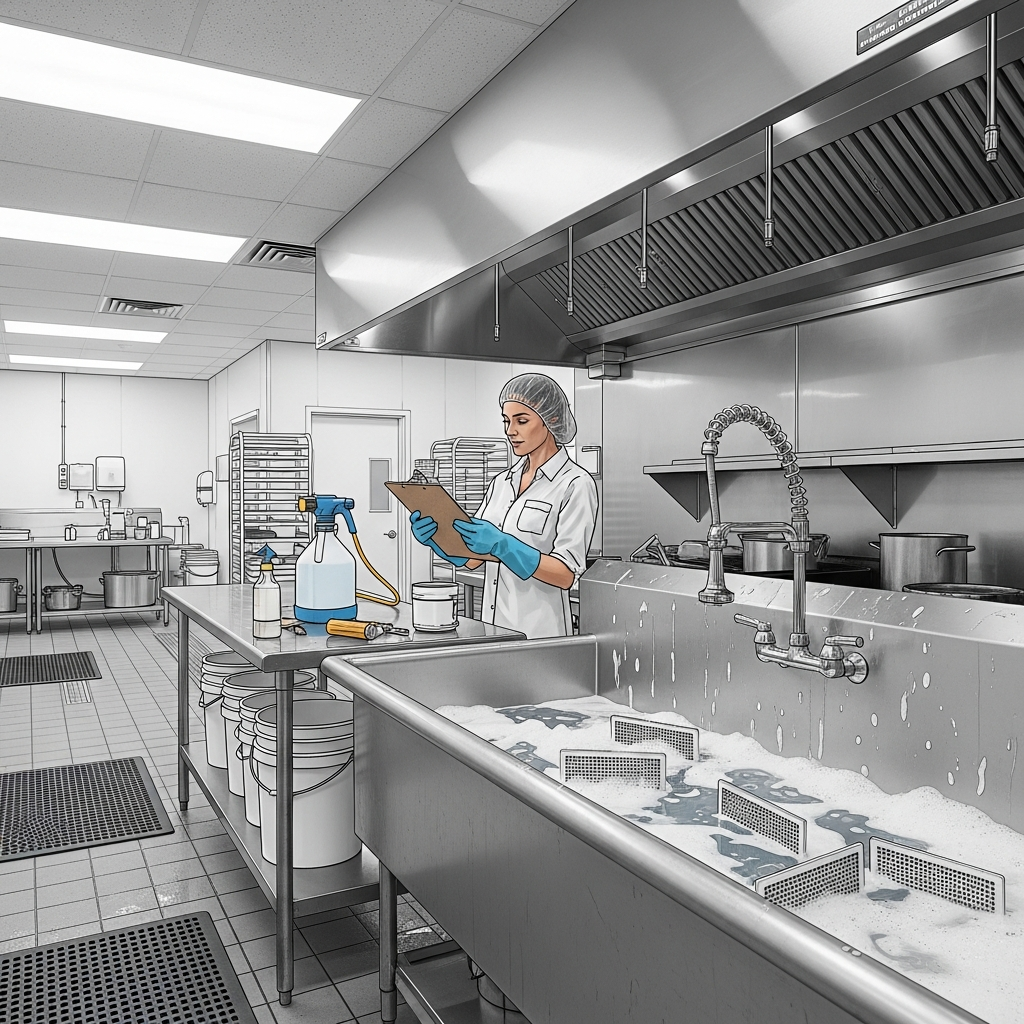
Remove baffle or mesh filters and wash them thoroughly in hot water with a commercial degreaser. A dedicated sink or soak tank makes this step more efficient and keeps other kitchen operations flowing. Inspect filter frames for warping and verify they seat snugly in the hood to maintain capture efficiency. Clean the underside of the hood, the plenum, and the surrounding stainless surfaces where overspray and splatter accumulate.
Take time to inspect the exhaust fan performance from inside the kitchen. Turn the fan on and listen for rattling, squealing, or uneven speeds that may signal worn belts or alignment issues. Note anything unusual so you can evaluate the fan more closely during your scheduled deep cleans.
Monthly or Periodic Cleaning
Depending on your cooking volume, step up to a more thorough cleaning monthly or quarterly. This includes degreasing the hood plenum, accessible duct sections, and, when safe and feasible, the fan housing. Set up protective plastic sheeting over appliances and floors, and have absorbent pads handy. Remove and soak filters while you address the plenum. Apply a commercial degreaser, allow appropriate dwell time, and agitate with nylon brushes. Wipe residue thoroughly and repeat until the metal is clean to the touch.
If your ductwork has access panels, open them and degrease the interior within safe reach. Use proper containment to manage any rinse water or residue. Note any sections that you cannot reach or that lack panels. Record these details so you can plan corrective work or schedule a professional service to maintain compliance. In many Somerville kitchens, rooftop fan cleaning requires a hinge kit and grease containment system; plan for these components to protect the roof and to make service safer.
Quarterly Planning and Documentation
Even when daily and weekly work runs smoothly, documentation is essential. Keep a log of cleaning dates, staff assigned, and work completed. Photograph heavy grease areas before and after significant cleaning to demonstrate progress and compliance. Place a dated tag on or near the hood after each periodic cleaning to make inspection conversations simple and straightforward.
Use your quarterly review to evaluate staff training needs, equipment repairs, and whether your cleaning frequency still fits your cooking volume. If you have expanded hours, added menu items with higher grease output, or noticed more frequent smoke events, increase the cleaning cadence accordingly. Staying ahead prevents emergency shutdowns and protects your team and guests.
Somerville-Specific Considerations
In Somerville, inspectors expect evidence that your system is being maintained according to NFPA 96. That includes proper access to ductwork, a hinge kit on the rooftop fan, and functional grease containment. If your operation occupies a multi-tenant building, coordinate access scheduling and rooftop protection with property management to avoid service delays. Maintain a good relationship with your fire suppression service provider so that your hood cleaning schedule aligns with suppression inspections and testing.
Signs It Is Time to Call Professionals
Bring in experts when ducts are long, access is limited, or the rooftop fan lacks a hinge. Likewise, if your system has heavy, baked-on grease that resists standard degreasers, pressurized hot-water cleaning may be necessary. A qualified crew can also add access panels, install grease containment, and provide photo-documented reports to back up your compliance efforts. For many establishments, coordinating with specialists in kitchen hood cleaning during off-hours reduces disruption and helps keep the kitchen running efficiently.
Helpful Best Practices
Standardize your filter rotation to balance wear and keep airflow consistent. Assign responsibility for nightly wipe-downs and weekly filter washing to specific roles. Incorporate a brief visual check of the hood and fan into opening or closing procedures. Keep a sealed container for grease waste so you can dispose of it properly without spills. Use non-abrasive products that will not etch stainless steel or leave residues that attract more soil.
Do not neglect the exterior of the hood canopy. Residue can build on the front lip, sides, and light lenses. A clean exterior not only looks professional but also prevents drips and contamination near the cooking line. Wipe handles, switches, and nearby walls as part of your routine to maintain a safe, hygienic work area.
Frequently Asked Questions
How often should I clean my filters? In a typical Somerville restaurant, weekly filter cleaning is a good baseline. High-grease menus may require more frequent service to maintain airflow and capture efficiency.
What is the fastest way to tell if the hood is performing poorly? Increased smoke or heat at the line, lingering cooking odors, or visible grease on the plenum indicate declining performance. Schedule a deeper cleaning if basic wipe-downs are no longer effective.
Do I need to clean the ductwork myself? You can address accessible sections through panels, but full-length duct cleaning often requires specialized tools and training. Document what you accomplish and schedule professional service as needed.
Will cleaning disrupt kitchen operations? Plan cleaning during off-hours and allow for cooling time. With a good schedule, you can minimize disruption while maintaining high standards of cleanliness and safety.
How do I show compliance during inspections? Keep a written or digital log of tasks, dates, and responsible staff. Add photos after deep cleanings and tag the hood with the date to provide a quick reference for inspectors.
Putting the Checklist to Work
Create a simple, one-page version of this checklist and post it where staff can initial tasks completed each shift. Review results weekly and adjust where necessary. Small, consistent actions compound into a safer, cleaner, and more efficient kitchen, which means better morale and fewer surprises during inspections.
Ready to keep your checklist on track?
If your team needs support implementing or scaling your routine, bring in a local partner who can deliver documented results, train your staff, and schedule service around your busiest hours. Book reliable kitchen hood cleaning to protect your operation, streamline inspections, and keep your exhaust system performing at its best.
