Keeping your commercial kitchen safe, efficient, and compliant in Somerville, New Jersey begins with a well-executed hood cleaning routine. Whether you run a bustling restaurant near Main Street, a school cafeteria, or a specialty food venue, the buildup of grease in hoods, ducts, and exhaust fans is a real fire hazard and a source of poor ventilation and odors. In this comprehensive guide, you will learn how to do kitchen exhaust hood cleaning the right way, what to watch for during the process, and how to align your practice with NFPA 96 standards and local inspections. If you prefer to leave the job to professionals, consider partnering with specialists in kitchen hood cleaning who understand Somerville’s compliance landscape and operational realities.
Why Hood Cleaning Matters in Somerville
Grease vapors created during cooking rise into the hood, pass through filters, and travel into ducts and the exhaust fan. As this vapor cools, it condenses, leaving flammable residue along the way. Consistent cleaning prevents fires, supports strong airflow that helps your HVAC work more efficiently, protects indoor air quality, and keeps your establishment aligned with local health and fire codes enforced by inspectors and fire marshals in Somerset County.
Beyond safety, a clean system reduces odors, prevents smoke from spilling into dining areas, prolongs the life of your fan motor and belts, and keeps kitchen staff comfortable. Establishing a repeatable, step-by-step process is the most reliable way to achieve consistent results.
Safety First and Compliance Mindset
Before touching the system, plan to protect people, property, and food. Shut down cooking appliances and allow them to cool. Lock out and tag out electrical to the exhaust fan where applicable. Cover appliances and nearby surfaces with plastic sheeting to prevent chemical overspray and runoff. Set up clear walkways with slip-resistant mats, and have a Class K fire extinguisher accessible. Confirm you have the right degreasers, personal protective equipment, and documentation forms to record what is cleaned and by whom.
Somerville kitchens are subject to NFPA 96 best practices and local enforcement. That means keeping accessible panels in ducts, protecting roof surfaces during fan service, and placing cleaning verification tags once work is complete. If your operation’s cooking volume is high or you use solid fuel or wok ranges, you may need more frequent cleaning than a low-volume kitchen. Always document dates, areas serviced, and any deficiencies found, such as missing access panels, worn belts, or deteriorated fan hinges.
Tools and Materials You Will Need
At a minimum, gather plastic sheeting, tape, absorbent pads, a wet-dry vacuum, non-abrasive degreasers appropriate for stainless steel, food-safe polish, scrapers, nylon brushes, a low-pressure sprayer or foamer, buckets, lint-free cloths, and PPE such as gloves, eye protection, and a respirator rated for chemical mists. If you plan to clean deeper into ducts and the rooftop fan, have a secure ladder, roof protection pads, and a hinge kit for the fan if one is not already installed.
Step-by-Step Hood Cleaning Process
Power down and cool. Turn off appliances below the hood. Switch off the exhaust fan and lock out if possible. Let surfaces cool to avoid chemical flash and to make degreasing safer.
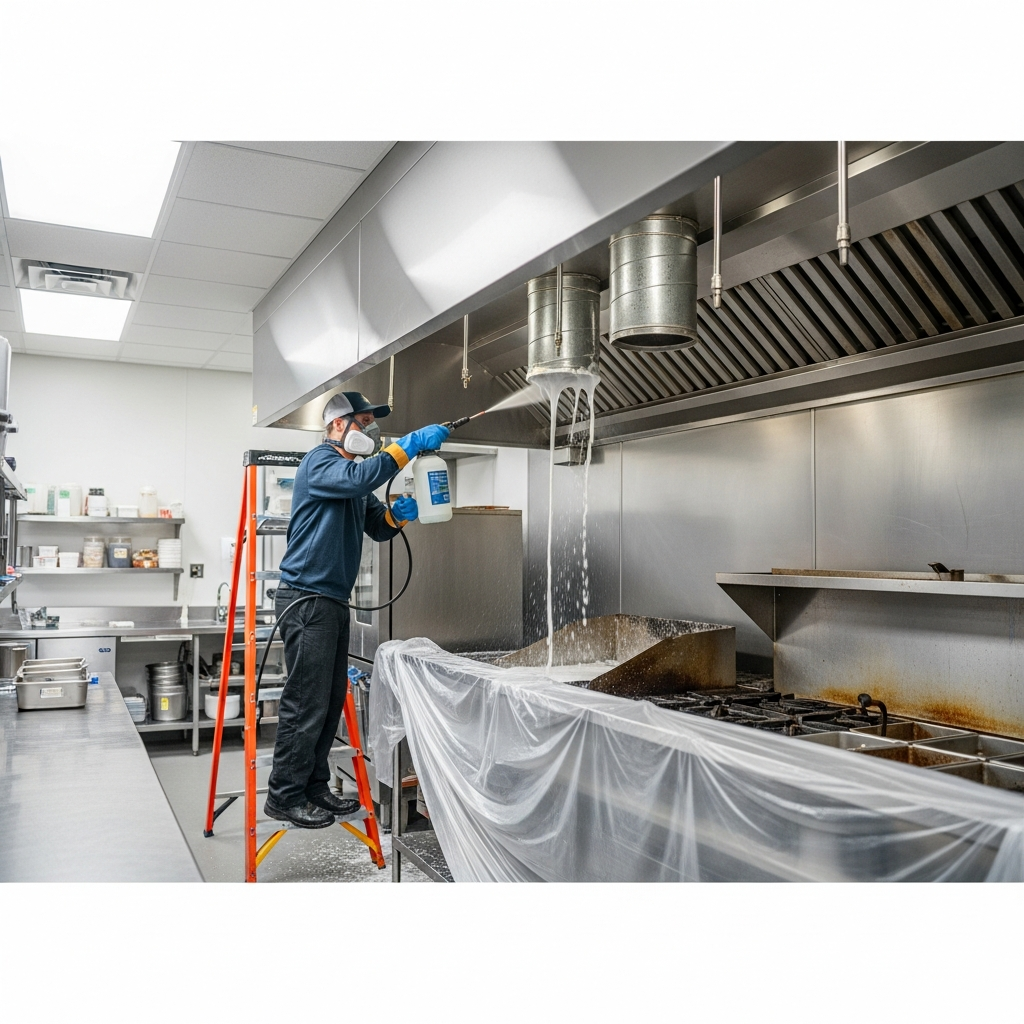
Protect the area. Drape plastic sheeting over equipment and floors. Create a funnel or channel to direct rinse water into containers if you are doing a wet process. Position absorbent pads to capture drips and prevent slippery floors.
Remove and soak filters. Slide the baffle or mesh filters out of the hood and place them in a sink or tub filled with hot water and degreaser. Soaking loosens heavy residue. Use nylon brushes to agitate. Rinse thoroughly and set aside to dry.
Degrease the hood plenum. Apply a compatible degreaser to the inside of the hood, the plenum, and behind the filters. Allow dwell time as directed by the product label, then use scrapers and brushes to remove softened grease. Wipe residue with cloths and repeat as needed until the metal surface is free of film.
Access the ductwork. If your system has access panels, remove them carefully and examine the duct interior. Use brushes and a foamer to apply degreaser up the line as far as you can safely reach. Allow dwell time, then wipe or rinse according to your containment plan. If access is limited, note this deficiency in your records and plan for installing panels to achieve full compliance.
Clean the exhaust fan. On the roof, protect the surface beneath the fan with pads. Open the fan on its hinge or carefully lift the housing. Clean fan blades, the shroud, and the curb. Remove grease from the drain port or weep holes, and ensure the grease containment device is not saturated. Inspect belts and pulleys, and verify the fan spins freely without wobble. Degrease the exterior and the discharge area where grease can accumulate.
Rinse, dry, and polish. If you used a wet method, capture all runoff with your containment system and dispose of it properly. Wipe the hood and plenum dry with lint-free cloths to avoid streaks. Apply a light, food-safe stainless steel polish to the exterior surfaces for a clean, professional finish that also makes future cleaning easier.
Reassemble and test. Reinstall the filters once fully dry. Turn the fan back on and verify strong, even airflow. Listen for unusual noises from the fan that might indicate alignment or bearing issues. Ensure lights under the hood are operational and protected by shatterproof covers where applicable.
Frequency and Scheduling
How often should you repeat this process in Somerville? It depends on the menu, hours, and volume. Heavy, high-grease cooking like deep frying or grilling may require monthly or quarterly cleaning of the full system, while low-volume or seasonal operations might follow a semiannual cadence. Create a written schedule that covers daily wipe-downs, weekly filter maintenance, and periodic full-system cleanings. Post the schedule where staff can see it, and assign responsibility to a shift lead or kitchen manager.
Common Mistakes to Avoid
Do not skip the ductwork or the fan. The most dangerous grease accumulates out of sight. Avoid using abrasive tools that scratch stainless steel and make it harder to clean next time. Never let cleaning chemicals contact pilot lights or hot surfaces. Do not forget to document your work and tag the hood with the date of cleaning. Finally, do not assume a shiny exterior means the system is safe; the danger is usually deeper inside.
Quality Checks After Cleaning
Complete a visual inspection of the hood interior, the plenum, and the duct segments you accessed. Wipe a clean white cloth along the surfaces; if it picks up a gray or brown film, there is more work to do. Inspect the rooftop area for any overspray or residue and confirm the grease containment device is in place and functional. Verify the access panels are sealed properly to prevent air leaks that reduce capture efficiency.
Documenting Work for Inspectors
In Somerville, keeping accurate records makes inspections smoother. Log the date, time, and scope of work, list the areas cleaned, and note any parts replaced, such as filters or belts. If you identified needed repairs, capture photos before and after, and track follow-up actions. Place a dated tag on the hood that includes the cleaning interval and the next due date. These steps demonstrate diligence and can speed up approvals from local authorities having jurisdiction.
When to Bring in Professionals
If your hood lacks access panels, your roof fan does not have a hinge, or your ducts travel long distances or through multiple stories, specialized equipment and training are essential. Professional crews use heated pressure washing, foamers, and custom containment to reach difficult runs and deliver verifiable, fire-safe results. They also help align your system with NFPA 96 by adding panels, hinges, and grease containment. For busy Somerville kitchens, outsourcing the heavy lifting to experts in kitchen hood cleaning can reduce downtime, protect your team, and keep you on schedule throughout the year.
Frequently Asked Questions
How do I know if my hood needs cleaning now? Look for visible grease on baffles, sticky residue around the plenum, or a smoky kitchen even with the fan on. If your last documented cleaning is past its due date, schedule service.
Can I use household cleaners on my commercial hood? It is better to use degreasers designed for commercial stainless steel and grease-laden vapors. Always follow product labels and avoid abrasives that scratch surfaces.
What about odor control? Proper degreasing of the hood, ducts, and fan reduces odor-causing buildup. Maintaining filters and ensuring strong airflow keeps cooking smells from lingering in dining areas.
Do I need to clean the fan every time? The fan and ductwork are integral to safety. If you are doing a full-system cleaning, include the fan. At minimum, visually inspect it and the rooftop containment each time.
How long does a thorough cleaning take? Duration varies with system size, grease load, and access. Plan for off-hours cleaning to avoid disrupting service and to allow for cooling and safe chemical use.
Will cleaning damage my roof? It should not. Lay down protective pads, use proper containment, and rinse and wipe surfaces thoroughly. Fan hinges keep the unit secure and protect the curb during service.
Somerville-Specific Tips
Build relationships with local inspectors by maintaining consistent records and visible hood tags. Train staff to perform daily wipe-downs and weekly filter washing to extend the life of professional cleanings. Consider seasonal spikes, such as festivals or holiday rushes, and adjust your schedule to keep pace with demand.
Conclusion
A methodical, safety-driven approach to hood cleaning protects your kitchen, your staff, and your guests. By following the steps above, documenting your work, and aligning with recognized standards, you can maintain a system that captures grease effectively and supports a comfortable work environment. If constraints or complex duct runs make the job challenging, choose a local partner who knows the territory and can prove results with photos and reports.
Ready to schedule your next service?
Protect your team, your guests, and your investment with experienced help that understands Somerville’s codes and operational needs. Contact trusted specialists for kitchen hood cleaning to book an after-hours appointment, set a recurring plan, and keep your ventilation system performing at its best all year.
