Introduction
Understanding inspection requirements is essential for any air duct installation in Somerville, New Jersey. Proper inspections verify that materials, workmanship, and safety measures meet local expectations, protecting comfort, energy efficiency, and occupant health. Whether you are renovating a single room or replacing an entire distribution system, this guide outlines common requirements, best practices for passing inspections, and documentation tips. If you decide an expert should manage the process from design through final sign-off, consider arranging professional air duct installation to streamline approvals and ensure code-aligned results.
What Inspectors Commonly Look For
While exact criteria vary by jurisdiction, inspectors typically focus on the same core principles: safe routing, airtight sealing, adequate support, appropriate insulation, and proper clearances. They also verify that fire and smoke provisions are honored where ducts pass through rated assemblies and that the system can be serviced without obstruction.
- Materials and Ratings: Duct materials, tapes, and mastics should carry appropriate listings, such as UL 181 for sealing products.
- Mechanical Fastening and Sealing: Joints should be mechanically fastened before being sealed with mastic or approved tape, with no visible gaps.
- Support and Spacing: Trunks and branches must be supported at compliant intervals. Flex should be supported with wide straps to prevent compression.
- Insulation and Vapor Barriers: Ducts in unconditioned spaces require insulation of sufficient R-value, with intact vapor barriers to prevent condensation.
- Clearances and Access: Maintain required distances from combustibles and flues, and provide space for filter changes and equipment service.
- Fire and Smoke Controls: Firestopping around penetrations and any required dampers or detectors must be in place.
- Return Pathways: Adequate returns or transfer pathways are necessary for balanced airflow and equipment performance.
Permits and Scheduling
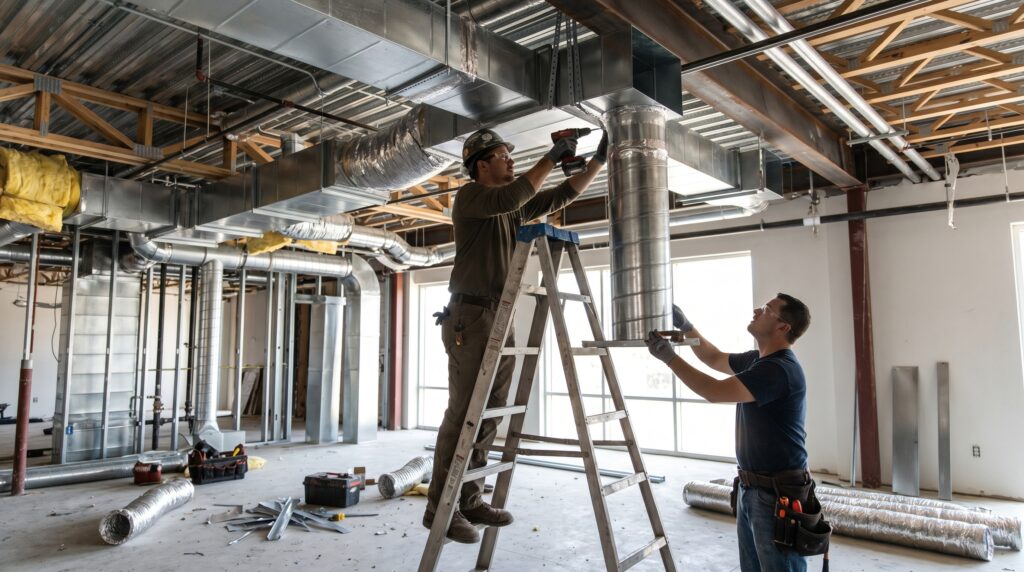
Many projects require permits, with at least two inspections: rough-in and final. Rough-in occurs before walls and ceilings are closed, allowing the inspector to see trunk lines, branches, supports, seals, and any firestopping. Final inspection typically happens after registers are installed and the system is operational. Coordinate inspections to avoid delays, and ensure someone knowledgeable is on-site to answer questions.
Documentation to Prepare
Good documentation speeds approvals. Keep the following on hand:
- Layout drawings identifying trunks, branches, registers, and returns
- Equipment specifications and blower data
- Product information for tapes, mastics, and insulation
- Pressure or leakage test results if required
- Photos of concealed transitions and supports taken prior to closure
Rough-In Inspection Focus Areas
During rough-in, inspectors verify foundational quality before finishes hide the work. Address the following points thoroughly:
- Seams and Fittings: Joints are screwed or cleated, then sealed with mastic. No loose tape tails or visible gaps.
- Supports: Hangers are correctly spaced and do not compress insulation. Flex is straight, lightly tensioned, and not kinked.
- Fire and Smoke Controls: Firestopping around penetrations is complete. Any required fire/smoke dampers are installed per manufacturer instructions.
- Clearances: Ducts maintain safe distances from chimneys, flues, and electrical equipment as required.
- Insulation Plans: For ducts in unconditioned spaces, insulation strategy and R-values are identified, even if jackets are installed later.
Final Inspection Focus Areas
At final, inspectors look for a finished system that operates cleanly and safely.
- Register Installation: Boots are sealed to surrounding finishes, and registers are secured without rattles.
- Filter Access and Labels: Clear access for filter changes, with sizes and orientation indicated.
- Balancing Dampers: Presence and accessibility of manual dampers for tuning airflow.
- Leakage and Operation: The system runs without audible leaks; airflow is consistent; no abnormal vibration is present.
- Insulation Completion: Jackets are intact with sealed vapor barriers; no exposed seams in unconditioned spaces.
Duct Leakage Testing
Some projects require a duct leakage test to confirm sealing quality. Even when not mandated, testing provides valuable insight into performance and energy efficiency. Prepare for the test by ensuring all joints are mastic-sealed, boots are sealed to finishes, and flex connections are tightened and re-sealed if necessary. Cap unused openings and verify that the air handler connections are airtight.
Common Reasons Installations Fail Inspection
Knowing frequent pitfalls helps you avoid them:
- Leaks at Takeoffs and Collars: Inadequate mastic or loose drawbands lead to measurable leakage.
- Sagging Flex: Long, unsupported runs reduce airflow and can fail support requirements.
- Poor Boot Seals: Gaps around boots allow unconditioned air to bypass registers.
- Missing Firestopping: Unsealed penetrations in rated assemblies trigger corrections.
- Insufficient Returns: Rooms without return pathways cause pressure imbalances that inspectors often flag.
- Inadequate Clearances: Ducts too close to flues or electrical gear violate safety rules.
Best Practices That Impress Inspectors
Exceeding minimums is a smart way to earn quick approvals. Focus on clean workmanship and robust documentation.
- Neat, Consistent Seals: Smooth mastic coverage at every joint, with screws fully embedded.
- Straight Runs and Gentle Bends: Long-radius elbows and smooth transitions lower resistance and noise.
- Well-Labeled Dampers: Clear labels for each branch make balancing straightforward.
- Photo Log: A brief photo record of concealed sections demonstrates diligence.
- Service Access: Obvious access for filter changes and equipment panels shows long-term thinking.
Somerville Considerations
Local climate and construction styles influence inspection details. In humid summers, inspectors pay close attention to vapor barriers and insulation on cold supply ducts routed through hot spaces. In basements and crawlspaces, supports must keep ducts level and above potential moisture. Homes with finished attics may require careful routing to maintain headroom while preserving insulation thickness over conditioned spaces.
Coordination with Other Trades
Inspections often reveal conflicts that could have been avoided with early coordination. Meet with framing, plumbing, and electrical teams to plan shared routes and avoid structural or code conflicts. Mark trunk lines on framing before installation and reserve chase space where needed. By resolving issues ahead of time, you reduce change orders and accelerate approvals.
Owner Handoff and Records
After final approval, provide the owner with a system map, damper settings, filter sizes, and maintenance tips. Clear documentation reduces future service time and helps maintain comfort across seasons. Include warranty information for materials such as tapes, mastics, and insulation.
Frequently Asked Questions
Q: Do all duct projects require permits and inspections? A: Requirements vary by jurisdiction and project scope. Many alterations and replacements do require permits and at least one inspection. Always check with your local authority before starting work.
Q: What kind of tape is acceptable? A: Look for products listed for duct sealing, such as UL 181-rated foil tapes, and pair them with duct mastic for long-term airtightness.
Q: How can I prepare for a leakage test? A: Seal every joint with mastic, secure flex connections with drawbands, and verify boots are sealed to surrounding finishes. Cap unused openings and confirm airtight connections at the air handler.
Q: Are wall cavities allowed as returns? A: Only if permitted and properly lined and sealed. Dedicated return ducts often perform better and stay cleaner.
Q: What causes inspection delays? A: Missing documentation, inaccessible work areas, unsealed penetrations, and scheduling conflicts with other trades are common culprits. Prepare early and keep the site organized.
Confidently Navigate Inspections
With careful planning, clear documentation, and neat workmanship, passing duct inspections becomes a predictable milestone rather than a hurdle. If you want a single team to manage design, installation, testing, and approvals with minimal disruption, arrange expert air duct installation and move forward knowing your project aligns with local expectations.
PREVIOUS: Air Duct Installation Maintenance Checklist In Somerville New Jersey
NEXT: Air Duct Installation How To Install In Somerville New Jersey
