After installing or upgrading a dryer vent in Somerville, New Jersey, you may still encounter issues like long dry times, damp laundry rooms, or a damper that sticks. This in-depth troubleshooting guide explains how to pinpoint and correct common problems so your system delivers safe, efficient airflow in every season. If you want a quick path to resolution without guesswork, start with local support for dryer vent troubleshooting and installation to evaluate performance, fix flawed routes, and seal weak points the right way.
Know the Symptoms
- Longer dry times: Often caused by excessive duct length, too many elbows, or lint buildup.
- Hot dryer top or cabinet: Indicates restricted airflow and heat accumulation in the appliance.
- Musty laundry room: Moist air is not being expelled efficiently, leading to humidity and odors.
- Visible lint outside: Loose joints or torn transition duct can eject lint at the termination area.
- Damper not moving: The exterior hood may be stuck due to paint, debris, or corrosion.
Initial Checks You Can Do Today
- Clean the lint screen: The simplest fix can restore a surprising amount of airflow.
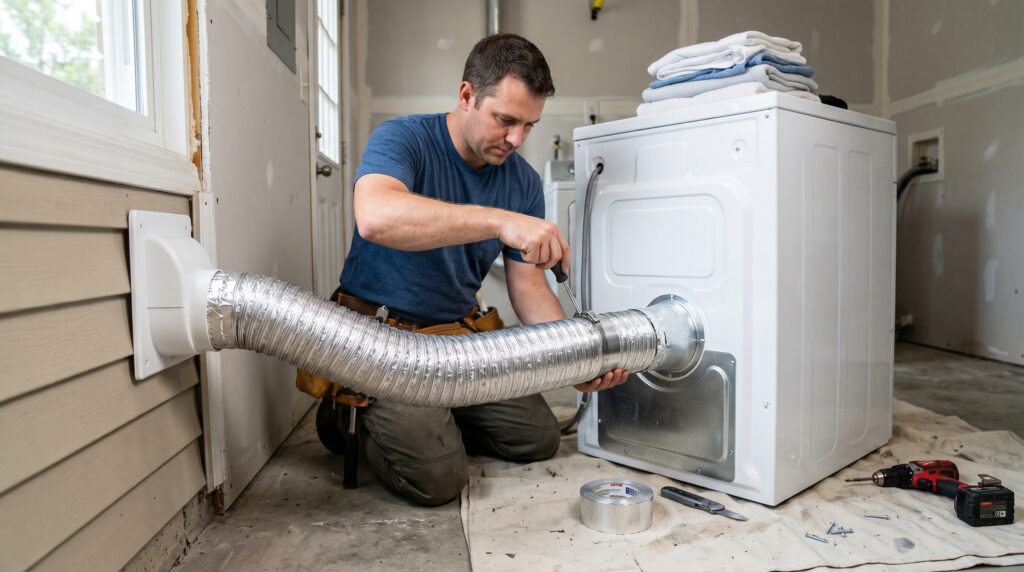
- Inspect behind the dryer: Ensure the transition duct is not crushed or kinked when the dryer was pushed back.
- Feel the exhaust at the hood: During a warm cycle, you should feel steady, strong airflow.
- Watch the damper: It should open fully when the dryer runs and close afterward to block drafts.
- Listen for rattles: Vibration may indicate loose supports or joints.
Common Installation Errors and Fixes
- Too much flex duct: Replace long runs of foil flex with rigid or semi-rigid metal to reduce friction and lint traps.
- Sharp, multiple elbows: Reconfigure bends; two 45-degree elbows can perform better than one tight 90.
- Screws penetrating the airstream: Replace with slip-fit joints, clamps, and foil-faced tape to secure and seal.
- Unsupported spans: Add metal straps and maintain a slight downward slope to the exterior termination.
- Termination with a screen: Swap for a dryer-rated hood with a backdraft damper and no screen.
Diagnosing Airflow Restrictions
Start at the appliance and move outward. Confirm the transition is short, undamaged, and properly clamped. Follow the route, feeling for cool spots or leaks that indicate escaped air. At each elbow, check for sharp kinks or misalignments. At the termination, verify the damper action and that lint is not blocking the opening. If you suspect internal buildup, a brush kit can help you sweep the duct from both ends.
Condensation and Winter Issues
In cold weather, uninsulated runs through attics or overhangs can collect condensation that drips back into the duct or wall. Solutions include adding an insulation sleeve rated for duct use, maintaining a downward slope to the exterior, and avoiding shaded wall faces that stay colder. After a freeze-thaw cycle, recheck the damper for ice-related sticking.
When Dry Times Stay Long
- Measure equivalent length: Add straight length plus elbow penalties per your dryer’s guidance.
- Shorten the route: Relocate the dryer or choose a closer wall termination if the path is excessive.
- Improve elbow geometry: Replace tight 90s with larger-radius fittings or two 45s where space allows.
- Reinforce sealing: Leaky seams lower effective airflow; reseal with foil-faced aluminum tape.
- Verify dryer health: A failing blower or heating element can mimic vent problems; cross-check with a service technician if needed.
Mid-Run Access and Cleaning
Many problems arise because sections are hard to reach. During installation or retrofit, include cleanout access at direction changes and document the route with photos. Routine brushing from both ends can keep lint accumulation under control, especially in homes with pets or heavy laundry use.
Exterior Hood Problems
- Painted-shut damper: Free the hinge, clean lint, and ensure the flap swings without resistance.
- Wind-driven backdrafts: Use a quality hood with a well-sealing damper and mount it plumb and true.
- Corrosion: Replace aging hoods with durable, weather-resistant models suited to New Jersey’s seasons.
Inspections After Renovations
Remodels and appliance swaps often shift ducts, add elbows, or squeeze clearances behind the dryer. After any project, re-verify alignment, support spacing, and the condition of the transition duct. Small changes can sharply affect total resistance and dry times.
Professional Diagnostics
If you have worked through the basics but results remain poor, it is time for a focused evaluation. A local specialist can measure airflow, assess equivalent length, and map hidden sections with inspection tools. This kind of targeted assessment can reveal pinch points, hidden lint, or make-up air deficits you might miss on your own. For peace of mind and a time-saving fix, schedule a session centered on dryer vent installation inspection so your system’s true capacity and safety margins are clear.
Frequently Asked Questions
Q: How do I know if the vent is the problem versus the dryer? A: If airflow at the exterior feels weak and improves after cleaning or reconfiguring ducts, the vent is likely at fault. If airflow is strong but clothes still take long to dry, the dryer may need service.
Q: Is a booster fan a good fix? A: Only if the equivalent length exceeds the manufacturer’s limits and the fan is rated for dryer exhaust, installed correctly, and accessible for maintenance.
Q: Can I terminate into a garage or attic temporarily? A: No. Always vent to the outdoors with a proper hood and damper.
Q: What maintenance interval is best? A: Clean the lint screen every load, check the termination monthly, and brush-clean the duct at least annually or more often for heavy use.
Q: Why does lint appear on my siding? A: Look for loose joints or a torn transition near the dryer and confirm the damper is not stuck partly open.
Q: Are screws ever acceptable? A: Avoid fasteners that intrude into the airstream. Use clamps and foil-faced tape with proper slip-fit joints.
Restore Reliable, Safe Airflow
With a methodical approach—inspect, clean, repair, and test—you can resolve most dryer vent performance problems quickly. If you want a thorough assessment, clean routing, and durable weatherproofing tailored to Somerville’s climate, connect with a local team to resolve your dryer vent installation with confidence and get back to faster, safer drying.
NEXT: Dryer Vent Installation How To In Somerville New Jersey
