A thorough inspection checklist ensures your new duct system performs as designed, meets code in Somerville, New Jersey, and provides quiet, efficient comfort. Whether you are a homeowner verifying completed work or a professional standardizing quality control, this inspection guide covers pre-installation prep, in-progress checks, and final verification. If you are early in planning, a consultation for air duct installation helps align design with these inspection benchmarks from day one.
Pre-Installation Checks
- Design documentation: Verify Manual J load calculations and a Manual D layout that specifies trunk and branch sizes, return locations, and target CFM per room.
- Equipment compatibility: Confirm blower capacity and coil pressure drop are suitable for the designed static pressure.
- Permitting: Ensure required mechanical permits are in place and inspection milestones are scheduled.
- Material selection: Inspect sheet metal gauge, duct board type, and flex duct ratings. Confirm mastic, UL-rated foil tape, hangers, and insulation R-values.
- Site preparation: Protect floors, set dust control measures, and confirm safe access to attics, basements, or crawlspaces.
Demolition and Site Safety
- Isolation: Cap or cover the air handler and returns to prevent debris entry.
- Removal: Bag debris from old ducts as needed, keep pathways clear, and stage disposal safely.
- Hazards: Identify electrical, plumbing, or structural risks. Use lockout/tagout near equipment.
Trunk Installation Inspection
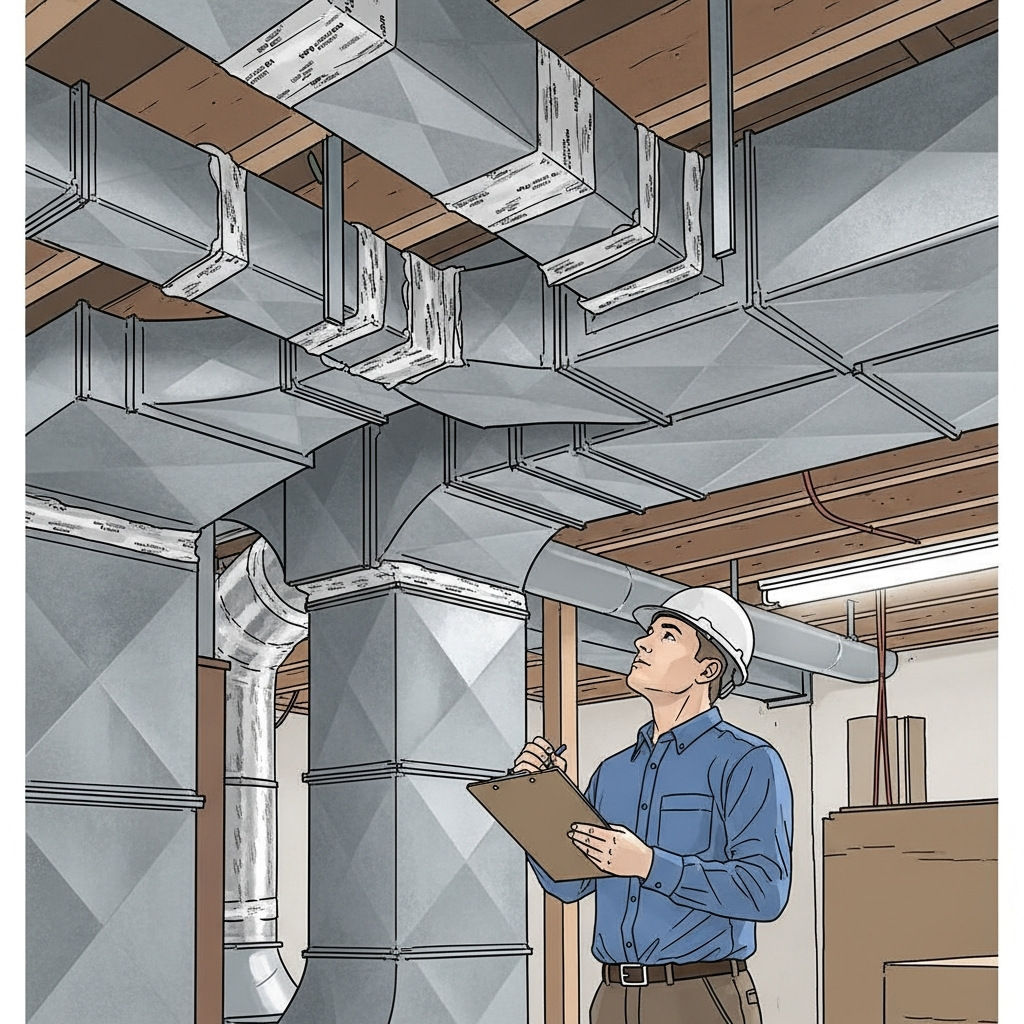
- Alignment and support: Hangers spaced per code and manufacturer guidance, trunk level and straight.
- Transitions: Smooth fittings with radius elbows where space allows, avoiding abrupt changes that raise static pressure.
- Sealing: Joints sealed with mastic or UL-rated tape; no gaps or loose seams.
- Isolation: Vibration pads where ducts connect to air handler or building structure to reduce noise transfer.
Branch Runs and Takeoffs
- Layout: Branches routed to minimize sharp bends and long runs.
- Connections: Mechanical fasteners and sealant at collars; inner liners of flex secured before insulation.
- Support: Flex duct supported at correct intervals; no kinks, compression, or sagging.
- Dampers: Manual balancing dampers accessible and labeled for future adjustments.
Supply Boots and Returns
- Boot sealing: Mastic or foam seal at boot-to-subfloor/ceiling interfaces to prevent leakage into cavities.
- Register placement: Orientation supports proper throw and spread without drafts.
- Return sizing: Adequate return area on each level to reduce noise and maintain blower efficiency.
Insulation and Vapor Control
- Coverage: Insulation installed continuously in unconditioned spaces; no bare sections at elbows or transitions.
- R-values: Meet or exceed New Jersey code.
- Condensation control: Inspect for potential cold spots; verify vapor retarders are properly oriented where required.
Fire and Penetration Sealing
- Penetrations: Seal gaps where ducts pass through framing; use fire-rated sealants as required.
- Clearances: Maintain safe separations from combustible materials and electrical components.
Controls and Thermostats
- Wiring: Neat, labeled wiring to dampers and control panels where zoning is used.
- Placement: Thermostats away from direct sun, drafts, or supply registers.
- Programming: Verify schedules and setpoints; confirm fan profiles on variable-speed handlers.
Testing and Verification
- Static pressure: Measure total external static pressure; compare with design and equipment limits.
- Airflow: Use anemometers, flow hoods, or pitot tubes to confirm room CFM against targets.
- Temperature split: Check supply and return temperatures to verify equipment performance.
- Duct leakage: If testing is required or requested, document leakage at the specified test pressure.
Documentation for Handover
- As-built layout: Note any field changes and final damper positions.
- Test results: Record static pressure, temperature splits, and leakage values if tested.
- Maintenance guidance: Provide filter sizes, replacement intervals, and access points.
Common Findings and Corrections
- Whistling at registers: Often caused by undersized grilles or high outlet velocity; correct with larger diffusers or balancing.
- Hot/cold rooms: Reassess branch size or add balancing dampers; verify return adequacy.
- High static pressure: Reduce restrictions by adjusting blower speed, enlarging returns, or reworking tight bends.
- Condensation on metal ducts: Improve insulation continuity and vapor control; verify supply air temperature.
- Dust around grilles: Inspect for leakage at boots and returns; improve sealing and filter fit.
Homeowner Walkthrough Points
- Register operation: Demonstrate how to adjust without closing too many supplies.
- Filter access: Show location and orientation; discuss replacement frequency.
- Thermostat basics: Review scheduling and zoning control if installed.
- Future changes: Explain how to request adjustments if comfort issues arise after occupancy.
Somerville-Specific Considerations
Many Somerville homes combine basements, finished attics, and additions from different eras. Inspections should verify that trunk lines in basements have adequate headroom and support, attic runs are well insulated, and returns are distributed across levels. In historic homes, ensure penetrations and soffits respect architectural details and that sealing preserves indoor air quality without trapping moisture in walls or ceilings.
Mid-Project Quality Gate
An effective checkpoint occurs after trunk and primary branches are set but before insulation. Inspect hanger spacing, damper accessibility, and joint sealing. Confirm that routing reflects the design’s intent for balanced airflow. This is also an ideal time to revisit how expert air duct installation will resolve prior issues like second-floor overheating or noisy returns near bedrooms.
Frequently Asked Questions
Q: Who performs the inspection?
A: A combination of in-house quality control personnel, municipal inspectors (when permits require), and the homeowner during the final walkthrough.
Q: Is duct leakage testing mandatory?
A: Requirements vary by jurisdiction and project scope. Even when not mandated, testing is a strong quality indicator and can guide final sealing.
Q: How do I know if returns are adequate?
A: Compare the total return grille area and duct size against the system CFM. High static pressure, noise, and poor temperature balance often signal return restrictions.
Q: Can I add zoning later?
A: It is easier during installation, but some systems can be retrofitted if trunks and controls allow. Discuss future plans during design.
Q: What if I see condensation on ducts?
A: Check insulation continuity, verify vapor barriers, and ensure air is balanced to maintain proper coil temperatures and airflow.
Final Review and Next Steps
A disciplined checklist confirms that your new duct system meets design targets and code requirements while providing quiet, efficient comfort. After addressing any punch list items, keep documentation for future service and seasonal adjustments. When you are ready to plan or verify your project, partner with a Somerville team that designs to the checklist and delivers results backed by measurements. From the first drawing to the final test, precise air duct installation sets the foundation for year-round comfort.
Make your inspection effortless
Schedule a walkthrough, review a clear set of test results, and enjoy the confidence that your system is sealed, balanced, and ready for every season. Connect with a local specialist to align design, installation, and verification in one streamlined process.
