
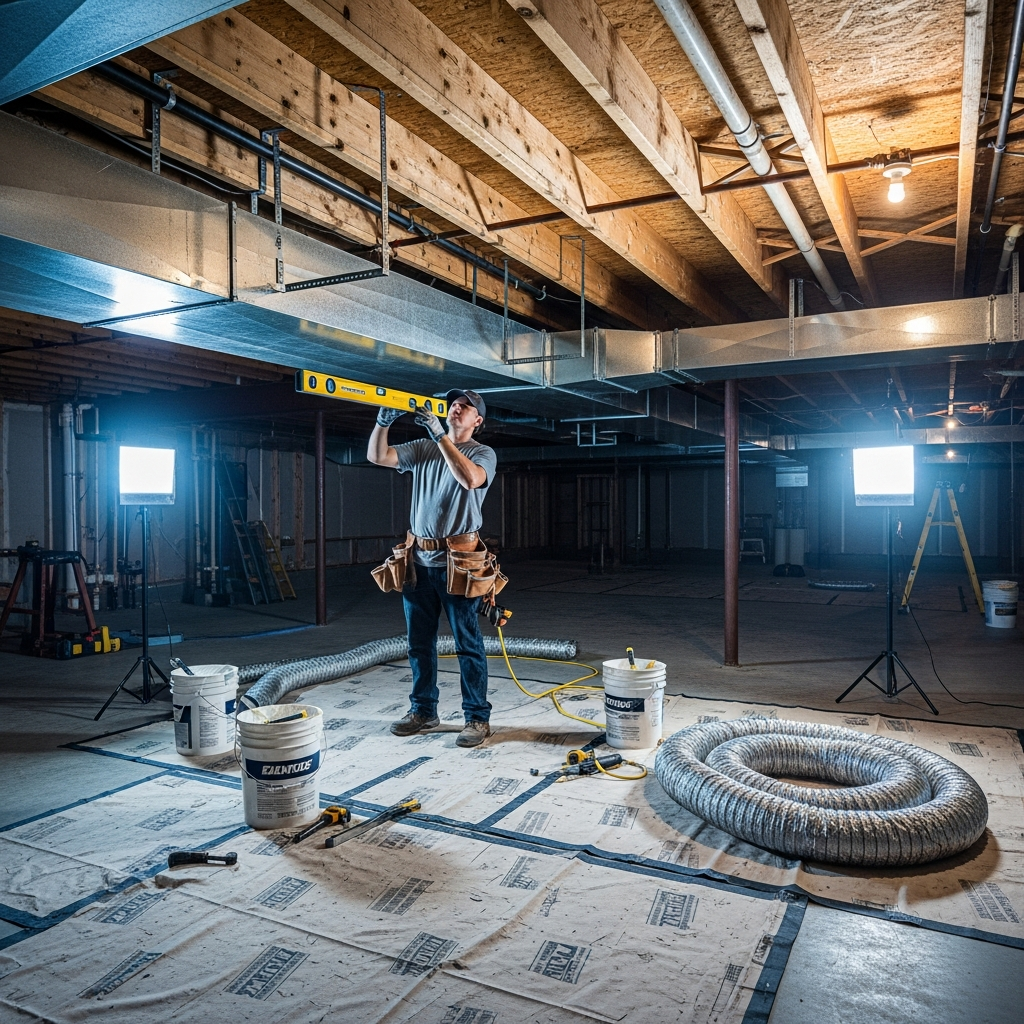
Installing a new air duct system is one of the most impactful ways to improve comfort, efficiency, and indoor air quality in a home or business. In Somerville, New Jersey, the installation process also involves local climate considerations, building codes, and construction styles common to Central Jersey properties. This comprehensive guide walks you through the full air duct installation process from the first evaluation to final commissioning, so you know what to expect, how professionals coordinate the work, and which quality checks matter most. If you are exploring options to replace failing ducts or add new distribution to a renovated space, professional air duct installation ensures the system is engineered and assembled to deliver balanced airflow where you need it most.
Understanding Goals and Constraints in Somerville Properties
Every project begins with goals. For homeowners, the objectives often include better temperature balance between levels, quieter operation, lower utility use, improved air quality, and room-by-room comfort. In older Somerville homes with additions, finished attics, or partial basements, installers must also consider tight framing cavities, brick or stone foundations, and existing utilities that can limit routes for duct runs. Newer townhomes and condos may have mechanical closets and set chaseways, but they also require meticulous sealing and insulation to meet energy code targets and HOA rules for noise and appearance.
Constraints are not just physical. They include occupancy schedules, permitting windows, coordination with other trades during remodels, and New Jersey energy code requirements for duct leakage, insulation R-values, and mechanical ventilation. A clear plan aligns these constraints with your comfort goals so the team can stage tools, materials, and labor efficiently and safely.
Initial Consultation and Load Calculations
The installation process properly starts with a consultation and load calculation. Technicians gather data about square footage, insulation levels, window orientation, infiltration, and usage patterns. A Manual J load calculation estimates heating and cooling needs for the structure and for each room. This step is crucial: undersized ducts starve rooms of airflow, while oversized trunks add noise and waste energy. The output of this analysis drives the duct design, register sizing, and blower settings.
During this phase, the team also inspects existing equipment, including the furnace, air handler, heat pump, or central AC. The blower’s capacity (CFM), the evaporator coil, and filter placement all influence static pressure and distribution design. If the equipment remains in place, the ducts must be matched to the blower’s capability and the coil’s pressure drop to avoid poor performance.
Duct Design and Layout
With loads calculated, a designer develops a duct layout. The plan indicates trunk and branch routes, supply and return placement, duct diameters, damper positions, and register styles. Good design minimizes sharp turns, long runs, and uneven branch lengths that increase static pressure and cause imbalances. In Somerville’s mixed housing stock, creative routing through attics, basements, knee walls, or soffits is common. The plan also documents insulation requirements for unconditioned spaces and specifies air sealing materials to meet leakage targets.
For multi-story homes, returns are often placed strategically on each level to improve air circulation. Zoning, if included, will be laid out with separate dampers and controls. The design also accounts for noise by selecting proper grille types and ensuring adequate throw and spread without excessive velocity at the diffusers.
Permitting and Code Compliance
Before installation, professionals confirm whether permits are required under local jurisdiction. While rules can vary, mechanical permits typically apply when adding or replacing significant ductwork. New Jersey’s energy code sets standards for duct insulation in unconditioned spaces and enforces duct leakage testing in many cases. Smoke and fire damper requirements apply in certain multifamily or commercial scenarios. A code-compliant installation not only passes inspection—it preserves equipment warranties, supports safe operation, and protects home value.
Material Selection and Staging
Installers choose materials that match the design and performance goals. Sheet metal ducts offer durability and smooth interiors for lower resistance; rigid fiberglass duct board can insulate and attenuate noise; flexible duct is useful for short, final runs when supported and installed correctly. Mastic sealant, UL-rated foil tape, hangers, vibration isolation pads, and insulated boots are staged in advance. Registers and grilles are verified for size and finish to suit the room aesthetics and airflow needs.
Staging includes delivering materials to convenient locations, protecting flooring, and establishing pathways for safe movement of tools. Drop cloths, temporary barriers, and dust control measures limit disruption to your living spaces, a must when work proceeds in finished areas of Somerville homes.
Site Preparation and Safety
On the first day of installation, the crew reviews the plan, verifies utilities and shutoffs, and sets up ladders or scaffolds as needed. Safety is emphasized: personal protective equipment, electrical lockout/tagout when working around air handlers, and proper handling of sheet metal to avoid injury. If demolition of old ducts is required, sections are removed carefully, bagged if dusty, and the area is vacuumed to preserve air quality. Returns and equipment are protected from debris so the blower and coil remain clean.
Trunk and Branch Installation
The main trunk line is typically installed first. It runs from the air handler or furnace plenum to distribution points and is supported by hangers or strapping according to code. Branch takeoffs connect to the trunk with proper fittings to ensure smooth transitions. Bends use radius elbows rather than sharp angles when space allows. For flexible duct sections, crews maintain stretch without compressing the helix, avoid excessive bends, and secure the inner liner to collars with mechanical fasteners and mastic. Each joint is sealed with mastic or UL-rated foil tape to reduce leakage.
Supply boots are then set at registers, and return drops are framed or aligned with planned grille locations. Special attention is paid to returns; a system with robust, well-sealed returns lowers energy use and improves comfort by providing the blower a low-resistance path to pull air back to the handler.
Insulation and Air Sealing
In unconditioned spaces like attics, crawlspaces, or garages, ducts are insulated to the R-values required by code or better for efficiency and condensation control. Joints are sealed with mastic and meshed where needed. Penetrations through framing are fire-caulked or sealed per local requirements. The installer verifies that supply boots are sealed to the subfloor or ceiling to prevent leakage into cavities.
Balancing, Dampers, and Zoning
Balancing dampers are installed on branches to fine-tune airflow to each room. Technicians use anemometers or pitot tubes to assess velocity and pressure, making adjustments to achieve design CFM targets. Where zoning is part of the design, motorized dampers and a control panel are wired and programmed. Thermostats or zone sensors are placed away from direct sunlight, drafts, and supply registers to avoid false readings. Proper balancing reduces hot and cold spots—a common complaint in two-story Somerville homes.
Register and Grille Installation
Registers and grilles are mounted with attention to throw direction, room layout, and furnishings. For example, supply air for a living room may be aimed to wash the exterior wall and windows to counteract heat loss in winter and heat gain in summer. Noise is checked at each diffuser; excessive whistle or rumble can indicate a sizing or velocity issue that merits adjustment during balancing.
Electrical and Controls Integration
If the installation includes control upgrades, technicians integrate them with existing equipment. This can involve wiring for zone dampers, installing a new thermostat, or configuring fan profiles on variable-speed air handlers. Filtration upgrades, like media cabinets, are fitted to minimize bypass and maintain appropriate static pressure.
Quality Assurance and Duct Leakage Testing
After the physical installation, quality checks confirm the system’s integrity. A duct leakage test may be performed using a calibrated fan to pressurize the duct system and measure leakage at a fixed pressure. Crews also inspect hangers, seals, insulation coverage, and connections at the plenum and boots. Thermometers and hygrometers confirm that supplied air matches expected temperatures under load. These steps are essential for reaching design efficiency and comfort.
Commissioning and Homeowner Orientation
Commissioning includes verifying blower speed, static pressure, temperature split across the coil or furnace, and zone operation. The installer records baseline measurements for future reference. The homeowner receives an orientation on filter changes, register adjustment basics, and thermostat settings for different seasons. Documentation may include the duct layout, damper positions, and warranty information.
Common Challenges and How Professionals Address Them
Every house presents surprises. In older Somerville basements, low beams or irregular joist spacing can compress design routes. Skilled installers will revise takeoff angles, add offsets, or change branch diameters to maintain target CFM without exceeding static pressure limits. When unexpected obstacles arise in finished spaces, soffits may be framed to conceal runs attractively. Moisture-prone crawlspaces call for elevated ducts and vapor barriers to preserve insulation performance.
Timeline Overview
Most straightforward single-system installations take one to three days, depending on scope and accessibility. Projects with demolition, zoning, or extensive finish work may extend longer. The best predictor of timeline is the clarity of the plan and the presence of a dedicated crew with materials staged in advance. Weather can matter, too; attic work is often scheduled in cooler parts of the day for safety and quality.
Mid-Project Coordination and Communication
Clear communication prevents delays. Professionals provide daily progress updates and confirm any design adjustments before proceeding. If a layout change risks airflow or noise performance, they explain trade-offs and offer solutions. This is also a good time to ask questions about diffuser styles, thermostat programming, and maintenance intervals. In the midst of a project, many owners appreciate a refresher on how proper air duct installation will improve filtration, humidity control, and even sound levels in frequently used rooms.
Post-Installation Best Practices
After the system is commissioned, keep registers unobstructed, change filters on schedule, and avoid closing too many supply registers at once—which can raise static pressure and stress the blower. If you remodel or add new rooms later, consult a professional for duct modifications rather than improvising with flexible duct that may not meet code or performance requirements. Periodic inspection of visible ducts for crushed sections, condensation, or loose insulation helps catch issues early.
Environmental and Efficiency Considerations
Well-designed ducts reduce energy consumption by lowering fan power and delivering conditioned air without waste. Insulated and sealed ducts in unconditioned spaces prevent condensation, protect indoor air quality, and support equipment longevity. Proper returns and filtration reduce dust recirculation, benefiting family members with allergies or sensitivities. These choices align with New Jersey’s broader goals for energy efficiency and healthier homes.
Frequently Asked Questions
Q: How do I know if I need new ducts rather than repairs?
A: If you observe persistent comfort imbalances, visible damage or corrosion, significant leakage found by testing, or changes to the floor plan that your existing ducts cannot serve, new ductwork may be the more reliable long-term solution. A load calculation and inspection provide clarity.
Q: Will new ducts make my system quieter?
A: Yes, thoughtful sizing, smooth routing, and proper diffuser selection reduce turbulence and noise. Insulated duct board or lined metal can further attenuate sound in sensitive areas.
Q: Can I reuse some of my old ducts?
A: Sometimes. If sections are in good condition, appropriately sized, and accessible for sealing and insulation, they may be incorporated. However, mismatched sizes or damaged sections often justify full replacement for performance and code compliance.
Q: What about indoor air quality?
A: Sealed returns, correct filter placement, and balanced airflow reduce dust and allergens. If needed, media filters or other IAQ accessories can be integrated, provided the system is designed to handle their pressure drop.
Q: How long does installation take?
A: A typical single-system home may take one to three days. Complex routing, zoning, or demolition can extend the schedule. Your installer should provide a timeline after the design is finalized.
Q: Do I need to leave the house?
A: Not necessarily. Crews can set up dust control and work in phases. If work concentrates in an attic during hot weather, some homeowners choose to be away for comfort.
Q: Will new ductwork help with humidity?
A: Properly designed distribution supports better moisture control by ensuring adequate airflow across the coil and throughout the home. Duct leaks and imbalances can undermine dehumidification, so sealing and balancing are important.
Q: Are permits always required?
A: Local rules vary. Many jurisdictions require mechanical permits when adding or replacing significant ductwork. Your contractor will advise and handle permitting when necessary.
Final Thoughts and Next Steps
The success of an air duct installation hinges on solid design, careful craftsmanship, and rigorous testing. In Somerville, New Jersey—where homes range from historic to newly built—the best outcomes come from professionals who adapt plans to the structure and document results. When you are ready to improve comfort, efficiency, and air quality, connect with a trusted local team. From the first assessment to final commissioning, expert air duct installation delivers lasting results you can feel in every room.
Take the next step today
Discuss your goals, review a tailored duct design, and schedule a convenient installation window that respects your daily routine. A well-planned project brings quieter operation, consistent temperatures, and cleaner indoor air. Reach out to a Somerville-based specialist to start your assessment, align on a clear timeline, and experience how precision installation elevates year-round comfort.
