Introduction
Planning a new or replacement dryer vent in Somerville, New Jersey involves more than picking a route and attaching a hood. Homeowners often ask two practical questions at the outset: what approvals are needed and what factors influence the investment. While this guide avoids quoting prices or service fees, it clearly explains the drivers that affect project scope and the permit and inspection basics you should consider. If you would like a turnkey solution that aligns with local rules and best practices, you can arrange professional dryer vent installation and use the information below to discuss expectations and timelines.
Why Permits Matter
Permits exist to ensure work is performed safely and in line with building codes and manufacturer requirements. For dryer vents, that means using listed materials, achieving adequate airflow, and terminating outdoors through a proper hood with a backdraft damper. Permits trigger inspections that help catch common hazards: overlength runs, plastic flex in walls, intrusive screws at joints, and improper terminations into attics, garages, or crawlspaces. The result is a safer home and a record of compliance that can be valuable during future home sales or insurance interactions.
Somerville and New Jersey Code Landscape
Somerville follows New Jersey’s adoption of the International Residential Code (IRC) with state amendments. While specific administrative steps can change over time, the technical expectations remain consistent: smooth metal duct for the main run, listed transition duct near the dryer, maximum equivalent length limits based on elbow count, and a dryer-rated exterior termination. Gas dryers require attention to combustion air and clearances. It is wise to consult the local building department to confirm whether your project needs a permit and inspection, especially for new routes or significant alterations.
Project Scope Factors
Several elements influence how straightforward or complex your dryer vent project will be. Understanding these drivers helps you estimate time, coordination, and the level of expertise required.
- Route complexity: Short, straight runs are simpler. Long routes with multiple elbows raise difficulty and demand careful planning.
- Termination location: Wall exits are typically easier than roof penetrations, which require flashing and safe roof access.
- Existing conditions: Older homes may present surprises—irregular framing, legacy ducts, or blocked chases—that add investigative work.
- Access: Finished walls and ceilings require more care than open framing. Tight laundry closets can complicate transition connections.
- Climate considerations: Runs through unconditioned spaces may require insulation and meticulous sealing to prevent condensation.
- Appliance specifics: Manufacturer length limits vary; gas models add considerations for combustion safety and ventilation.
Working with the Local Building Department
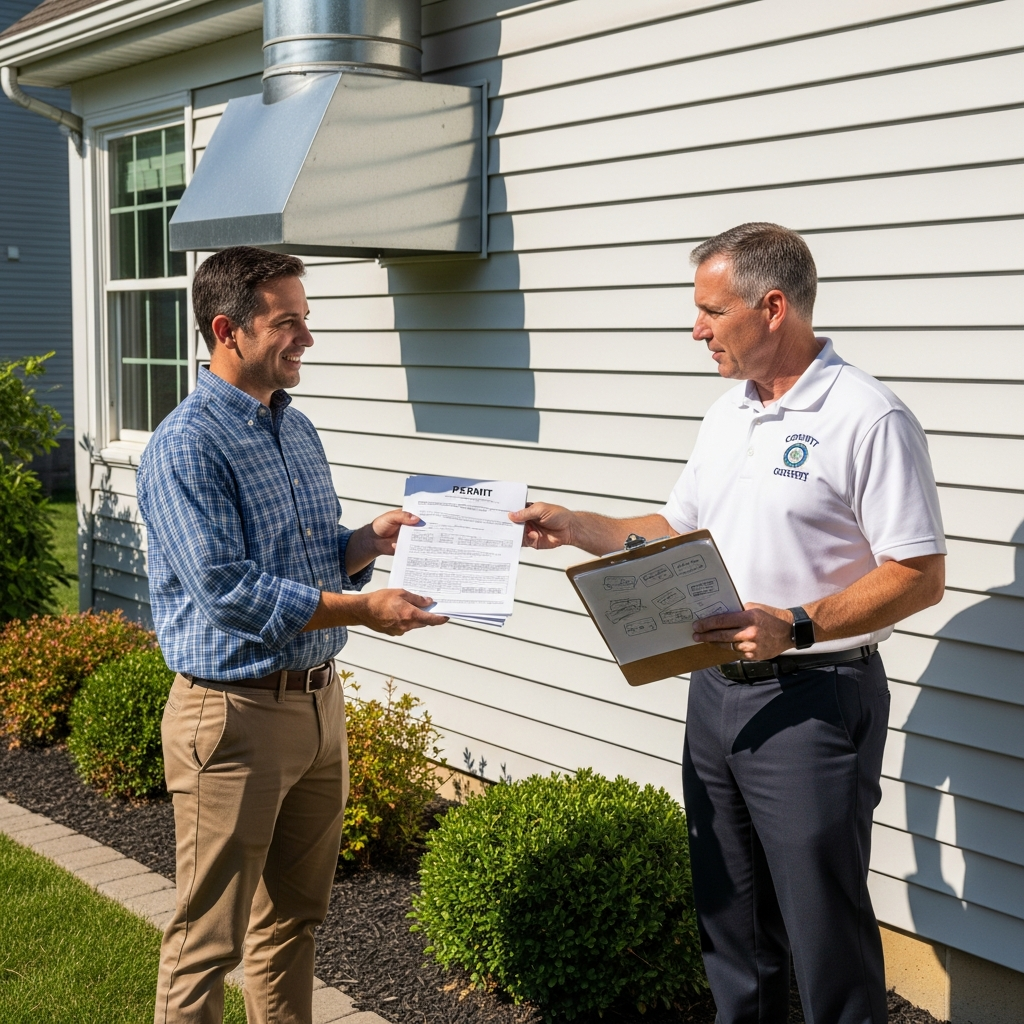
A productive first step is to describe your proposed route, materials, and termination to Somerville’s building staff. Ask about submittal requirements, whether a simple over-the-counter permit is possible, and what inspections to expect. Clarify any documentation needed—manufacturer literature for the termination hood, equivalent length calculations, or diagrams of the route. Early engagement reduces surprises later and can streamline scheduling.
Typical Inspection Points
- Verification that the main run is smooth metal and that the transition duct is UL 2158A–listed and accessible.
- Confirmation of duct diameter, route length, and elbow count within manufacturer limits.
- Proper orientation of crimped ends in the direction of airflow and sealed exterior joints without intrusive screws.
- Correct exterior termination with a functioning backdraft damper and no fine-mesh screen.
- Weatherproofing around the hood—caulk or flashing—to protect the building envelope.
- Slope toward the exterior and adequate support spacing to prevent sags.
Hidden Variables That Expand Scope
What looks like a simple one-afternoon task sometimes grows when hidden conditions appear. Opening a wall may reveal a structural member that requires a reroute. A short vent envisioned for a side wall might exceed length limits once equivalent lengths for elbows are tallied. An attic or crawlspace path can demand insulation, additional supports, and careful condensation control. Recognizing these variables early allows you to adjust timelines and coordinate trades if needed.
Homeowner Responsibilities
If you are managing the project, your responsibilities include planning a compliant route, selecting listed materials, coordinating with the building department, and maintaining jobsite safety. Keep documentation of product listings, manufacturer instructions, and your equivalent length calculations. Photograph the run before closing walls; this record aids future maintenance and helps inspectors confirm hidden details.
Contractor Selection Considerations
- Familiarity with local codes and inspection practices.
- Experience designing short, low-resistance routes in older homes.
- Clear communication about materials, terminations, supports, and sealing methods.
- Willingness to provide as-built documentation and maintenance recommendations.
Timeline Planning
Coordination with permitting and inspections affects project timing. Plan for application lead time, scheduling availability, and potential reinspection if corrections are needed. Weather can influence roof work; choose a window with favorable conditions. If other renovations are underway, sequence the vent installation so penetrations and duct routing occur before finishes are installed.
Scope Control Without Quoting Prices
Although this guide does not list prices, it is practical to outline levers that influence the scale of effort. Reducing elbows, selecting a closer termination point, and keeping the transition short and accessible all tend to simplify work. Conversely, long routes through unconditioned spaces or complex roof penetrations require more care and coordination. Decisions about rerouting versus reusing existing runs can also shift the scope.
Common Pitfalls to Avoid
- Relying on plastic or vinyl flex in walls or ceilings. Use smooth metal duct for safety and performance.
- Adding a screen at the exterior hood. Choose a dryer-rated termination with an integrated damper instead.
- Exceeding equivalent length limits by undercounting elbows or tight turns.
- Crushing the transition hose when pushing the dryer into position.
- Neglecting to seal joints, leading to moisture and lint inside walls.
Documentation and Closeout
At completion, assemble a simple packet: permit number, inspection sign-off, route diagram, photographs before finishes, and manuals for the dryer and termination hood. Note the location of supports, elbows, and any access panels. Record the date of installation and create a maintenance reminder schedule—monthly hood checks and annual duct inspections are a good baseline.
Frequently Asked Questions
Q: Do all dryer vent projects require a permit? A: Not always, but many new or significantly altered routes do. Check with Somerville’s building department for current rules.
Q: If I keep the same route, do I still need approval? A: If components change or you correct code issues, an inspection may still be advised. When in doubt, ask the local authority.
Q: Can I exit through the roof to shorten the route? A: Yes, provided you use a dryer-rated roof termination and correct flashing. Many homeowners prefer wall exits for ease of access.
Q: Are booster fans acceptable? A: When a route cannot be shortened enough to meet manufacturer limits, a listed booster fan may be permissible if accessible and installed per the maker’s instructions.
Q: How do inspectors evaluate length? A: They review straight runs and add equivalent length for each elbow based on standard tables or manufacturer charts.
Q: What if the termination is near a walkway or window? A: Maintain required clearances from openings and pedestrian areas. Reposition the hood if necessary to avoid nuisance exhaust.
Q: Does a gas dryer change venting rules? A: The same venting principles apply, but gas dryers add combustion considerations; follow the appliance manual and code for clearances and ventilation.
Somerville-Specific Notes
Older Somerville homes sometimes conceal legacy duct paths behind plaster or paneling. If you encounter remnants of a previous system, verify material type and condition before deciding to reuse it. Seasonal snow and landscaping growth also affect hood placement and access—choose a location that remains serviceable year-round. If the route crosses an attic or crawlspace, insulate the duct and maintain slope to reduce condensation in winter.
Maintenance and Longevity
After approvals and installation, protect your investment with routine care. Clean the lint screen before every load, vacuum around the dryer seasonally, and inspect the termination monthly for movement and lint accumulation. Schedule a thorough duct inspection at least annually, more often for long runs or heavy laundry usage. Proactive attention reduces future scope and maintains the performance you planned for.
Moving Forward with Confidence
Understanding how scope, approvals, and inspection checkpoints interact positions you to manage the project smoothly. Clear communication with the building department, a concise plan for materials and routing, and a maintenance mindset set you up for long-term success. If you want a compliant, hassle-free outcome handled by specialists, arrange professional dryer vent installation that coordinates routing, approvals, and commissioning so your laundry performs reliably in every season.
