
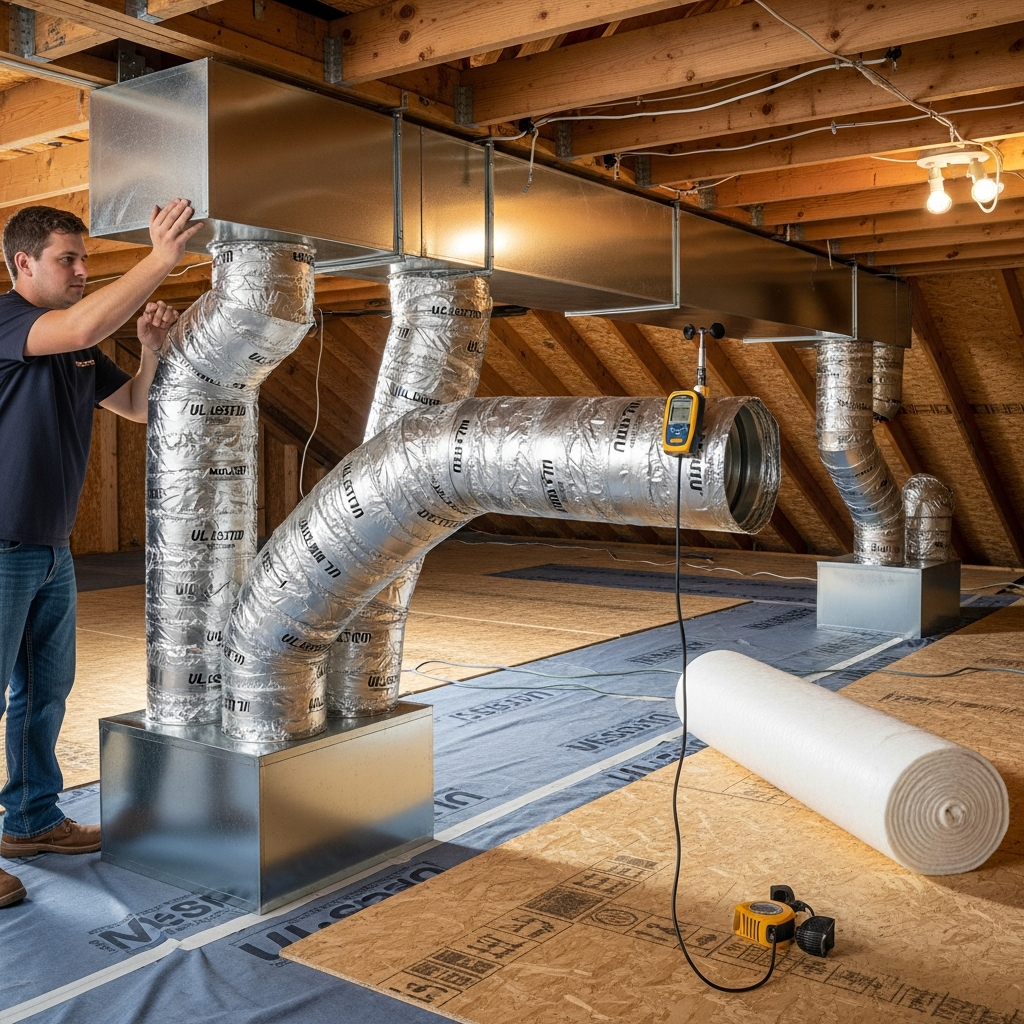
Understanding the Air Duct Installation Process in Somerville
Installing new ductwork is one of the most transformative upgrades you can make to a home in Somerville, New Jersey. Between humid summers and chilly winters, your HVAC system works hard year-round, and properly designed ducts determine how efficiently that conditioned air moves throughout every room. If you are preparing for a renovation, adding an addition, or modernizing an older property, this guide explains the complete process from the first assessment to final testing. To set the stage, remember that local expertise matters; consulting a team that specializes in air duct installation for Somerville homes helps ensure your plan aligns with New Jersey codes, building realities, and climate demands.
Homeowners often imagine duct installation as simply running a few metal trunks and branches. In reality, success depends on a methodical sequence: planning and load calculations, layout design, material selection, fabrication, sealing, insulation, balancing, and verification. When each step is executed precisely, airflow becomes even, rooms feel consistent, noise is minimized, and your HVAC system avoids the lifespan-reducing strain caused by leaks or restrictions. The following sections detail each stage, offering practical insights for new builds, retrofits, and historic properties common across Somerville’s neighborhoods.
Initial Consultation and Whole-Home Assessment
The process begins with a walkthrough to understand your home’s layout, insulation levels, window types, and room usage. An experienced professional will look for existing comfort issues—hot or cold spots, persistent humidity, or dust accumulation. They will also evaluate equipment location, potential duct pathways, and obstacles such as structural beams, fire blocks, and tight chases typical of older New Jersey homes.
During this phase, the contractor documents the square footage of each room, ceiling heights, and the building envelope’s condition. If your house has undergone piecemeal updates—like added insulation in the attic but original walls elsewhere—the assessment ensures airflow plans accommodate these differences. Safety factors are also reviewed: required clearances to flues, dryer vents, and electrical lines, plus adherence to mechanical codes that govern firestopping and smoke barriers.
Load Calculations and Airflow Targets
Before any ducts are designed, the team performs a Manual J or comparable heat gain/loss calculation to determine how much heating and cooling each room needs. This is especially important in Somerville, where winter lows and summer highs can swing dramatically. The result of these calculations drives airflow targets—how many cubic feet per minute (CFM) each space requires—to keep temperatures even and humidity under control.
Skipping this step leads to chronic comfort issues: oversized equipment that short cycles, rooms starved of supply air, or excessive static pressure. Right-sized airflow also helps your filtration perform better by keeping velocities in the sweet spot and reduces noise created by air rushing through undersized ducts or sharp transitions.
Duct Design and Layout Strategy
Armed with airflow targets, the designer maps a trunk-and-branch or radial layout that balances efficiency with constructability. The supply and return pathways must be thought out together to prevent pressure imbalances. For multistory homes, dual returns or strategically located return grilles on each level can improve circulation while reducing the risk of temperature stratification.
Good design also anticipates real-world limitations: joist spacing that may dictate oval or appropriately sized round ducts; soffits or dropped ceilings in basements; and chase spaces that carry plumbing or electrical lines. Smooth airflow requires gentle transitions, long-radius elbows, and minimal flex duct runs. Where flex is needed, it should be pulled taut with minimal sag and supported at proper intervals to prevent kinks that raise static pressure.
Material Selection: Metal, Fiberglass Lined, or Flex
Material choice shapes performance, sound, and longevity. Galvanized sheet metal remains the gold standard for trunks and main branches due to its strength and low friction. Short lengths of quality flex duct can work well for final takeoffs if installed straight and supported properly. In certain cases, fiberglass-lined metal ducts may be used for sound attenuation near the air handler; however, it is critical to follow manufacturer guidelines to prevent fiber shedding and to ensure cleanliness over time.
Insulation values are tailored to location: ducts running through unconditioned basements, attics, or garages in Somerville benefit from robust insulation to prevent condensation in summer and heat loss in winter. In conditioned chases, exterior insulation may be lighter, but air sealing remains essential to maintain designed airflow.
Permitting, Code Compliance, and Inspections
Somerville follows New Jersey Uniform Construction Code requirements, which encompass mechanical codes for duct installation, firestopping, and ventilation. Before work begins, necessary permits are obtained. Inspectors verify that penetrations are sealed with rated materials, return paths are not located in prohibited spaces, and ducts meet required clearances from combustion appliances. Proper support spacing, hangers, and vibration isolation around equipment are also examined.
Clear communication with your contractor ensures the design accommodates these checkpoints from the start. That way, inspections proceed smoothly, timelines stay on track, and you avoid rework caused by overlooked compliance items.
Site Preparation and Protection
On installation day, pathways are covered, registers are masked, and work zones are isolated to limit dust. In existing homes, strategic openings may be made in ceilings or walls to route branches; these are later repaired and finished in coordination with your renovation plan. If your project includes equipment replacement, the air handler and coil clearances are verified to allow for service access, filter changes, and condensate management.
Good crews stage materials close to the work area, preassemble sections when possible, and coordinate with other trades—framers, electricians, and plumbers—to avoid conflicts that can cause last-minute rerouting or constrictions that raise static pressure.
Fabrication, Assembly, and Sealing Best Practices
Once the layout is marked, trunks and branches are fabricated and installed with attention to direction of airflow, turning vanes in larger elbows, and sealed joints. Every seam, collar, and takeoff is sealed with mastic or UL-listed foil tape designed for ducts. In New Jersey’s climate, even small leaks add up to lost comfort and energy. Sealing returns is as important as sealing supplies; unsealed returns can draw dusty or unconditioned air from attics, basements, or wall cavities into the system.
Support spacing follows material guidelines to prevent sagging. Dampers are placed on branch lines to fine-tune balance during commissioning. Boots at floor, wall, or ceiling terminations are fastened securely and sealed to surrounding surfaces to prevent leakage into cavities.
Insulation and Condensation Control
After sealing, ducts running through unconditioned spaces are insulated to the specified R-value. In summer, this reduces the chance of condensation forming on cold ducts that can drip and damage finishes. Vapor barriers are oriented correctly, and joints in insulation are taped or sealed to prevent moisture migration. In conditioned areas, even lightly insulated ducts benefit from a thermal layer that moderates sound and temperature fluctuation.
Special attention is given to supply trunks near the air handler and to any long runs exposed to attic heat. Proper insulation complements airtight duct construction, preserving the design CFM at every register.
Register Placement, Return Strategy, and Zoning
Supply registers are located to throw air across the room and mix conditioned air efficiently. Ceiling supplies near exterior walls can offset window loads, while high wall or floor supplies in some layouts may be better for heating performance. Return grilles are sized generously and located to encourage complete air circulation without whistling or excessive velocity.
For larger homes or those with additions, zoning may be introduced. Multiple zones use motorized dampers and individual thermostats, allowing upstairs and downstairs to call for different airflow as needed. Correctly designed zoning pairs with balanced ductwork to prevent pressure spikes and uneven delivery.
Balancing, Static Pressure, and Airflow Verification
With ducts assembled and insulated, technicians measure total external static pressure at the air handler and compare it to equipment specifications. Too high a static pressure can indicate undersized ducts, restrictive filters, or sharp transitions. Branch dampers are then adjusted to achieve design CFM at each register, verified with anemometers or flow hoods.
This commissioning step is often overlooked in rushed projects, but it is central to the process. A properly balanced system helps your equipment run quietly, maintain consistent temperatures, and deliver cleaner air throughout pollen-heavy spring and leaf-fall autumn months in Somerville.
Mid-Project Checkpoints and Communication
Midway through installation, an organized contractor will walk you through progress, showing trunk lines, key branches, and any minor adjustments made to accommodate structural surprises. It is an excellent time to confirm grille locations, thermostat placement, and access points for future maintenance. If you are comparing options or need further guidance on system configuration, you can also ask about local expertise in air duct installation services and how design tweaks might improve comfort in stubborn rooms.
Documenting these milestones pays off later. Photos of concealed ducts and notes on hidden dampers make future service faster and help ensure remodels or repairs do not inadvertently damage critical runs.
Testing for Tightness and Cleanliness
Some projects include duct leakage testing, which uses a calibrated fan to pressurize or depressurize the system and measure leakage rates. Even when not mandated, this test can verify workmanship and pinpoint any tiny gaps that escaped sealing. After testing, installers remove debris and wipe accessible interiors so airflow starts off clean.
Filters are checked, and where possible, a high-quality filtration strategy is confirmed—keeping in mind that filter resistance must be balanced with airflow requirements. Final checks ensure that return pathways are clear, grills are fastened firmly, and labels indicate damper locations for future balancing.
Final Walkthrough and Homeowner Orientation
Before sign-off, your contractor should demonstrate system operation, thermostat settings, and seasonal considerations for Somerville’s climate. You will learn how to change filters, recognize signs of restricted airflow, and schedule maintenance. If your home has special conditions—like a finished attic, crawlspace, or partially conditioned basement—the team will explain how those areas impact duct performance through the seasons.
Expect to receive documentation: load calculations, layout diagrams, equipment manuals, and any test results. These records support future renovations, resale conversations, and warranty considerations.
Common Pitfalls and How to Avoid Them
- Skipping load calculations and using rule-of-thumb sizing that leads to imbalances or noise.
- Overusing flex duct or allowing it to sag, which increases resistance and reduces airflow.
- Neglecting return air design or relying on a single undersized return grille.
- Failing to seal and insulate ducts in unconditioned spaces, causing condensation and energy loss.
- Ignoring static pressure measurements and airflow verification during commissioning.
- Placing registers where furniture or drapes block throw patterns.
- Not planning for service access to air handlers, dampers, and filters.
Considerations for Somerville’s Housing Stock
Somerville features a mix of historic homes, mid-century builds, and newer developments. In older properties, running new ducts may involve creative routing through closets, soffits, or built-ins. Preservation-minded projects aim to minimize visible changes while upgrading comfort; this might involve compact round ducts, high-wall registers with discrete grilles, or leveraging basements and attic chases for vertical runs.
Newer homes may focus on performance optimization: refining return placement, upgrading insulation on long attic runs, or adding zoning. In all cases, paying attention to air sealing of the building envelope complements duct improvements, resulting in cleaner indoor air and steadier temperatures.
Maintenance After Installation
Once installed, ducts require modest but consistent care. Replace filters on schedule, keep returns free from obstructions, and have a professional check dampers and static pressure if you notice new hot or cold spots. After significant home changes—finishing a basement, adding a sunroom, or replacing windows—rebalancing may be recommended to reflect the new load profile.
Seasonal pollen, road dust, and humidity shifts characteristic of central New Jersey can affect perception of airflow. Routine maintenance helps preserve the smooth performance you achieved at installation.
Frequently Asked Questions
Q: How long does a typical duct installation take in an existing Somerville home?
A: Project duration varies with scope and accessibility. A straightforward replacement using existing pathways may be completed relatively quickly, while a full redesign across multiple floors can take longer, especially when coordinated with other renovation work and inspections.
Q: Will new ducts reduce noise from my HVAC system?
A: Yes, when designed and balanced properly. Using the right duct sizes, gentle transitions, and correct register types significantly lowers airflow noise. Insulation and strategic material choices near the air handler further dampen sound.
Q: Do I need multiple return grilles?
A: Many homes benefit from multiple or larger returns to ensure adequate circulation and lower static pressure. This is particularly effective in multi-level homes where temperature differences can otherwise build up between floors.
Q: What if my house lacks space for large duct trunks?
A: Designers can use compact round ducts, high-efficiency layouts, or carefully installed flex runs for short distances. Creative routing through soffits, closets, or chases often solves space constraints without compromising performance.
Q: How important is duct sealing?
A: Critical. Even small leaks add up, wasting conditioned air and drawing in dust through return leaks. Mastic and UL-listed foil tapes are standard for robust, long-lasting seals.
Q: Will new ducts improve indoor air quality?
A: Properly sealed and balanced ducts help filters work as intended, reduce infiltration of unconditioned air, and maintain consistent humidity—key aspects of healthy indoor air.
Q: Are permits required in Somerville?
A: Most projects require mechanical permits and inspections under New Jersey’s Uniform Construction Code. Your contractor coordinates these to confirm safety and compliance.
Q: Can I keep some of my existing ducts?
A: Often, yes—if they are the correct size, in good condition, and can be integrated into a new design that meets airflow targets. A professional assessment will determine which sections are worth retaining.
Q: What happens if static pressure is too high?
A: Excessive static pressure can strain equipment, increase noise, and reduce comfort. The solution may involve resizing ducts, adjusting dampers, or modifying transitions to lower resistance.
Q: How do seasons in Somerville affect duct performance?
A: In summer, insulation and vapor barriers help control condensation. In winter, sealed, insulated ducts keep heat delivery consistent. Balanced design ensures comfort regardless of seasonal swings.
Ready for Reliable Comfort All Year?
If you are planning a renovation, addition, or system upgrade, the right ductwork design and installation can transform your comfort, efficiency, and air quality. From careful load calculations to meticulous sealing and balancing, each step matters—and having a local team that understands Somerville homes makes the difference. Start the conversation with trusted experts in air duct installation in Somerville and move forward with confidence knowing your home will feel comfortable, quiet, and consistent in every season.
