
Introduction
Most homeowners and managers in Somerville, New Jersey know the basics of hood maintenance—wipe the canopy, wash filters, and keep the plenum clean. But advanced issues can still appear: noisy operation after cleaning, lingering odors that resist routine wipe-downs, airflow that seems weak despite clean filters, or corrosion starting in hidden corners. Understanding advanced fixes helps you diagnose root causes and apply targeted solutions that preserve safety and performance. If you suspect problems beyond reach or want a professional baseline before tackling complex work, local specialists provide thorough kitchen exhaust hood cleaning with deep access and performance verification.
This guide explores real-world challenges and the methods that address them. You will learn how to evaluate airflow, deal with noise and vibration, balance makeup air, correct filter fitment, manage degreaser chemistry, and recognize when to call a professional for duct or fan service.
Diagnosing Airflow Weakness
Airflow complaints often arise even after a careful cleaning. The cause usually falls into one or more categories: blocked intake, poor filter fit, duct restriction, or insufficient makeup air.
- Blocked intake: Verify that nothing obstructs the hood opening. Oversized pots placed far from the center can leak steam beyond the capture zone.
- Filter fit: Gaps around baffles or mesh allow air to bypass filtration and reduce capture efficiency. Re-seat filters until they sit snugly without rattle.
- Duct restriction: Grease beyond the plenum, sharp duct elbows, or collapsed flexible sections can choke airflow. Professional inspection is advisable here.
- Makeup air: Tight homes or sealed dining rooms reduce available replacement air, causing the fan to struggle. Slightly opening a nearby window for a test can reveal if this is the problem.
Noise and Vibration After Cleaning
If your fan becomes louder after a cleaning session, the likely culprits are mis-seated filters, loose panels, or an unbalanced fan wheel. A small shift can transform smooth hum into a rattling buzz.
- Check seating: Confirm that baffles or mesh are installed in the correct orientation. Many have an airflow arrow or top/bottom marking.
- Tighten fasteners: Inspect visible screws on the canopy and any access panels. Tighten gently to avoid stripping threads.
- Inspect the fan: If safe access is available, confirm that no cloth fibers or debris touch the wheel. Even a small thread can cause a persistent tick.
- Verify mounting: Ensure that fan housings and brackets are secure. On rooftop fans, verify that hinges and latches are correctly set after service.
Advanced Filter Care and Fitment
Filters are the heart of capture. Even when visually clean, subtle problems with fit and flow can degrade performance.
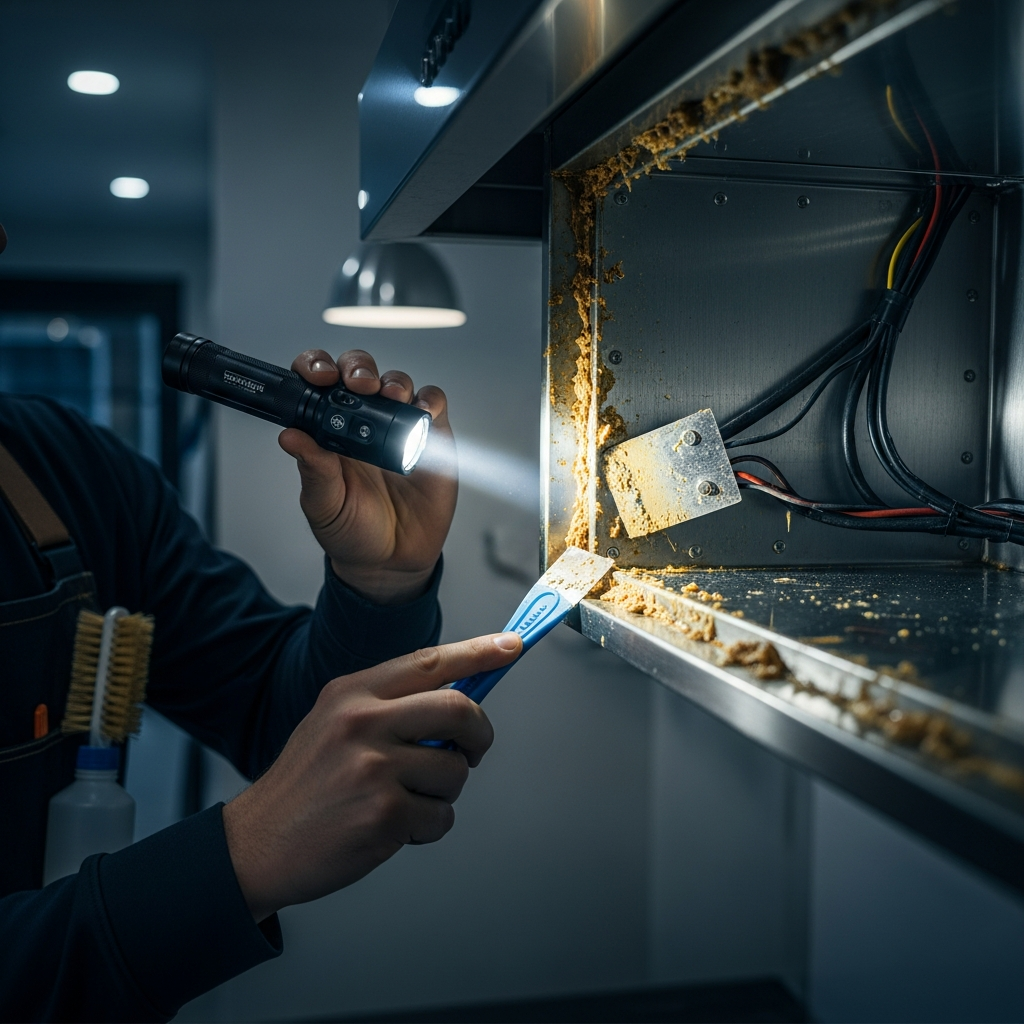
- Channel inspection: Use a flashlight to check the channels or ledges that hold the filter. Hardened grease can prevent full seating and create bypass gaps.
- Mesh fatigue: Older mesh filters can warp or thin, allowing more bypass. Replace if they no longer sit flat.
- Baffle orientation: Baffles are designed to redirect grease droplets; incorrect orientation reduces capture and can increase noise.
- Dry time: Reinstall only when filters are completely dry. Residual moisture can attract dust and add weight that stresses clips.
Degreaser Chemistry and Dwell Time
Not all degreasers work the same way. Some rely on alkalinity; others on surfactants and solvents. Matching chemistry to soil type improves results and protects finishes.
- Test spot: Always test in an inconspicuous area. Look for dulling, discoloration, or residue.
- Dwell time: Allow the cleaner to sit for the label-recommended period. Wiping too soon leaves film behind and demands more scrubbing.
- Layered approach: For heavy buildup, apply several light passes with short dwell times rather than one heavy soak that can drip into electronics.
- Neutral rinse: After an alkaline degreaser, a water-damp cloth removes residue that can otherwise feel tacky.
Managing Odors That Return Quickly
When odors return soon after cleaning, suspect hidden grease pockets or recirculating filters past their useful life.
- Drip trays and seams: Remove and wash trays. Use a bottle brush around screws and along seams inside the plenum.
- Lighting housings: Grease can settle above light lenses. Remove covers per your manual and wash them thoroughly.
- Charcoal filters: For recirculating hoods, replace the charcoal element on schedule. It captures fumes that grease filters cannot.
- Duct suspicion: If odors persist, grease deeper in the duct could be the source, warranting professional service.
Makeup Air and Kitchen Balance
Air exhausted from the kitchen must be replaced. In tightly sealed homes or busy commercial rooms, insufficient makeup air leads to weak capture, backdrafts from chimneys, or doors that feel hard to open.
- Simple test: Open a nearby window slightly and repeat a steam capture check. Improved performance signals that makeup air is the issue.
- Practical fixes: In homes, a small supply vent or strategic window use during high-heat cooking may help. In businesses, consult HVAC providers to ensure dedicated makeup air meets demand.
- Seasonal factors: Winter in Somerville brings closed windows; summer humidity adds stickiness. Adjust fan speeds and cleaning frequency accordingly.
Access and Advanced Cleaning Techniques
Some hoods include access panels or hinges for deeper cleaning. Use them cautiously and only within your competence.
- Access panels: If present, open carefully to avoid damaging gaskets. Clean accessible areas without spraying liquid into electrical housings.
- Rooftop fans: On multi-story buildings, rooftop components require safe access and training. Verify hinges, latches, and weather seals upon reassembly.
- Staged cleaning: Work from the least to most soiled areas, changing cloths often to prevent re-depositing grease.
Handling Corrosion and Finish Care
Corrosion can start where cleaners pool or where moisture lingers. Early action protects both appearance and function.
- Immediate dry: After any wet cleaning, dry surfaces thoroughly.
- Grain direction: On stainless steel, always wipe with the grain to reduce visible swirls.
- Avoid abrasives: Non-scratch pads are safer than steel wool, which can embed particles that later rust.
- Monitor seams: Inspect screw heads and seams for discoloration that suggests moisture retention.
When Performance Still Falls Short
If cleaning and basic fixes do not restore airflow and odor control, consider broader system factors:
- Duct configuration: Excessive turns or crushed flexible sections reduce flow.
- Fan capacity: A replacement range or a new high-output cooktop may overwhelm an older hood.
- Building pressure: Exhaust fans in adjacent rooms can compete for air, weakening capture at the cookline.
Mid-Project Validation
Advanced fixes benefit from a second set of trained eyes. When you want confirmation that airflow, filter fitment, and duct condition are on track, schedule a professional assessment. Providers in Somerville offer specialized kitchen exhaust hood cleaning that includes deeper access and practical recommendations tailored to your equipment and space.
Frequently Asked Questions
Q: Why is my hood louder after I cleaned it?
A: Filters may be reversed or not fully seated, or a panel may be loose. Check orientation marks, tighten screws gently, and confirm nothing touches the fan wheel.
Q: How do I know if makeup air is the problem?
A: Open a window slightly during a steam test. If capture improves, you likely need more makeup air or a ventilation balance review.
Q: Can I use stronger chemicals for heavy grease?
A: Choose products labeled safe for your hood’s materials and follow dwell-time instructions. Multiple light applications are safer than a single aggressive soak.
Q: What if filters look clean but airflow is weak?
A: Inspect seating channels for hardened grease and confirm correct baffle orientation. Gaps and bypass reduce real capture despite clean surfaces.
Q: Should I lubricate the fan motor?
A: Many modern motors are sealed and maintenance-free. If lubrication is required, it should be performed by a qualified technician following the manufacturer’s guidance.
Q: How can I reduce recurring odors?
A: Deep clean drip trays, plenum seams, and light housings. Replace recirculating charcoal filters on schedule, and evaluate ducts if smells persist.
Move Forward with Confidence
With advanced troubleshooting in hand, you can protect airflow, quiet operation, and long-term equipment health. When deeper access, rooftop components, or documentation are needed, book comprehensive kitchen exhaust hood cleaning and keep your Somerville kitchen performing at a high standard every day.
