Searching for reliable dryer vent cleaning near me in Somerville, New Jersey means you are already taking a proactive step to protect your home from hidden fire hazards, save energy, and extend the life of your dryer. Lint buildup happens in every home, but it can become a serious risk when it accumulates in hard-to-reach duct runs, elbows, and exterior hoods. In a community like Somerville with diverse housing styles—from historic homes with long vent runs to newer townhomes and condos with compact laundry closets—professional care makes a measurable difference. If you are looking for a straightforward, safety-first solution, consider scheduling trusted dryer vent cleaning so your laundry routine stays fast, efficient, and worry-free.
Whether you are battling slow drying times, excessive heat in the laundry room, or you just want an annual safety check, understanding how dryer vents work and why cleaning matters will help you make confident decisions. This guide explains the warning signs, how local professionals approach the job, what tools and techniques they use, and the simple maintenance steps you can take between appointments. You will also find a Somerville-specific perspective, including how seasonal weather and building layouts influence vent performance.
Why Dryer Vent Cleaning Matters in Somerville, New Jersey
Dryer vents move moist, heated air from your dryer to the outdoors. Along the way, lint and fine fibers escape the lint trap and gather on interior duct walls. Over time, this accumulation narrows the pathway, forcing your dryer to work harder, run longer cycles, and produce more heat. In the worst cases, lint ignites, causing a dangerous fire. Somerville homes range from historic properties with basements and lengthy duct runs to modern construction with complex bends to reach the exterior wall or roof termination; those features can increase resistance and create catch points for lint.
Local weather also plays a role. In New Jersey, cold winters can cause condensation in poorly insulated vent sections, turning fine lint into a sticky mat that traps more debris. Summer humidity has a similar effect, allowing moist lint to adhere to elbows and joints. The result is a gradual, invisible clog that shortens appliance life and can fill your laundry area with excess heat and humidity.
Clear Signs You Need Dryer Vent Cleaning Near You
- Dryer cycles take noticeably longer, or you need to run a second cycle for towels and bedding even though the machine is otherwise in good working order.
- Your laundry room feels unusually warm or humid while the dryer is running, suggesting hot air is not exiting efficiently.
- You notice a burning or musty odor during or after a cycle, which can indicate overheated lint or microbial growth on damp lint inside the duct.
- Clothing feels excessively hot to the touch at cycle end, or the dryer cabinet itself is unusually warm.
- The exterior vent hood does not open fully, flapper sticks, or airflow is weak when the dryer is operating.
- Lint accumulates behind the dryer, around the connection hose, or on the exterior vent hood screen.
- You have not scheduled a professional dryer vent cleaning in more than a year, particularly if your household runs multiple loads weekly.
- You recently moved into a new home or renovated your laundry area and are unsure of the vent route or condition.
The Local Advantage of “Near Me” Service
When you search for dryer vent cleaning near me in Somerville, you are likely prioritizing fast scheduling, local knowledge, and dependable follow-up. Local technicians understand common vent configurations found in Somerset County homes, including long basement runs, vertical exhausts through roofs, and concealed ducts behind finished walls. That familiarity speeds up troubleshooting, ensures they carry the right tools and adapters, and helps them spot past shortcuts—like foil or vinyl transition hoses—that should be upgraded to safer, code-compliant materials.
Proximity also matters for maintenance planning. A nearby company can more easily accommodate annual visits, seasonal reminders, or a quick return call if your exterior hood sticks after a storm. When technicians know your home’s vent route and history, each appointment becomes faster and more targeted, leading to cleaner results and less disruption to your day.
What Professional Dryer Vent Cleaning Includes
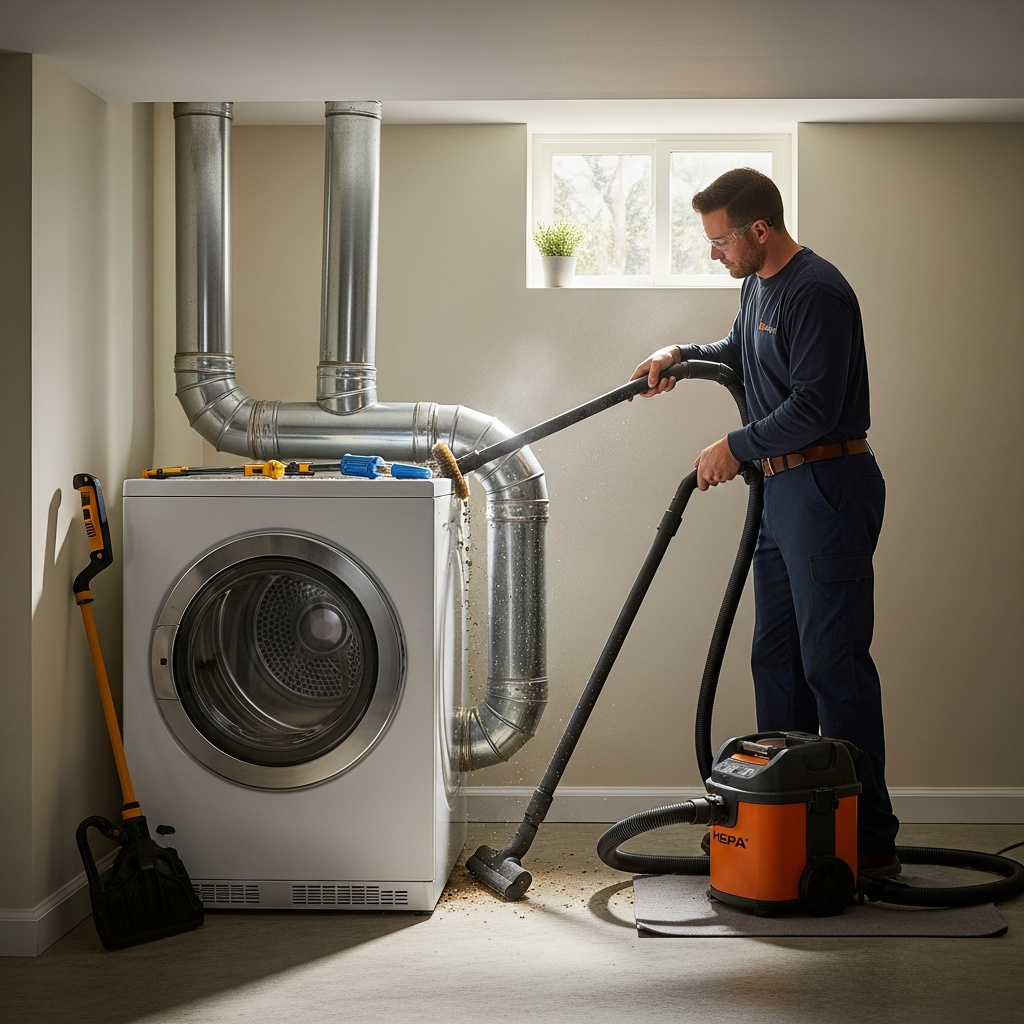
A thorough service goes far beyond vacuuming near the lint trap. Professional technicians use a combination of inspection, agitation, and high-powered suction to clean the entire length of the system:
- Inspection and airflow testing: Before starting, many pros measure airflow at the exterior vent to establish a baseline and identify severe restrictions.
- Equipment setup: They protect floors, move the dryer safely, and disconnect the transition duct to access the vent connection.
- Rotary brush or air whip tools: These specialized tools travel through the duct, dislodging compacted lint, pet hair, and nesting materials.
- HEPA-filtered vacuum extraction: Captured debris is removed cleanly to avoid dust or lint clouds in the home.
- Exterior hood cleaning: Technicians remove trapped lint, confirm flapper operation, and check that screens are not installed where they can trap lint.
- Transition duct evaluation: If your dryer is connected with foil or plastic flex, they may recommend upgrading to a code-compliant, UL-2158A–listed transition duct for better safety and performance.
- Final testing: After reassembly and proper dryer placement, they confirm strong airflow and shorter cycle times.
DIY Versus Professional in Somerville
Homeowners can and should clean the lint trap after every load and vacuum around and behind the dryer periodically. However, most ducts include sections you cannot reach without specialized tools. DIY kits can help with short, straight runs, but many Somerville homes have multiple elbows, long basement or attic runs, or rooftops that require safe ladder work and roof access. A professional cleaning reduces risk, protects your dryer warranty, and gives you a documented maintenance record you can share if you sell your home.
Choosing the Right Local Provider
- Look for proper licensing and insurance to protect your home and the technicians working on it.
- Ask about tools and methods; rotary brushing with high-powered vacuum extraction is a proven standard for compacted lint.
- Confirm experience with your home type—historic houses, multi-family buildings, or roof terminations all require specialized know-how.
- Expect education: The best providers explain findings, show before-and-after airflow results when possible, and provide maintenance tips.
- Request documentation: Photos of problem areas, notes about duct materials, and any repair recommendations help you plan future care.
In the middle of your decision-making process, it helps to review a reputable local option for professional dryer vent cleaning so you can compare service scope, scheduling ease, and the quality of homeowner guidance you will receive.
Safety and Code Considerations in New Jersey
While specific requirements can vary by municipality, there are widely accepted best practices that improve performance and safety. Vent paths should be as short and straight as possible, using smooth-walled metal ducting, with limited elbows to reduce resistance. Screws that penetrate the duct interior should be avoided because they snag lint. The transition duct connecting the dryer to the wall should be UL-2158A–listed and kept as short as practical. The vent must discharge outdoors, never into attics, crawlspaces, or garages. Exterior hoods should not be screened in a way that traps lint; instead, a damper-style hood or louvered cover is preferred. These principles keep lint moving, minimize heat buildup, and align with common code guidance used by inspectors in and around Somerville.
Maintenance Schedule and Easy Homeowner Checklist
How often should Somerville residents schedule dryer vent cleaning? A typical household benefits from annual service, while homes with high laundry volumes, multiple pets, or long vent runs may need semiannual visits. Between professional services, use this checklist to keep your system clear and efficient:
- After every load, clean the lint screen thoroughly. Rinse it occasionally to remove fabric softener residue that can block airflow.
- Monthly, vacuum around and behind the dryer to capture stray lint and dust that could be drawn into the vent connection.
- Inspect the transition duct for kinks or crushing each season, especially if the dryer has been moved during cleaning or remodeling.
- Step outside during a drying cycle to confirm the exterior damper opens fully and you feel strong airflow.
- In winter, check for frost or condensation on the exterior hood that might indicate insulation or airflow concerns.
- Trim landscaping near the vent outlet so plants do not block the damper or catch lint.
- After large loads of towels or bedding, expect a bit more lint; be diligent about cleaning the screen and consider running the dryer on appropriate settings to avoid over-drying.
- If you notice musty odors, run the dryer empty on a warm setting for a few minutes after washing heavily soiled or damp items to move residual moisture out of the duct.
- Keep the laundry area clear of storage that can press against the transition duct or limit make-up air to the dryer.
- Mark your calendar for the next professional appointment based on your household’s laundry habits and the technician’s recommendations.
Frequently Asked Questions
Q: How long does a professional dryer vent cleaning take in Somerville? A: Most appointments take between 45 and 90 minutes depending on duct length, number of elbows, and how compacted the lint is. Complex layouts or rooftop terminations can add time for safe access.
Q: Will cleaning really speed up drying times? A: Yes. Restored airflow removes moist air efficiently, allowing clothes to dry faster and more evenly, often reducing cycle times dramatically.
Q: How do I know if my vent exits the roof or wall? A: Walk the exterior of your home to look for a damper-style hood near the laundry room. If none is visible, your vent may travel to the roof. A professional can trace the route during inspection.
Q: Can I just replace the transition duct to fix the problem? A: A safer, code-listed transition duct is important, but it does not remove lint deeper in the system. Full-length cleaning is the best approach.
Q: Are birds or rodents a common issue? A: Yes, particularly if the exterior hood is damaged. Nests and debris can block airflow. Technicians remove obstructions and may recommend a proper pest-resistant hood that does not trap lint.
Q: How often should landlords or property managers schedule service? A: Multi-family buildings or rentals benefit from regular, documented maintenance. Annual cleaning per unit is a strong baseline, with additional service for high-use laundry rooms.
Q: Will cleaning affect my dryer warranty? A: Proper maintenance supports warranties by keeping the appliance within normal operating conditions. Always follow manufacturer recommendations.
Q: What if my duct is too long or has many bends? A: A professional can suggest route improvements, booster fans where permitted, or material upgrades to improve airflow and safety.
Ready to Schedule Your Dryer Vent Service in Somerville?
If your laundry takes too long, the laundry room feels hot, or you simply want peace of mind, bring in a local expert who understands Somerset County homes and the nuances of safe venting. Book dependable dryer vent cleaning service today and enjoy faster cycles, a safer home, and a more efficient dryer throughout the year.
