Step-by-Step Guide to Installing a Dryer Vent in Somerville, New Jersey
Installing a dryer vent correctly is one of the most important safety and performance upgrades you can make to your laundry area. Whether you are renovating an older Somerville home or replacing a makeshift setup, this step-by-step guide walks you through planning, materials, and execution. Even if you choose to hire a professional, understanding the process helps you prepare your space, ask informed questions, and verify a safe, efficient result. If you want a quick overview before diving in, explore local best practices for dryer vent installation to see how route design and materials influence performance.
Before starting, confirm your dryer type. Standard vented dryers exhaust to the outdoors through a duct. Condensing or heat pump models may not require a traditional vent, though they have their own maintenance needs. For vented models, this guide focuses on safe exterior venting that supports airflow, reduces lint accumulation, and protects your home from moisture problems.
Plan the Route
Begin by identifying the shortest, straightest path from the dryer to an acceptable exterior wall. Minimize elbows and avoid routing through attics, garages, or concealed cavities that are difficult to service. Check the dryer manufacturer’s equivalent length limits and factor in every elbow or transition. If your laundry room is interior, consider whether a vertical rise then horizontal run to a sidewall termination is feasible while staying within limits.
In Somerville’s varied housing, older walls may include masonry or plaster that requires careful coring. Newer homes often provide framed utility chases that simplify routing. Wherever possible, design the path to allow future cleaning with straightforward access points.
Choose Materials
For the primary run, use smooth, rigid metal duct. It provides superior airflow and resists crushing. Semi-rigid aluminum can be used as a short connector between the dryer and the wall when space is tight. Avoid flexible foil or plastic for the main run because it traps lint and collapses easily. Select wide-radius elbows to reduce turbulence and keep the run aligned with minimal resistance.
For sealing joints, use metal foil tape rated for HVAC applications. Do not use cloth duct tape; it degrades under heat and humidity. Choose an exterior termination cap with a low-resistance backdraft damper and an opening large enough to pass exhaust freely. If you will penetrate masonry, have the appropriate sleeve and sealants ready to maintain a clean, weathertight opening.
Prepare the Work Area
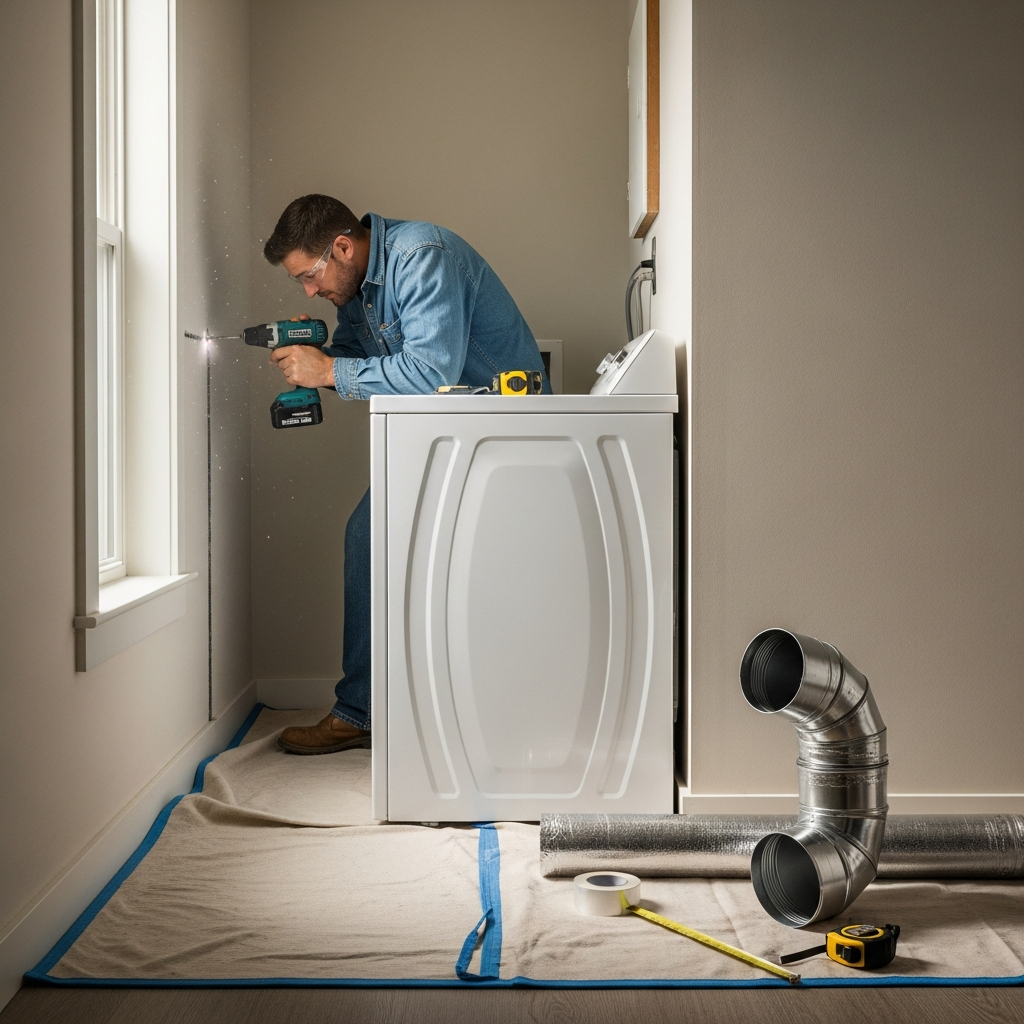
Unplug the dryer and, if it is gas-fired, close the gas valve. Pull the unit away from the wall to create room for measuring and assembly. Protect floors and nearby finishes. Plan where the wall penetration will be made and verify there are no utilities in the way. In multi-story or multifamily buildings, coordinate with building management if approvals are required for exterior changes.
Measure twice and mark the centerline for the penetration. Confirm exterior clearances per local guidelines so the termination is not too close to corners, windows, or pathways.
Create the Exterior Penetration
Drill a pilot hole to confirm location and angle. Then, use the appropriate hole saw or coring tool sized to the duct and sleeve. When passing through masonry or thick siding, proceed slowly and support the surrounding material to avoid cracks. Install the sleeve if used, then dry fit the termination cap to verify alignment and slope to the exterior for drainage.
Weatherproofing is essential in Somerville’s climate. Apply flashing or sealants compatible with your siding or masonry. The goal is a neat, weathertight opening that looks intentional and sheds water away from the wall assembly.
Assemble the Interior Duct
Start at the exterior and work inward or vice versa, depending on access. Fit rigid sections together with the crimped end pointing in the direction of airflow to reduce lint snags. Orient elbows for the gentlest turns possible and align the run to keep it straight and supported. Mechanically secure joints where appropriate and seal seams with metal foil tape. Avoid screws that protrude into the airstream.
If you must pass through unconditioned spaces, consider insulating the duct to minimize condensation risk during cold Somerville winters. Keep any insulation removable or positioned to allow future cleaning access.
Connect the Dryer
Use a short length of semi-rigid aluminum connector if space behind the dryer is tight, or a carefully measured rigid section if clearance allows. Form a gentle bend—never a sharp kink—and leave room so the dryer can be pushed back without crushing the connector. Secure with appropriate clamps and verify that the connection is airtight with metal foil tape where needed.
Before repositioning the dryer, confirm that the exhaust port, connector, and wall transition are aligned. An awkward angle here is a common source of restriction and future maintenance issues.
Test and Commission the Vent
Restore power and, if applicable, reopen the gas valve. Run a timed dry cycle and observe the exterior damper. It should open fully and move freely. Check for leaks along the joints and reseal as needed. Listen for rattling or vibration that could indicate misalignment. Measure or estimate airflow if you have the tools; otherwise, confirm normal dry times and even heat distribution in the laundry area.
Label the route’s equivalent length and note the date of installation. This record helps schedule cleanings and informs any future modifications.
Safety and Code Considerations
Always vent to the outdoors—never into an attic, crawlspace, or interior room. Use materials acceptable to the appliance manufacturer and local code. Keep the number of elbows to a minimum and avoid screws that protrude into the duct interior. Maintain proper clearances around the dryer for cooling and service access. Where permits or inspections apply, coordinate with local authorities or your building association.
In older Somerville homes, pay special attention to preserving structural members and protecting utilities. If in doubt, consult a professional to verify that the planned penetration and route are safe and compliant.
Maintenance Starts on Day One
Good installation sets you up for easier maintenance. Straight runs with smooth interior surfaces collect less lint and are simpler to clean. Establish a cleaning schedule based on your usage patterns—households that launder towels and bedding frequently may need more frequent service. Check the exterior termination seasonally to confirm free damper movement and remove debris.
Monitor dry times. A gradual increase often signals developing restriction that is easiest to address early. Keep the short connector behind the dryer untwisted and inspect it when you move the appliance for cleaning.
Troubleshooting Common Issues
If the damper barely opens during a cycle, suspect restriction from excessive equivalent length, crushed connectors, or lint accumulation. Reassess elbow orientation and consider upgrading to long-sweep elbows. If you notice moisture or lint near the termination, verify that the cap is appropriately sized and that there are no screens trapping lint. A hot laundry room or a burnt smell indicates immediate attention is required—stop the dryer and investigate for blockages.
Crushed or damaged connectors behind the appliance are frequent culprits. Leave adequate space when pushing the dryer back and consider slim-profile elbows only if they maintain a generous internal radius.
Somerville-Specific Tips
Cold snaps can stiffen dampers or encourage condensation in ducts that pass through unconditioned spaces. Periodic winter checks help you catch issues early. In neighborhoods with close setbacks, position the termination to avoid blowing lint onto pathways or neighboring properties. For masonry exteriors, a clean, properly sealed opening improves durability and curb appeal.
In multifamily buildings, verify rules for exterior penetrations and coordinate access for any ladder work. Clear communication with building management smooths the process and helps ensure compliance.
Frequently Asked Questions
Q: Can I vent through the roof instead of a sidewall? A: Roof terminations are sometimes used, but sidewall terminations are generally preferred for accessibility and airflow. If a roof vent is necessary, plan for careful routing, weatherproofing, and maintenance access.
Q: Is flexible foil duct acceptable for the whole run? A: It is generally discouraged for the primary run due to collapse and lint accumulation. Use smooth, rigid metal duct for most of the path and reserve semi-rigid only for short connectors when needed.
Q: How many elbows are too many? A: Follow your dryer manufacturer’s equivalent length limits. Fewer and gentler elbows are better. Long-sweep elbows help reduce the airflow penalty of each turn.
Q: Do I need a permit? A: Requirements vary. Check with local authorities or your building association. A professional familiar with Somerville practices can advise on approvals.
Q: How often should I clean the vent? A: Many households benefit from annual cleaning, but frequency depends on usage patterns and route complexity. Monitor dry times and damper movement between cleanings.
Q: What if my existing hole is in a poor location? A: It is usually worth patching and creating a new, better-positioned opening. A correct route outperforms a compromised one every time.
From Plan to Reliable Performance
A carefully planned and executed dryer vent installation yields safer operation, faster dry times, and less maintenance. By prioritizing smooth, rigid duct, minimizing elbows, and selecting a quality termination cap, you give your dryer the environment it needs to work efficiently. Document your route, test thoroughly, and keep an eye on seasonal changes that can affect performance in Somerville.
If you would like expert help with route design, coring, sealing, and airflow verification, partner with a local team that treats each home as unique and installs with precision. For scheduling and support from start to finish, request professional dryer vent installation services tailored to Somerville homes.
