
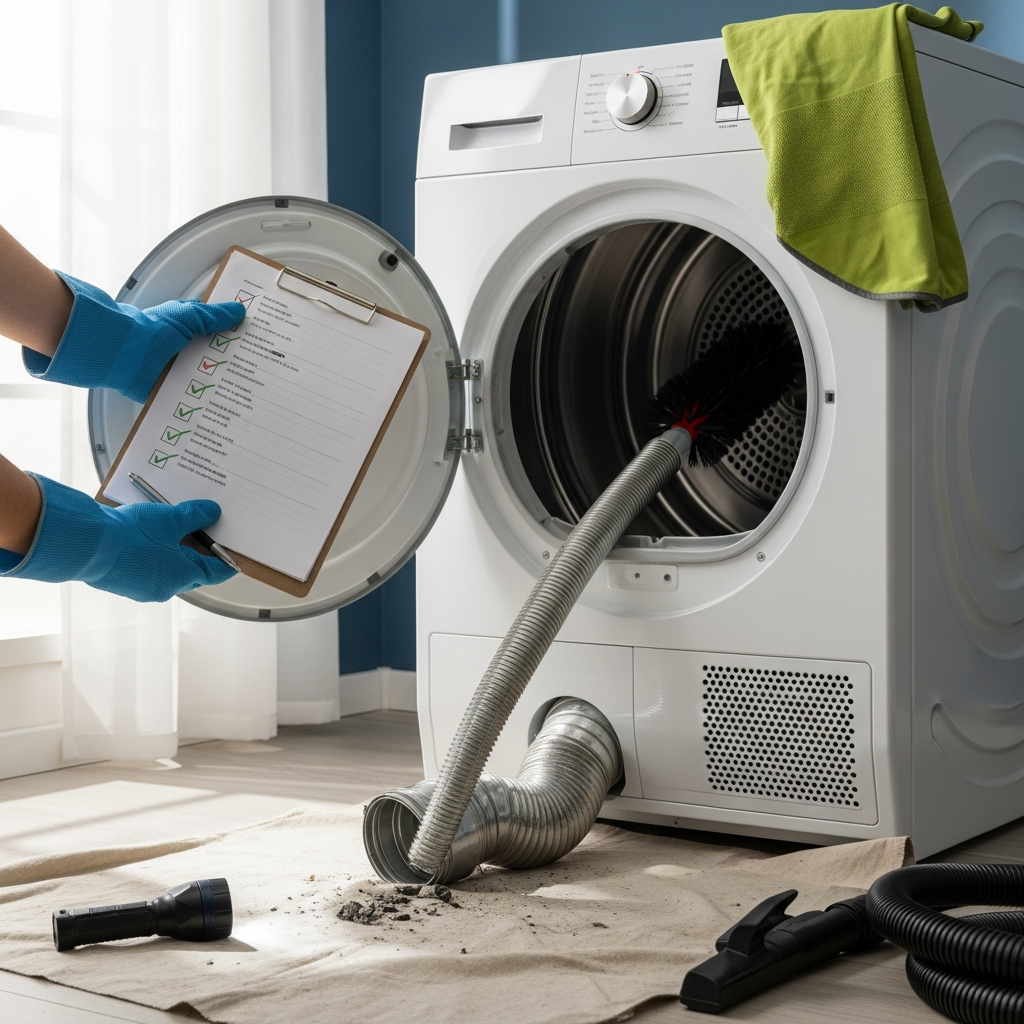
This comprehensive dryer vent cleaning checklist for Somerville, New Jersey homeowners will help you maintain safe, efficient laundry days throughout the year. While many steps are manageable for a careful do-it-yourselfer, long or complex vent paths benefit from professional attention. If you notice longer dry times, hotter surfaces, or odors when the dryer runs, plan a complete evaluation and consider professional dryer vent cleaning to restore proper airflow.
Preparation and Safety
- Power: Unplug electric dryers. For gas dryers, close the gas valve if you will move the appliance; handle reconnection with care.
- Clearance: Pull the dryer out gently to avoid crushing the transition duct.
- Protection: Lay a drop cloth and keep a trash bag ready for lint disposal.
- Tools: Lint brush, rod-and-brush kit, vacuum with narrow attachment, flashlight or small camera.
- Materials: Prefer semi-rigid or rigid metal transition ducts. Avoid plastic or thin foil.
Initial Checks
- Clean the lint screen and wash it periodically to remove fabric softener residue.
- Check the area behind and under the dryer for lint buildup.
- Inspect the transition duct for kinks, crushing, or damage.
- Identify the vent path and exterior termination location.
Cleaning the Appliance and First Section
- Remove the lint screen and use a flexible brush to reach the housing.
- Vacuum any loosened lint at the housing opening.
- Detach the transition duct carefully and inspect the first elbow for visible buildup.
- Use a rod-and-brush to agitate lint in the accessible portion of the vent.
Working Through the Vent Run
- Advance the brush slowly, rotating to agitate lint and withdrawing periodically to clear debris.
- Do not force through tight bends. If resistance is strong or the path is unclear, stop and reassess.
- Move outside and clean the exterior hood, ensuring the damper opens freely.
- Reassemble the transition duct, ensuring it is not crushed when the dryer is moved back.
Final Checks and Airflow Verification
- Run the dryer on a warm cycle and observe the exterior hood; the damper should open widely.
- Confirm that dry times are reasonable for your load size and fabric type.
- Listen for unusual sounds that could indicate a kinked transition or blocked elbow.
When to Call a Professional
- Long vent runs (15 feet or more) or multiple elbows.
- Roof or second-story terminations requiring ladder access.
- Persistent long dry times despite cleaning the accessible sections.
- Gas dryer reconnection concerns or suspected backdrafting issues.
Midyear Maintenance: Keep Performance Consistent
Somerville’s seasons affect vent performance. Spring brings yard debris and potential nesting at the hood. Summer humidity can cause clumping inside long runs. Winter can restrict dampers with ice or snow, especially on low-mounted terminations. Check the exterior hood seasonally and watch drying times; small changes are early warnings that airflow is declining. If issues recur quickly after a basic clean, book a thorough, end-to-end dryer vent cleaning so the entire run is addressed.
Checklist: Signs Your Vent Needs Immediate Attention
- Dry cycles suddenly take much longer than usual.
- The dryer or surrounding area feels unusually hot during operation.
- There is a burning or musty odor while the dryer runs.
- Lint appears around the exterior hood or the damper barely moves.
- It has been a year or more since your last professional cleaning, or you have a high-usage household.
Best Practices for Everyday Use
- Clean the lint screen before every load.
- Avoid overloading; run similar fabrics together to shorten cycles.
- Use only metal transition ducts—semi-rigid or rigid—and avoid crushing them when positioning the dryer.
- Keep the laundry area clear so airflow around the appliance is not restricted.
Frequently Asked Questions
Q: How often should I clean the vent? A: Most households do well with annual cleaning. Larger families, pet owners, or homes with long vent runs may benefit from service every six to nine months.
Q: Can I do the job myself? A: Short, straight runs are approachable with a rod-and-brush kit. Complex or long runs, roof terminations, and gas dryers are better handled by a professional.
Q: How do I know the cleaning worked? A: Expect a damper that opens fully, stronger airflow outside, and noticeably shorter dry times.
Q: Is plastic transition duct acceptable? A: No. Use semi-rigid or rigid metal for safety and durability.
Q: Why does humidity matter? A: Humid air can cause lint to clump, restricting flow more quickly during summer months.
Recordkeeping and Routine
- Note your service dates and any changes in dry times.
- Set calendar reminders for seasonal hood checks and annual cleaning.
- Keep receipts and notes about vent configuration to speed future appointments.
Make Laundry Safer and Easier
A clear, well-maintained vent helps your dryer work as designed, protecting your home and your time. Whether you are following this checklist for a quick touch-up or preparing for an in-depth service visit, consistent care pays off in faster cycles, cooler surfaces, and peace of mind. When you are ready for a thorough, start-to-finish result, schedule professional dryer vent cleaning with a trusted Somerville team and enjoy smooth, reliable laundry days all year long.
