Planning dryer vent installation for a new home in Somerville, New Jersey is a chance to get everything right from day one. Good design choices at the blueprint stage lead to faster drying, safer operation, and easier maintenance for years to come. By selecting optimal locations, minimizing duct length, and integrating durable materials and terminations, builders and homeowners can avoid the compromises often required in retrofits. If you want expert guidance through layout, materials, and testing, consider working with a local specialist in dryer vent installation who understands the needs of new construction.
New builds offer unmatched flexibility. With walls open and framing accessible, you can prioritize a clean, short route, align utility chases, and pre-plan service access. The result is a system that performs well from the first cycle and remains serviceable for the long haul.
Locate the Laundry with Venting in Mind
Dryer placement is the single biggest factor in vent performance. Position the laundry room or closet on an exterior wall whenever possible so the vent can terminate nearby with minimal elbows. If an interior location is preferred, design a direct chase to the exterior that avoids competing utilities and excessive turns. A few inches of appliance placement flexibility can eliminate an elbow or shorten the run by several feet.
In multi-story homes, think vertically. Stacking laundry centers or second-floor laundries can work well when chases are straight and properly sized. Align floor penetrations to maintain a true path and simplify future cleaning.
Choose Durable, Code-Conscious Materials
Rigid metal duct for the primary run remains the best practice for airflow and lint resistance. Keep any transition duct between the appliance and wall box short and straight. Specify an exterior termination with an integral backdraft damper and no screen. Select materials early so rough-in openings are cut to the correct size and location, avoiding patchwork fixes late in the build.
Support brackets, listed foil tape for joints, and a recessed vent box in tight closets are small details that elevate quality. Confirm that the chosen dryer model’s maximum equivalent length will accommodate your planned route with margin to spare.
Design the Route Before Mechanical Rough-In
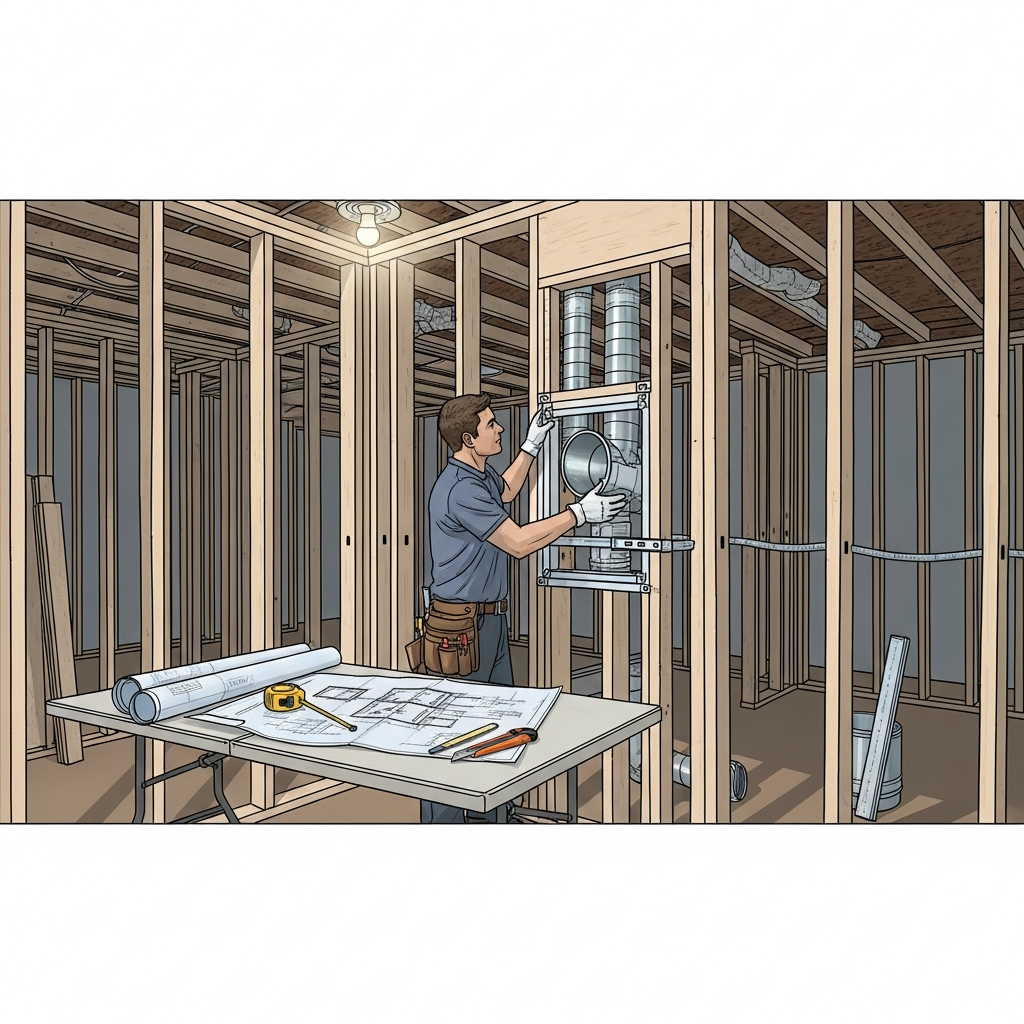
Coordinate with framing, plumbing, electrical, and HVAC trades to keep the dryer vent route clear. Avoid intersecting studs, joists, and ducts that would force extra elbows. Pre-mark the centerline of the run on framing members to guide hole cuts and keep the path straight through each level.
Where chases pass through unconditioned spaces, plan for solutions that reduce condensation risk per manufacturer instructions. Maintain accessibility by avoiding concealed cavities without service panels or reasonable access for future cleaning.
Frame and Rough-In with Precision
Once the route is set, frame penetrations to the proper diameter and height relative to the planned dryer location. In laundry closets, consider a recessed vent box that sets the connection neatly within the wall, protects the transition duct, and allows the dryer to sit closer without crushing the connector.
Dry-fit rigid duct sections during rough-in to confirm elbow orientation and support spacing. A clean rough-in saves time during trim and reduces the chance of last-minute changes that could compromise airflow.
Install the Exterior Termination Correctly
Cut a clean exterior opening and install a termination with an integral damper, flashing, and sealant compatible with the cladding. The cap should sit square and flush, and the damper should move freely. Choose a height and location that remains accessible for future inspection while staying clear of landscaping and snow accumulation zones typical in New Jersey winters.
Document the termination location on the plan set for future reference. Clear labeling helps homeowners and service providers locate and check the cap quickly.
Seal, Support, and Label
Assemble rigid duct with smooth joints sealed by high-temperature foil tape. Avoid screws that intrude into the airstream, which can catch lint. Provide supports at regular intervals to prevent sagging and to maintain alignment through changes in direction. Where elbows are necessary, use long-radius fittings and keep counts low to preserve airflow.
Label the route on the mechanical plan and note the total equivalent length. Include this information in the homeowner handoff packet so ongoing maintenance can be scheduled appropriately.
Coordinate Appliance Selection and Clearances
Final appliance selection should confirm compatibility with the planned route. Review the dryer’s installation manual for maximum equivalent length, approved transition connectors, and required clearances. Ensure the laundry space provides adequate room for duct connections, plumbing lines, and electrical or gas hookups without compromising the vent path.
In small laundry closets, pocket or outswing doors and a recessed vent box can protect the transition duct and maintain the necessary clearances while keeping the footprint compact.
Test and Document at Closeout
Before drywall is finished, photograph the route and supports. After trim-out and appliance set, run the dryer and verify that the exterior damper opens fully and that airflow is strong and steady. Check for leaks at joints and confirm that the transition duct is short, straight, and undamaged.
Provide the homeowner with a concise record including photos, the route path, total equivalent length, termination type and location, and recommended maintenance intervals. Clear documentation is a valuable part of a professional new-home handoff.
Plan for Maintenance from Day One
Integrate maintenance planning into the build. Ensure there is enough space behind and beside the dryer to pull it out for cleaning. Consider simple access panels where the duct passes through concealed spaces. Educate the homeowner on cleaning the lint trap every load and scheduling periodic professional vent cleaning. A well-planned system encourages good habits that keep the vent safe and efficient.
Seasonal reminders are especially helpful in Somerville: after winter storms and heavy leaf drop, a quick exterior check ensures the damper moves freely and the cap is clear.
Address Special Cases in New Construction
Some new homes include features that affect vent planning. In multi-unit buildings or townhomes, shared walls and rated assemblies require careful penetrations and sealing. In energy-efficient builds with tight envelopes, plan for adequate makeup air and appliance clearances to avoid negative pressure. For laundry rooms located far from exterior walls, a straight, purpose-built chase can preserve airflow while maintaining architectural intent.
Where noise transfer is a concern, thoughtful routing and support spacing minimize vibration. Avoid placing the termination near bedrooms or quiet outdoor spaces if possible, or choose locations that direct exhaust and sound away from sensitive areas.
Frequently Asked Questions
Q: What is the ideal dryer location in a new home? A: On or near an exterior wall to minimize duct length and elbows, improving airflow and simplifying maintenance.
Q: Which duct material should be specified? A: Rigid metal duct for the main run, with a short, straight listed transition connector between the dryer and wall box.
Q: Are roof terminations recommended for new builds? A: Wall terminations are often preferred for access and maintenance, but roof terminations can work when flashed correctly and inspected regularly.
Q: How do I ensure the route meets the dryer’s limits? A: During design, calculate total equivalent length, including penalties for elbows, and compare it to the manufacturer’s maximum. Build with margin to accommodate future changes.
Q: What should be in the homeowner packet at closeout? A: Photos, route diagrams, total equivalent length, termination details, and maintenance guidance including recommended cleaning intervals and warning signs.
Q: Can I place the laundry in an interior location? A: Yes, provided a direct chase to the exterior is planned with minimal elbows and adequate access for future cleaning and inspection.
Build It Right From the Start
New construction offers a rare opportunity to engineer a vent system that is safe, efficient, and easy to maintain. With careful placement, durable materials, and documented testing, homeowners can enjoy reliable performance for years. For guidance from planning through final verification, partner with a local team that specializes in new-home dryer vent installation and hand off a system that lives up to the quality of the rest of the build.
