Introduction
For restaurants, caterers, cafeterias, and commercial food operations in Somerville, New Jersey, a clean and well-maintained kitchen exhaust hood is central to fire safety, indoor air quality, and regulatory compliance. Grease accumulation threatens more than aesthetics; it can fuel fires, impair ventilation, and shorten equipment life. Clear, consistent procedures supported by documentation protect staff, patrons, and assets while aligning with commonly referenced national fire safety standards and local expectations. If you need help creating a compliant cleaning plan, Somerville-based professionals provide end-to-end kitchen exhaust hood cleaning that pairs practical fieldwork with recordkeeping you can present during inspections.
This guide outlines the responsibilities that businesses typically address: defining cleaning intervals based on cooking risk, establishing safe methods, training staff on daily and weekly care, and documenting professional service. While each jurisdiction may interpret or enforce rules differently, the core elements below are widely recognized best practices for commercial operations.
Risk-Based Cleaning Intervals
Commercial cleaning intervals are generally tied to cooking volume and methods. Heavier grease production demands more frequent hood, duct, and fan cleaning to control risk.
- High-volume, solid-fuel, or heavy frying: Very frequent cleaning to keep grease in check and maintain safe, efficient capture of smoke and vapor.
- Moderate-volume cooking: Routine professional service supported by staff-led filter and canopy care between visits.
- Low-volume or light-duty cooking: Longer intervals may be acceptable, but visible grease or odor remains the ultimate trigger for service.
Document your interval selection, the factors that justify it, and the date of your last and next planned cleanings. Adjust as menus, equipment, or staffing change.
Staff Responsibilities Versus Professional Service
Most businesses use a hybrid model that combines frequent staff cleanings with periodic professional service. Define and train on clear boundaries:
- Daily: Wipe canopy, control surfaces, and backsplash; confirm filters are seated correctly; clear spills or drips in drip trays.
- Weekly: Wash baffle filters, detail the canopy edges and seams, and log the work.
- Professional cycle: Clean interior plenum, ducts, and exhaust fan assemblies using specialized tools and methods, then provide documentation including before/after notes or photos when possible.
Documentation and Logs
Good records demonstrate due diligence and help during health or fire inspections. Keep a binder or digital log with:
- Service dates and provider information
- Scope of work performed and any corrective actions
- Filter washing schedule and initials of staff who completed tasks
- Observed issues such as unusual noise, vibration, or airflow changes
- Copies of training checklists or brief safety talks
Cleaning Procedure Essentials
Day-to-day procedures at the business level should follow safe, repeatable steps that protect staff and equipment.
- Power and cool-down: Ensure the cookline and the hood are cool. If possible, disconnect power to the hood during cleaning.
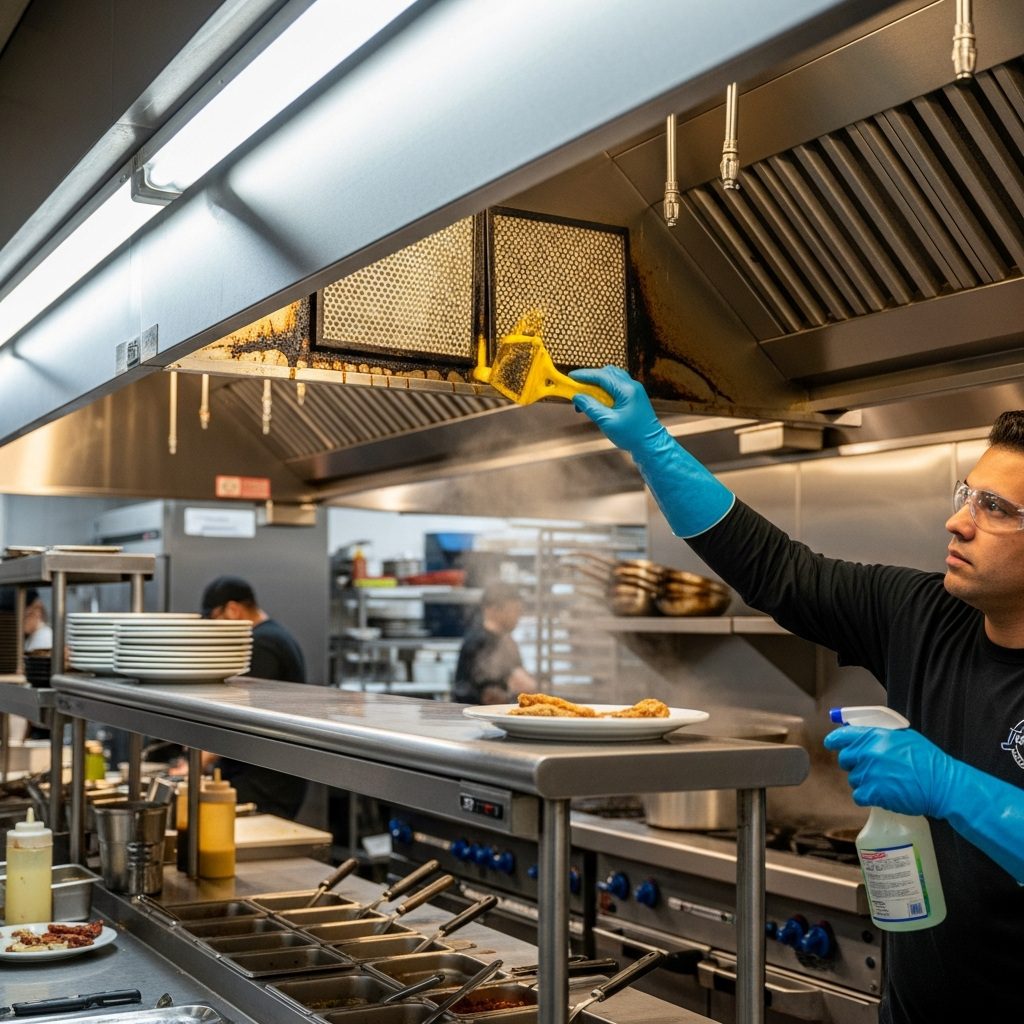
- Personal protective equipment: Provide gloves, eye protection, and non-slip shoes. Train staff to handle degreasers responsibly.
- Protect the area: Use floor mats, towels, or liners to catch drips. Cover sensitive electronics or POS stations if they are near the cookline.
- Filter care: Remove baffle filters, soak in warm soapy water with degreaser as needed, scrub, rinse, and dry fully before reinstalling.
- Canopy and plenum: Wipe the exterior canopy daily; schedule weekly interior wipe-downs by trained staff, keeping liquids away from electronics.
- Fan and ducts: Assign these to professional cleaners who can access, clean, and verify hard-to-reach components safely.
Somerville Facility Considerations
Facilities in and around Somerville may experience seasonal airflow shifts. Packed dining rooms in winter mean doors open less often, affecting makeup air. Summer humidity can increase stickiness and grease adhesion. Build these realities into your interval plan, especially during peak seasons or special events that drive volume. If you introduce a new fryer or charbroiler, reassess your schedule immediately.
Verification and Quality Control
Verification builds confidence that procedures work and that staff understand expectations. Use the following checks:
- Visual and tactile tests: Surfaces should look uniform and feel smooth, not tacky.
- Airflow observation: Cooking steam should move decisively toward the hood intake.
- Noise profile: Fan operation should be even and free of rattles, which can indicate loose panels or mis-seated filters.
- Odor resolution: Odors should dissipate promptly after cooking. Persistent smells suggest missed areas or clogged filters.
Training and Safety Culture
Integrate hood care into onboarding and refresher training. Emphasize safe chemical handling, proper PPE, and when to stop and call a supervisor or professional—especially if something seems unsafe or beyond staff scope. Short toolbox talks at shift change reinforce habits, and posted checklists near the cookline make it easy to follow steps in the rush of service.
Coordination with Other Vendors
Kitchen exhaust cleaning intersects with several specialties. Fire suppression technicians verify that hood-mounted systems remain ready. HVAC contractors ensure balanced makeup air and correct fan speeds. Renovation teams may alter duct paths or fan types. Keep lines of communication open so changes do not undermine capture efficiency or cleaning access. When the rooftop fan is involved, verify that access is safe and that reinstallation maintains correct belt tension and rotation direction.
Mid-Cycle Professional Support
If you suspect grease beyond the plenum, notice reduced capture at peak times, or experience persistent fan noise, schedule a professional assessment. In Somerville, dedicated providers offer full-service kitchen exhaust hood cleaning that includes documentation suitable for audits and inspections, giving managers confidence that risk is being actively controlled.
Frequently Asked Questions
Q: How often should a busy fryer line schedule professional cleaning?
A: Heavier grease production typically demands frequent service. Confirm intervals by monitoring visible film on baffles, odors, and airflow behavior during peak hours, then adjust accordingly.
Q: Can my staff clean the ductwork to save time?
A: Duct interiors and fans require trained personnel and specialized tools. Assign these tasks to professionals to protect safety and maintain compliance.
Q: What documentation should I keep?
A: Maintain service dates, provider details, task scope, staff filter-wash logs, and notes on issues. Organized records simplify inspections and support risk management.
Q: How do I handle noise after cleaning?
A: Check that baffles are seated, panels are tight, and fan belts are correctly tensioned. Persistent vibration or noise warrants a service call.
Q: Are eco-friendly degreasers acceptable in a commercial environment?
A: Yes, provided they are effective and used according to label directions. Train staff on dwell times and proper rinsing to avoid residue.
Q: How do renovations affect cleaning requirements?
A: Any change to cookline layout, hood size, or duct routing should trigger a reassessment of cleaning intervals, access points, and documentation practices.
Take the Next Professional Step
A clear plan, trained staff, and consistent documentation set the foundation for safer, cleaner commercial kitchens. When your team needs deeper access, rooftop fan service, or inspection-ready records, schedule comprehensive kitchen exhaust hood cleaning and keep your Somerville operation confident and audit-ready.
