
Introduction
A practical maintenance checklist transforms kitchen exhaust hood care from an occasional chore into a reliable routine. In Somerville, New Jersey, households and property managers benefit from a schedule that aligns with seasonal changes, cooking styles, and equipment type. By methodically addressing filters, the plenum, the fan intake, and surrounding surfaces, you protect airflow, reduce odors, and lower the risk of grease-related incidents. For those who prefer a supported approach or need documentation for rentals and multi-unit properties, local professionals deliver thorough kitchen exhaust hood cleaning to keep systems running at their best.
Use this checklist as a living document. Adjust frequencies to match real-world use. If your home sees frequent frying, grilling, or high-heat cooking, shorten intervals. If you primarily bake and simmer, extend them modestly. When in doubt, inspect and decide; clean surfaces should look uniform, feel smooth, and pass an odor test after your next meal.
Daily and After-Use Habits
- Post-cook canopy wipe: After cooking that generates visible steam or splatter, wipe the exterior canopy with a damp microfiber cloth to capture fresh residue.
- Control panel touch-up: Keep switches and display areas clean using a lightly damp cloth to prevent grime buildup around buttons.
- Quick backsplash check: Wipe a hand’s width on the backsplash directly behind the range to prevent a tacky film line.
- Cooktop perimeter: Clean the zone between the cooktop edge and the counter so new splatter does not quickly re-soil the hood.
Weekly Tasks
- Exterior degrease: Use a kitchen-safe degreaser on the canopy, edges, and underside lip of cabinets near the hood. Follow with a damp rinse and a dry wipe.
- Filter glance: Peek at baffle or mesh filters. If they look glossy or feel tacky, plan a wash. The earlier you address film, the easier it is to clean.
- Light lenses: If accessible, gently wipe covers to remove haze, improving illumination over the cooktop.
Monthly Tasks
- Filter cleaning: Remove filters carefully. Soak in warm soapy water for 10–20 minutes. Add a measured amount of degreaser for heavy film. Scrub with a soft brush and rinse until the water runs clear.
- Dry and reinstall: Air dry completely before seating filters back into the hood. Damp filters can drip and attract dust.
- Interior plenum wipe: With filters out, use a degreaser-damp cloth to clean the interior cavity, seams, and corners. A bottle brush helps along edges and screw heads.
- Drip trays and channels: Wash removable trays or channels, dry thoroughly, and reinstall snugly.
- Backsplash refresh: Degrease and rinse the backsplash area to keep the entire cooking zone fresh.
Quarterly or Seasonal Tasks
- Full interior detail: Increase dwell time for degreaser on stubborn spots, using a plastic scraper to lift hardened layers carefully.
- Fan intake check: If your design allows safe access, lightly wipe accessible fan blades or the impeller. Avoid saturating any electrical parts.
- Hardware tightness: Confirm that filter frames, screws, and panels are snug to reduce rattles and vibration.
- Performance test: Boil water and confirm that steam is captured promptly on low and medium speeds. Listen for smooth, even fan sound.
- Documentation: Record the date, tasks performed, and any observations about airflow or odor. This log helps you adjust schedules and validates care for rentals or property inspections.
Somerville Climate Considerations
Winter often means closed windows and reduced makeup air, which can make hoods seem louder or less effective on low settings. Summer humidity can make grease tackier and faster to accumulate. Adjust the checklist by adding one mid-season wipe-down of the plenum and an extra filter wash after holiday cooking or backyard grilling that rolls into the kitchen. If your home has a powerful range or cooks for larger gatherings, move monthly tasks to every two weeks during peak use.
Supplies and Storage
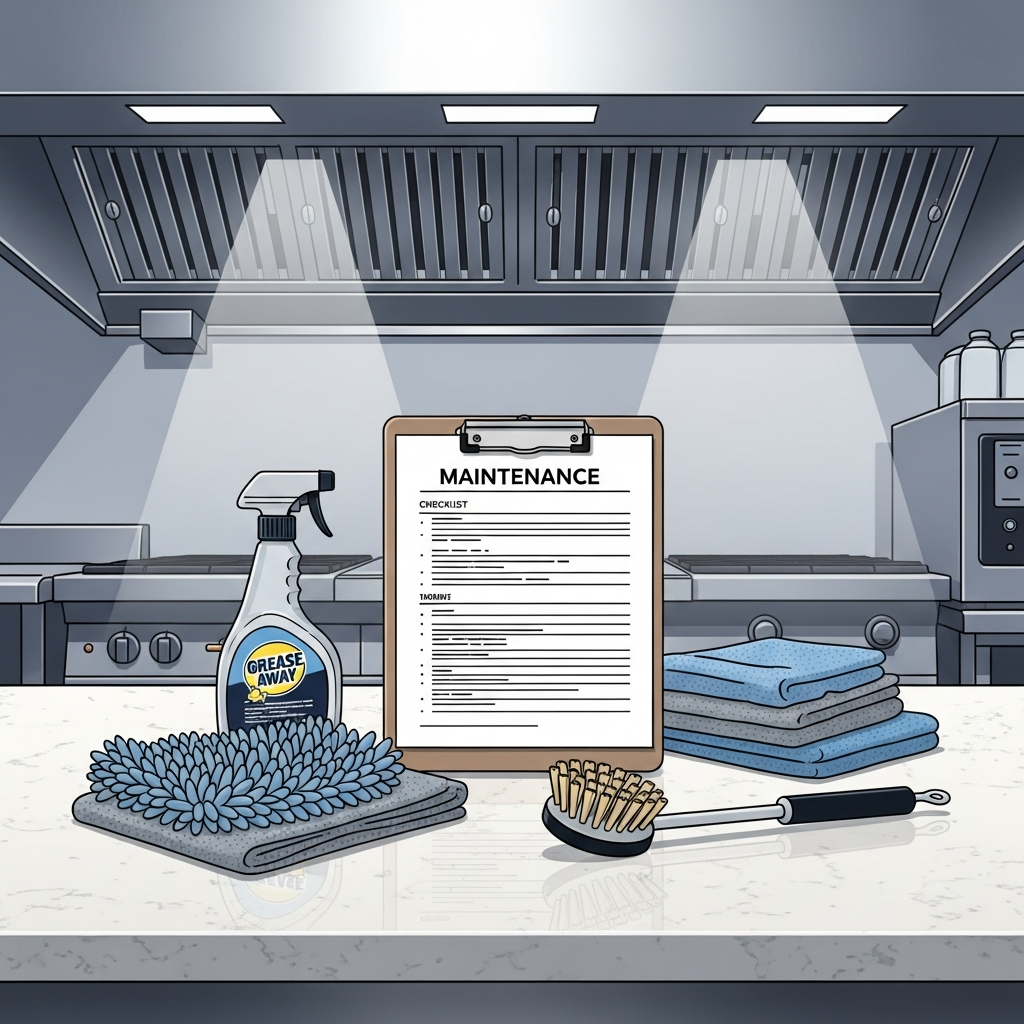
- Degreaser: Keep a kitchen-safe, non-abrasive option on hand. Label it clearly and store out of children’s reach.
- Microfiber cloths: Dedicate a set for hood care to avoid cross-contamination with bathroom cleaning supplies.
- Brush kit: A soft-bristle brush and a narrow bottle brush fit seams, channels, and corners.
- Protective gear: Gloves and glasses reduce risk from splashes and sharp edges.
- Spare towels and liners: Use absorbent towels below the work area to catch drips and keep counters clean.
Signs It Is Time to Clean Now
- Sticky feel on the canopy or filter frames
- Lingering odors after cooking
- Visible film or yellowing near seams and screws
- Rattling or louder-than-usual fan noise
- Steam escaping around the hood instead of being captured
How to Execute the Monthly Filter Wash
- Prepare the space: Turn off power to the hood if possible. Lay towels around the cooktop and clear clutter.
- Remove filters: Support them as they release to avoid bending.
- Soak: Use warm water with dish soap in a sink or bucket. For heavy buildup, add degreaser per label directions and let filters sit for 10–20 minutes.
- Scrub: Work with a soft brush through mesh layers or along baffle channels. Be thorough but gentle.
- Rinse: Flush with warm water until runoff is clear and free of suds.
- Dry: Air dry completely to prevent moisture from entering the hood.
- Reinstall: Seat filters firmly without gaps, clips, or latches misaligned.
Interior Plenum Cleaning Walkthrough
- Access and inspect: With filters removed, use a flashlight to spot grease lines, corners, and seams that trap residue.
- Apply cleaner: Mist onto a cloth, not directly into the cavity, to control overspray around electronics.
- Wipe top-to-bottom: Pull grease downward onto towels, swapping cloths as they saturate.
- Detail corners: Use a bottle brush around screws and edges to free stubborn film.
- Rinse and dry: Wipe with a damp cloth to remove residues and then dry thoroughly to discourage future buildup.
Mid-Checklist Support
Halfway through your seasonal routine, you may wonder whether airflow and odor control are truly optimized. If you want validation or help with hard-to-reach parts and duct access, consider professional kitchen exhaust hood cleaning to complement your efforts and document the results for rentals or property files.
Common Pitfalls to Avoid
- Skipping drying time for filters
- Using abrasive pads that scratch stainless surfaces
- Spraying cleaner directly into light sockets or control panels
- Neglecting drip trays and channels that hold hidden grease
- Waiting until odors return before scheduling the next cleaning
Frequently Asked Questions
Q: How do I know if my checklist frequency is right?
A: Track how quickly the canopy feels tacky and how soon odors return after cooking. If you notice either within two weeks, shorten intervals; if not for several months, you can extend them slightly.
Q: What if I rent my home?
A: Keep a simple log with dates, filter care, and interior wipe-downs. It shows good stewardship and helps during move-in/move-out inspections.
Q: Are recirculating hoods different?
A: Yes. They add a charcoal filter for odor absorption. Your checklist should include replacing that filter on the manufacturer’s schedule, plus routine grease-filter washing.
Q: Can I use baking soda or vinegar instead of degreaser?
A: Mild solutions can help with light film, but a purpose-made degreaser is usually more effective for stubborn grease typical around cooktops.
Q: My hood is still loud after cleaning. What next?
A: Verify that filters are seated, screws are tight, and nothing touches the fan housing. Persistent noise could indicate a motor or duct issue that warrants professional evaluation.
Q: Should I clean the duct myself?
A: Duct interiors require specialized access and safety measures and are best handled by trained technicians.
Keep Your Kitchen Venting at Its Best
Consistency is the secret to a clean, quiet, effective exhaust system. With the checklist above, you can match effort to actual use and keep grease from getting ahead of you. When you want documented results, deeper access, or simply a time-saving option, schedule trusted kitchen exhaust hood cleaning and enjoy a fresher kitchen across every season in Somerville.
