
Introduction
Keeping a kitchen exhaust hood clean is essential for fire safety, indoor air quality, and the daily comfort of cooking in Somerville, New Jersey. Grease, vapor, and microscopic food particles accumulate rapidly in busy home kitchens and even more quickly in high-use environments. Left unmanaged, this buildup can become a fire hazard, create lingering odors, and reduce the efficiency of your fan and filters. Whether you are a homeowner fine-tuning a seasonal deep clean or a property manager overseeing regular maintenance, understanding how to clean a hood properly will help you preserve equipment, meet safety expectations, and enjoy quieter, more effective ventilation. If you prefer expert support or want to verify that your work meets professional standards in Somerville, consider professional kitchen exhaust hood cleaning for reliable results and peace of mind.
This guide walks through safe preparation, recommended tools, proven methods, and inspection tips tailored to the conditions common in Somerset County. You will learn what to do before, during, and after cleaning, how to evaluate your results, and how to set an ongoing schedule that matches your cooking frequency and equipment type.
Before You Begin: Safety and Preparation
Cleaning a kitchen exhaust hood exposes you to grease, sharp metal edges, hot surfaces, and chemical cleaners. Begin with safety to protect yourself and your kitchen surfaces.
- Power and heat: Turn off the cooktop and let all surfaces cool completely. If your hood has a dedicated power switch or plug, switch it off or unplug it for the duration of the cleaning.
- Personal protective gear: Wear cut-resistant gloves, safety glasses, and old clothing. Degreasers can irritate skin and eyes, and metal edges inside a hood or filter frame can be sharp.
- Ventilate the space: Open a window if possible. Place a small fan in a nearby doorway to promote fresh air flow while you work.
- Protect kitchen finishes: Cover the cooktop, counters, backsplashes, and nearby cabinets with absorbent towels or rosin paper. Have a lined trash bin ready for used towels and debris.
- Read your manual: If you have the model number, consult the hood manufacturer’s instructions for filter removal, bulb access, recommended cleaners, and any warranty considerations.
Tools and Supplies You Will Need
Having the right tools at hand makes cleaning safer, faster, and more effective. Assemble the following items before you start:
- Degreaser: A kitchen-safe, non-flammable degreaser suitable for stainless steel and aluminum. Check labels for compatibility with your hood materials and finishes.
- Warm water and mild dish soap: Useful for rinsing and light cleaning when a strong degreaser is not necessary.
- Microfiber cloths and non-scratch pads: Microfiber lifts greasy residue without spreading it. Non-scratch pads help with stubborn spots.
- Soft-bristle brush and bottle brush: Great for scrubbing filter channels, seams, and corners without damaging finishes.
- Plastic scraper: Lifts thick, caked-on grease without gouging metal surfaces.
- Bucket or sink: For soaking baffle or mesh filters. Lay a protective rack or towel in the sink to protect finishes.
- Step stool: Ensures stable, safe reach for the hood canopy and upper controls.
- Flashlight: Helps you see inside the plenum (the interior cavity) and beneath the fan cover.
Understanding Grease Buildup and Airflow
Your hood captures airborne grease, steam, and smoke at the source, pulling them through filters before expelling air outdoors or recirculating it through charcoal filters. Grease condenses on cool metal surfaces and becomes sticky, then hardens. Over time, residue narrows air passages, strains the fan motor, reduces capture efficiency, and may drip back onto the cooktop. Because winter heating and summer humidity in Somerville can change how air moves indoors, you may notice seasonal differences in noise, airflow, or odor control. Regular cleaning stabilizes performance and ensures your fan moves air as designed year-round.
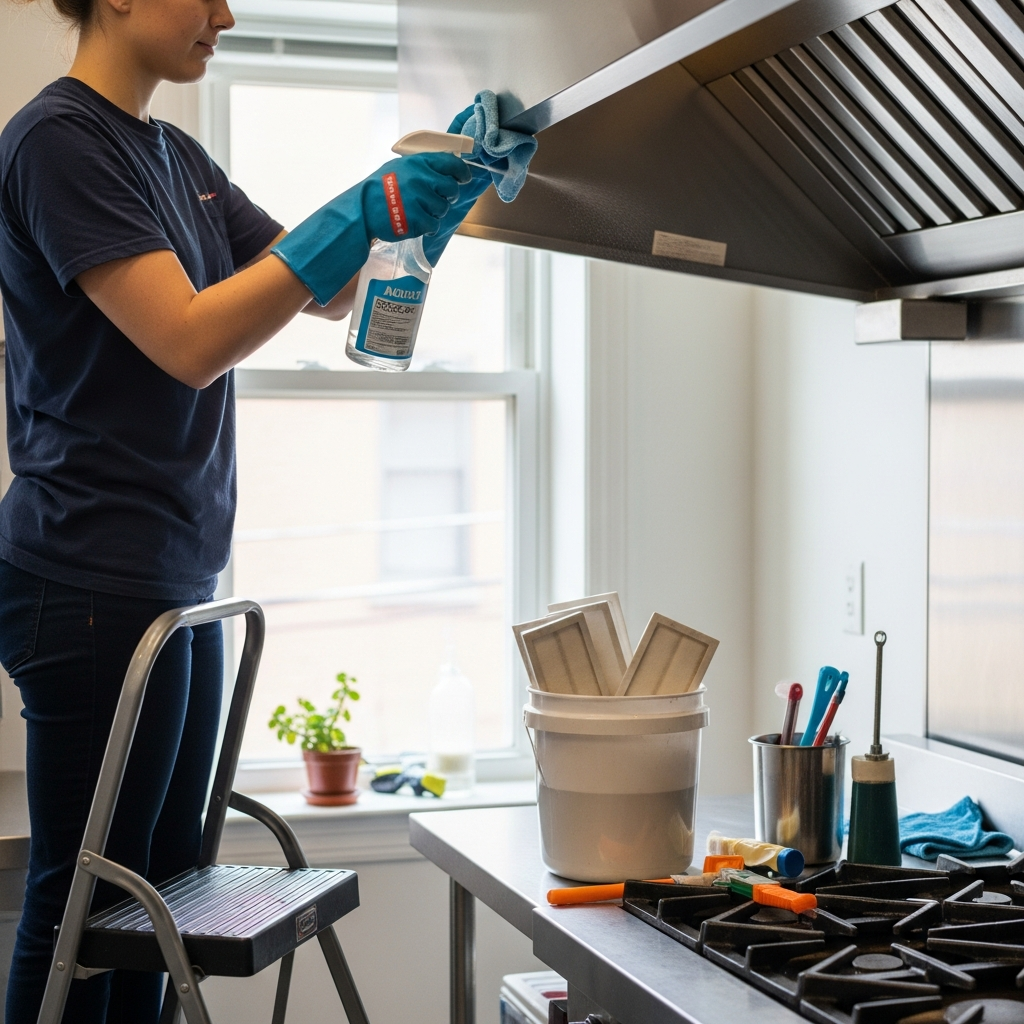
Step-by-Step: How to Clean the Hood Exterior
- Clear the area: Remove pots, pans, and utensils from the cooktop. Cover surfaces that could be splashed by cleaner.
- Dust first: Use a dry microfiber cloth to remove loose dust and crumbs from the hood canopy, control panel, and light covers. Dry dusting minimizes smearing once you apply liquids.
- Apply degreaser: Lightly mist a degreaser onto the exterior surfaces. Avoid spraying directly into electronics or light sockets; instead, spray onto the cloth and wipe.
- Wipe with the grain: On stainless steel, wipe in the direction of the grain to avoid visible swirls. Use a non-scratch pad for stubborn film.
- Rinse and dry: Wipe surfaces with a damp cloth to remove cleaner residue, then dry immediately to prevent streaks or water spots.
Removing and Cleaning Filters
Filters are the frontline of grease capture. Keeping them clear dramatically improves airflow and reduces odors. Most residential hoods use one of two types: aluminum mesh or stainless-steel baffle filters.
- Remove the filters: Slide the latch, lift, or press the release tab per your model. Support the filter as it drops to avoid bending frames.
- Pre-soak: In a sink or bucket with warm water and dish soap, soak filters for 10–20 minutes to loosen grease. If heavily soiled, add a small amount of degreaser as directed by the product label.
- Scrub gently: Use a soft-bristle brush to work through mesh layers or along the channels of baffle filters. Avoid aggressive scrubbing that could deform mesh.
- Rinse thoroughly: Rinse until water runs clear. Residual detergent can attract more dirt.
- Dry completely: Allow filters to air dry on a rack or towel. Reinstalling wet filters can drip into the hood and reduce effectiveness.
Cleaning the Hood Interior and Plenum
The plenum is the cavity just behind the filters where grease easily accumulates. Cleaning this area is critical for safety and performance.
- Access the interior: With filters removed, use a flashlight to inspect the plenum, seams, and any accessible duct collar. Note heavy or caked deposits.
- Apply cleaner carefully: Mist cleaner onto a cloth, not directly into the cavity. Wipe surfaces methodically from top to bottom, pulling grease down onto absorbent towels.
- Use the scraper: For thick deposits, gently lift layers with a plastic scraper, then wipe with a degreased cloth.
- Detail corners and seams: A bottle brush or toothbrush-sized brush helps dislodge buildup in edges and screw heads where grease likes to cling.
- Rinse and dry: Wipe with a damp cloth to remove residues, then dry thoroughly to prevent streaks and repel future buildup.
Fan, Light Lenses, and Controls
Working around electrical components requires care. Always ensure power is off and surfaces are cool.
- Fan blades or impeller: If your design allows access, gently wipe the fan blades or impeller with a lightly dampened cloth. Support each blade to avoid bending. Do not saturate motors or electrical housings.
- Light lenses: Remove covers if your manual allows. Wash with warm soapy water, rinse, and dry fully before reinstalling.
- Control panel and switches: Spray cleaner onto a cloth, not the panel, and wipe carefully. Avoid moisture intrusion around buttons and displays.
Backsplash, Drip Trays, and Surroundings
Grease migrates beyond the hood. Clean adjacent surfaces to prevent the return of odors and film.
- Backsplash and upper cabinets: Degrease and wipe dry to prevent sticky buildup that attracts dust.
- Drip trays and channels: If your hood includes removable trays, empty and wash them with warm soapy water, then dry thoroughly.
- Cooktop and grates: Finish by cleaning the cooking surface so fresh splatter does not immediately re-soil the hood.
Somerville-Specific Considerations
Seasonal humidity and temperature shifts in Somerville can affect ventilation behavior. In winter, closed windows may reduce makeup air, causing the hood to sound louder or move less air. In summer, higher humidity can leave surfaces tacky and accelerate grease film formation. Adjust your schedule accordingly: frequent light wipe-downs after heavy cooking days and a thorough interior cleaning at least every one to three months, depending on usage. If you host frequent gatherings or cook foods with higher fat content, shorten the interval. For restaurants and commercial kitchens, stricter intervals and documentation are standard practice, while homes can tailor to real-world use patterns.
Verification: How to Know You Did It Right
- Visual test: Shine a flashlight across the canopy and plenum surfaces. They should appear free of visible grease film and debris.
- Tactile test: Lightly touch cleaned areas with a dry glove. They should feel smooth, not sticky.
- Airflow test: With filters reinstalled and power restored, run the fan on each speed. Listen for smoother sound and ensure smoke from a simmering pot is captured promptly.
- Odor test: After your next cooking session, odors should clear faster. Persistent odors can indicate missed areas, clogged filters, or recirculating charcoal filters that need replacement.
Troubleshooting Common Problems
- Persistent grease film: Increase dwell time by letting the degreaser sit on surfaces (within label guidance) before wiping. Repeat light applications rather than one heavy soak.
- Noisy operation: After cleaning, if the hood remains loud, check that filters seat correctly and that screws or panels are tight. Vibration can stem from loose components.
- Poor capture: Make sure your cookware is centered under the hood. Higher-rim pans and rear burners may require a higher fan speed to capture steam effectively.
- Streaks on stainless steel: Use a microfiber cloth and wipe with the grain. Finish with a water-damp cloth followed by a dry cloth to eliminate residue.
- Residual odor: Clean drip trays and the area above light lenses, which can trap hidden grease.
Maintenance Frequency and Simple Habits
A few quick habits keep deep-clean intervals manageable and support safe operation:
- After heavy cooking: Wipe the exterior canopy and control panel the same day, while residue is still soft.
- Weekly: Wash or inspect filters depending on how often you cook. Mesh filters tend to need more frequent attention than baffle filters.
- Monthly to quarterly: Perform an interior plenum cleaning, checking corners, seams, and the fan housing you can safely reach.
- Seasonally: Review your hood’s performance during major seasonal changes, especially before winter and summer peak cooking periods.
When to Consider Professional Help
Some situations call for trained technicians and specialized equipment. These include heavily caked interiors, signs of grease beyond the plenum, unusual noises or vibrations that persist after cleaning, and any uncertainty about safe access to fan parts or ductwork. Professionals can also address makeup air imbalances, duct access doors, and rooftop fan cleaning in multi-story buildings, tasks that are often impractical or unsafe for homeowners. Mid-renovation changes, such as swapping ranges or moving a hood, also benefit from expert evaluation to protect performance and safety.
Mid-Course Refresher
If you reached the halfway mark of your cleaning and want validation or a second opinion on technique, professional teams in Somerville provide assessments and full-service cleanings that align with local expectations and national safety standards. When in doubt about filter condition, duct access, or fan integrity, explore a trusted provider of kitchen exhaust hood cleaning to supplement your efforts and keep your system running smoothly.
FAQ
Q: How often should I clean my kitchen exhaust hood at home in Somerville?
A: Light cooking usually requires a monthly filter wash and a quarterly interior wipe-down. Heavy frying or frequent searing often justifies cleaning filters weekly and the plenum monthly.
Q: Can I put baffle or mesh filters in the dishwasher?
A: Many metal filters are technically dishwasher-safe, but strong detergent and high heat can dull finishes or loosen frames over time. Hand washing with warm soapy water preserves longevity.
Q: What if my hood recirculates instead of venting outdoors?
A: Recirculating hoods rely on a grease filter and a charcoal filter. Clean the grease filter as usual and replace the charcoal filter as directed by your manufacturer, typically every few months depending on use.
Q: Is there a cleaner that works for every surface?
A: No single product is perfect for all finishes. Choose a degreaser labeled safe for stainless steel or aluminum and always test on a small, inconspicuous area first.
Q: Why does my hood still smell after cleaning?
A: Hidden grease in drip trays, seams, or above light lenses can hold odors. Re-check these areas, ensure filters are fully dry, and confirm that recirculating charcoal filters are replaced on schedule.
Q: Do I need to clean the ductwork myself?
A: Duct interiors beyond the hood are not typically homeowner-accessible and often require professional tools and training. If you suspect duct grease or see drips above the hood, call a professional.
Q: What if I see rust or discoloration inside the hood?
A: Light discoloration is common. Rust suggests moisture exposure or abrasive cleaning. Dry thoroughly after rinsing and avoid harsh pads to help protect the finish.
Q: Are there eco-friendly options for degreasing?
A: Yes. Many plant-based degreasers perform well with longer dwell times and warm water. Use microfiber to boost effectiveness and rinse thoroughly.
Ready for a Cleaner, Safer Kitchen
Whether you just completed a deep clean or are planning the next session, staying proactive will reward you with better airflow, fewer odors, and a safer cooking environment. If you want guaranteed results, documentation, or help with hard-to-reach components, schedule expert kitchen exhaust hood cleaning so you can cook confidently and enjoy a fresher, quieter kitchen in Somerville year-round.
