
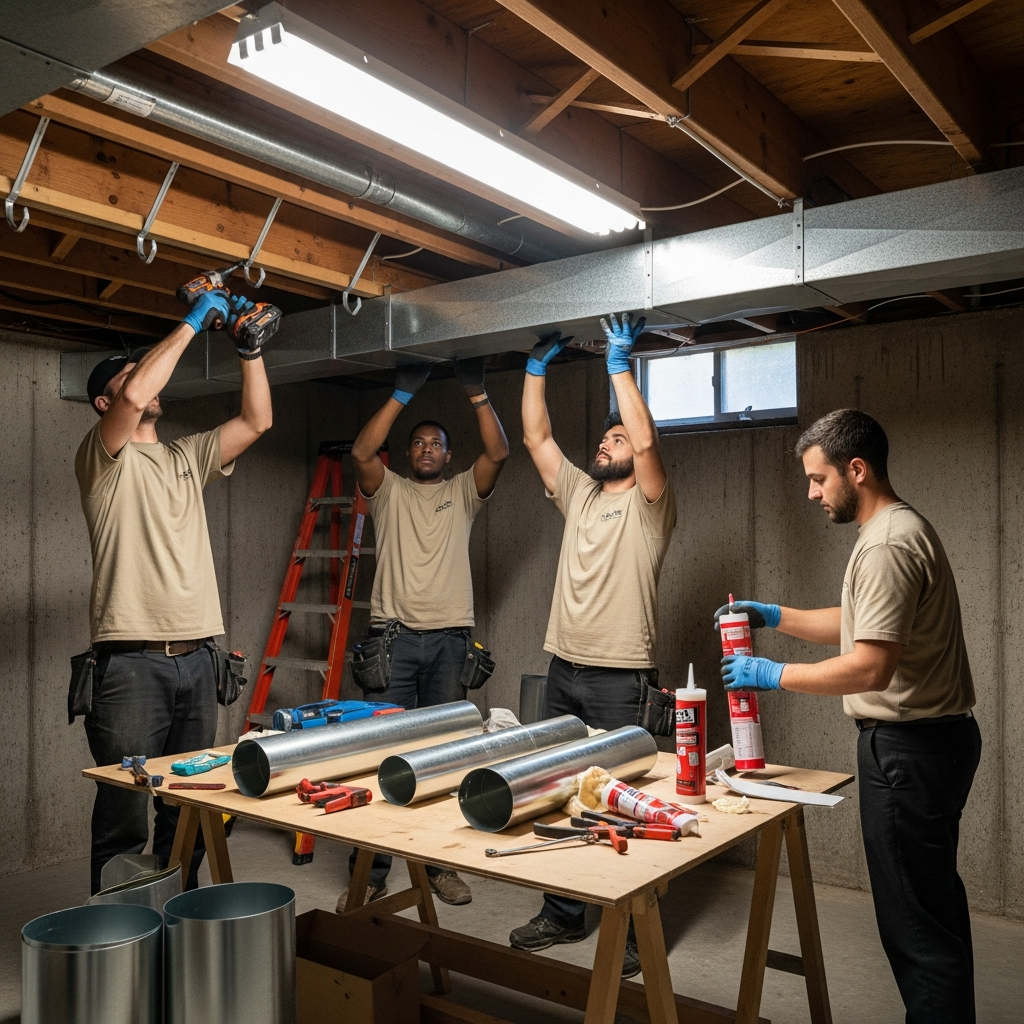
Whether you are renovating a classic Somerville home or fine-tuning comfort in a newer build, well-designed ductwork is the backbone of quiet, even heating and cooling. Proper installation sets the stage; thoughtful repair keeps performance on track when time, traffic, or earlier shortcuts take a toll. This homeowner’s guide explains how installation and repair work together to deliver lasting comfort, healthy air, and efficient operation. If you want a head start on options available locally, consider speaking with a specialist who focuses on diagnostics and dependable air duct repair so your decisions are grounded in evidence.
Good ductwork is more than metal, flex, or ductboard. It is a system tuned to your home’s layout, equipment, and lifestyle. The best results come from attention to details you rarely see once walls and ceilings are closed: smooth transitions, airtight seams, correct hanger spacing, and insulation that protects temperature and mitigates condensation. When these fundamentals are respected during installation and maintained through timely repair, comfort simply feels effortless.
Principles of Thoughtful Duct Installation
Great installation starts with design. The plan must move the right amount of air to each room, at a reasonable pressure, with minimal noise. Key principles include:
- Balanced supply and return: Each space needs a path for conditioned air to enter and a path for air to return, preventing pressure imbalances.
- Straight, smooth runs: Reducing turns and kinks preserves pressure and reduces turbulence and noise.
- Right-sized trunks and branches: Transitions should gently step down to maintain velocity and distribution.
- Durable sealing: Mastic and compatible tapes at seams, takeoffs, and boots deliver long-term tightness.
- Appropriate insulation: Protects temperature and helps control condensation, especially in attics and crawl spaces.
- Service access: Thoughtful placement of key components simplifies maintenance and future improvements.
In Somerville’s mix of older and newer homes, layout realities sometimes drive compromises. A skilled installer anticipates tight chases, beams, and obstacles, choosing routes and transitions that preserve performance without introducing avoidable bottlenecks.
When Repair Enters the Picture
Even a well-installed system can drift from peak performance due to settling structures, renovations, or heavy use. Signs that repair is warranted include rooms that never stabilize to a comfortable temperature, vents that sound strained, or returns that draw in dust from unintended spaces. In these scenarios, repair focuses on restoring integrity—sealing leaks, straightening flex, rebuilding crushed sections, and correcting transitions.
When repair is paired with light balancing adjustments, the result is a system that once again delivers the right amount of air to each room, quietly and consistently. The process should be transparent: photos of issues, airflow readings before and after, and a clear summary of changes made.
Materials and Methods You Can Trust
Quality work depends on appropriate materials and careful technique:
- Sheet metal: Seams and elbows sealed with fiber-reinforced mastic; joints fastened securely; transitions built to reduce turbulence.
- Flex: Inner core sealed to collars, insulation jackets closed without gaps, runs supported at proper intervals, routes straightened to avoid crushing.
- Ductboard: Edges properly stapled and sealed with compatible adhesives and tapes to prevent delamination and leakage.
- Insulation: Replaced or upgraded after sealing to protect temperature control and minimize condensation risk.
The combination of correct materials and workmanship produces a quieter system with steadier temperatures in every season.
Installation for Renovations and Additions
Somerville renovations often add conditioned space in basements, attics, or over-garage rooms. Extending ductwork requires careful planning so the original system is not overburdened and pressure remains within healthy ranges. Strategies can include adding returns, adjusting trunk sizes, and rerouting or rebuilding sections to maintain balance. When decisions are guided by measurements rather than assumptions, new spaces integrate smoothly with the rest of the home.
Diagnostics: The Bridge Between Installation and Repair
Accurate testing turns guesswork into a clear plan. Before recommending changes, a seasoned technician will inspect accessible ducts, measure airflow, and check static pressure. If a room is chronically uncomfortable, the test data will point to leakage, restrictions, or sizing issues. Diagnostics not only help define the repair scope, they also validate the results after the work is done.
Protecting Your Home During Work
Professional crews treat your home with respect. Expect floor protection, careful handling of attic or crawl-space access, and thoughtful staging of tools and materials. If sections of ceiling or wall must be opened for access, the plan should explain where, why, and how the area will be restored. Clear communication reduces surprises and ensures a smooth experience from start to finish.
Somerville Home Considerations
Local housing variety shapes installation and repair strategies. Classic homes might feature panned returns or narrow chases that complicate routing. Newer homes may include long runs to additions with tight elbows that increase resistance. A team familiar with Somerville’s building styles will anticipate these realities, lay out realistic timelines, and provide documentation that shows how each challenge was addressed.
Questions to Ask Your Contractor
Use these prompts to gauge clarity and expertise:
- What tests will you perform, and how do the results guide your plan?
- Can you show photos of the areas you will address and explain the steps you will take?
- How will you verify the outcome—airflow readings, static pressure checks, and a walkthrough?
- What materials will you use for sealing and reinforcement, and why are they appropriate for my duct type?
- How will you protect finished spaces and clean up afterward?
Clear, confident answers set the tone for a successful project.
Common Myths About Ductwork
Several misconceptions can lead homeowners astray:
- Myth: All noise comes from the equipment. Reality: Poor transitions, loose boots, or restrictions often cause whistling or rumbling at vents.
- Myth: Cleaning solves comfort problems. Reality: Removing dust helps with particles, but leakage and restrictions require repair or redesign.
- Myth: Flex is always inferior. Reality: Properly installed, supported, and routed flex can perform well; shortcuts are the real culprit.
Frequently Asked Questions
-
Do I need new ducts or can mine be repaired? It depends on condition and access. Many systems benefit from targeted repairs that restore integrity and airflow without full replacement.
-
How long will the work take? Timelines vary by access and scope, but a clear plan will set expectations up front.
-
Will my home be disrupted? Reputable teams protect surfaces, stage work carefully, and communicate progress so you can plan your day.
-
How do I know the results are real? Ask for airflow readings, static pressure checks, and photo proof before and after the work.
-
What maintenance should follow? Filter changes on schedule, occasional visual checks in accessible areas, and periodic equipment service support long-term performance.
Make Your Next Step Count
If you are planning a renovation, addressing stubborn hot and cold spots, or seeking a quieter, more even system, start with diagnostics and a clear plan. When you are ready to partner with a local team that prioritizes evidence, communication, and durable workmanship, schedule an evaluation with trusted specialists in air duct repair so your home feels comfortable in every season.
