
What Comprehensive Air Duct Repair Means in Somerville
Comprehensive air duct repair is more than sealing a few joints. It is a coordinated process that diagnoses weaknesses, restores connections, stabilizes airflow, and documents measurable improvements. In Somerville, New Jersey—where homes range from historic to modern—comprehensive repair adapts to each building’s layout, materials, and access conditions. If you are seeking a result that feels better, sounds quieter, and supports indoor air quality, start with a provider that treats diagnostics as nonnegotiable. To begin with a team that aligns methods to your goals, consider professional air duct repair and use that consultation to map a plan tailored to your home.
This guide explains what “comprehensive” looks like at each stage—from inspection and planning to execution and verification—so you know what to expect and how each step contributes to lasting comfort.
Inspection and Discovery
Every strong project begins with discovery. Visual checks, pressure tests, and targeted measurements expose leaks, hotspots, restrictions, and return-side issues that may otherwise go unnoticed. Technicians capture photos and notes to build a clear story: where air escapes, where insulation falls short, and which sections need reinforcement. For homes that have undergone recent renovations, this step also confirms that hangers and supports remain properly spaced and that new finishes have not hidden critical access points.
Discovery is not only about problems; it is also about priorities. Contractors sort findings into must-do items and enhancements. This prioritization helps you make decisions in line with your goals, whether that is stabilizing comfort quickly or investing in long-term efficiency and air quality.
Planning and Scope Definition
Clarity in planning prevents confusion in execution. A comprehensive plan lists tasks, materials, and the sequence of work, noting access challenges and surface protections. If optional improvements—such as added return capacity or insulation upgrades—are suggested, the plan explains expected benefits so you can weigh them thoughtfully. This roadmap keeps the project focused, even if you choose to phase steps over time.
Somerville homes vary in layout, so plans often include strategies for tight chases, basements with low headroom, and attics where temperature swings are pronounced. The plan specifies where to open access, how to protect finishes, and how to patch areas cleanly when the work is complete.
Execution: Materials and Methods that Last
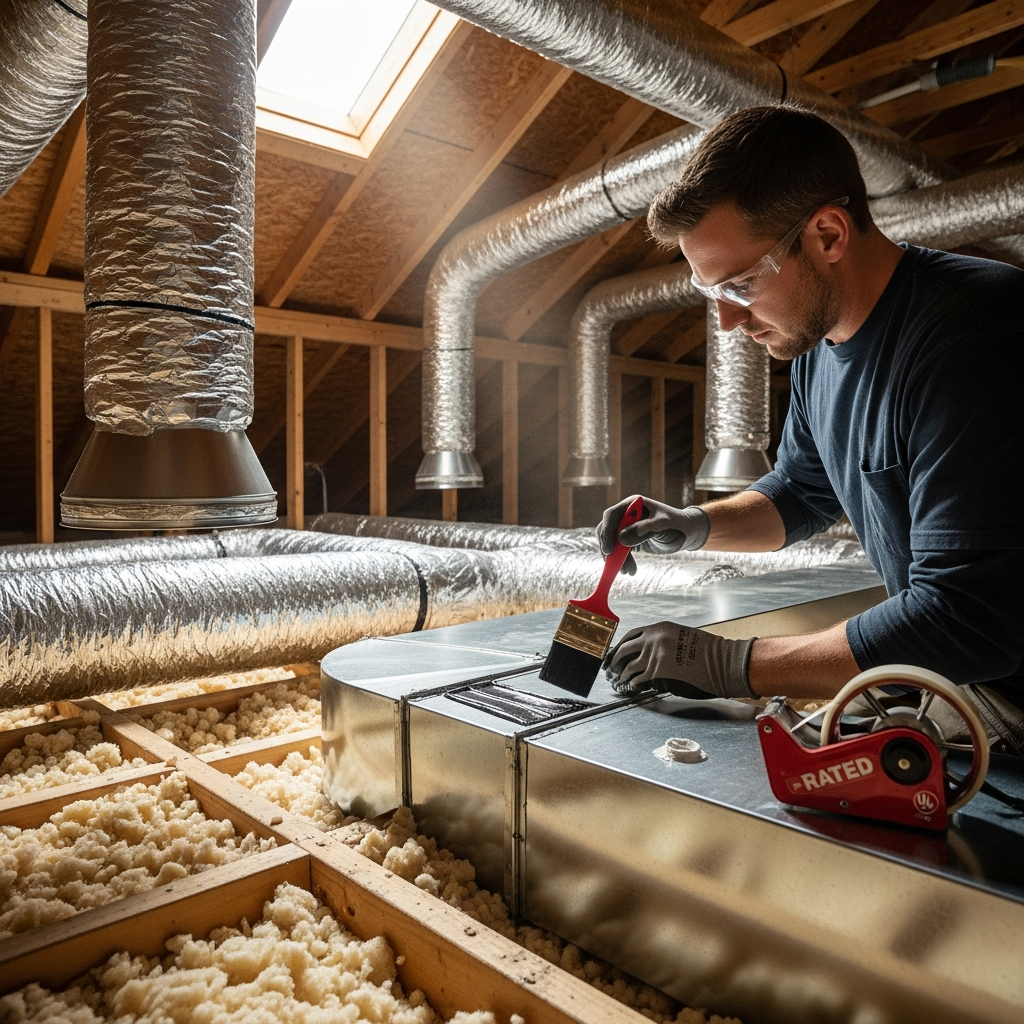
During execution, the difference between a patch and a repair becomes clear. Crews apply duct-rated mastics and UL-listed tapes, fasten joints mechanically, and use hangers that hold runs straight. They replace crushed or undersupported flex, rebuild weak transitions, and insulate sections that pass through hot or cold spaces. This attention to detail increases durability, reduces noise, and keeps airflow on track to distant rooms.
Supply and return paths are addressed together. Return leaks can pull dusty or humid air from unconditioned spaces, stressing filtration and comfort. By sealing returns, improving connections at the air handler, and balancing supply branches, the whole system operates more quietly and predictably.
Verification and Documentation
Comprehensive repair does not end when the last bead of mastic is applied. Post-repair testing validates improvements. Airflow readings confirm that starved rooms are receiving the supply they need. Temperature checks show that insulation is keeping conditioned air stable along the route. Photos reveal reinforced joints and cleanly supported runs. The final documentation becomes a reference for maintenance, future renovations, or home sales.
Verification also provides peace of mind. When you can see and measure the difference, you know the system is ready for Somerville’s seasonal demands and daily life.
Comfort, Air Quality, and Noise Reduction
Comprehensive repair delivers benefits you can feel and hear. Rooms align more closely with thermostat settings, drafts fade, and nighttime noise from whistling or rattling declines. By stopping return leaks, filtration can work as intended, supporting cleaner indoor air and reducing dust. These comfort and health gains often stand out as much as energy stability.
If anyone in your home is sensitive to allergens or humidity swings, the change can be especially noticeable. Better sealing and balanced airflow stabilize interior conditions, creating a calmer environment for daily activities, work, and rest.
Addressing Common Somerville Scenarios
In older homes, ducts may run through narrow chases and behind finished ceilings. Access is the main challenge, so contractors plan carefully placed openings and precise patching. In newer homes, flex runs may be long and undersupported, causing sags and restricted airflow. Correcting support spacing and replacing crushed sections often restores performance. Homes with additions sometimes have uneven distribution; balancing air between original rooms and new spaces ensures consistent comfort.
Basements and crawlspaces deserve special attention. Moisture, pests, and temperature swings can weaken insulation and loosen connections. Comprehensive projects secure these vulnerable areas so that the distribution network remains resilient through every season.
Phased Approaches that Still Count as Comprehensive
Comprehensive does not have to mean everything in one week. Many Somerville homeowners choose a phased path that begins with the highest-impact repairs: sealing main trunks, securing returns, and correcting crushed or kinked runs. Subsequent phases might add insulation upgrades, rebalance airflow, or fine-tune specific rooms. As long as the plan remains cohesive and data-driven, a phased approach can be just as thorough—only spread over a timeline that works for you.
What matters is continuity. Each phase should build on verified results from the last, moving steadily toward a fully stable distribution system.
Homeowner Preparation and Collaboration
Before crews arrive, create clear paths to mechanical rooms, attics, and crawlspaces. Move delicate items from work areas and discuss any household routines that could affect access. Share notes about hot or cold rooms, dust, or noise so technicians can compare your observations with their measurements. Collaboration speeds the project and ensures the plan targets what matters most to you.
During work, mid-day updates keep everyone aligned. If an access route is blocked by a structural element or finish, your contractor can present alternatives and trade-offs. This ongoing dialogue preserves quality and keeps surprises to a minimum.
Why Documentation is a Hidden Asset
Detailed documentation is more than a receipt; it is a future guide. If you later remodel a kitchen, finish a basement, or add a room, the record of what was repaired and where access exists will help new contractors tie into the system correctly. It also reassures prospective buyers that the home’s distribution network has been evaluated and improved with recognized methods.
Well-documented work simplifies maintenance too. When you or a service technician know where supports, seals, and connections were reinforced, seasonal checks are faster and more effective.
Middle-of-Project Quality Checks
Mid-project quality checks confirm that findings match expectations. Technicians can show in-progress photos of sealed joints, replaced flex, and re-hung lines. If conditions differ behind finishes, the plan adjusts transparently. Providers who specialize in thorough duct repair services welcome these checkpoints because they prove that execution remains aligned with the original goals.
By catching variances early, teams avoid rework and ensure each hour contributes to lasting results.
Life After Repair: Maintenance that Protects Results
After comprehensive repair, maintenance is straightforward but essential. Replace filters on schedule to protect airflow and the blower. Keep supply and return grilles unobstructed. Glance at visible runs seasonally to verify that hangers are secure and insulation remains intact. If you notice new noises, dust, or comfort shifts, schedule a quick check before small concerns grow. This routine keeps performance steady and prolongs equipment life by avoiding unnecessary strain.
Pairing annual equipment service with a brief duct review ensures that the distribution network and mechanical components continue to work in harmony, regardless of Somerville’s seasonal swings.
Frequently Asked Questions
Q: How long does comprehensive repair take? A: Timelines depend on access, scope, and whether work is phased. A clear plan, daily updates, and end-of-day recaps keep everything predictable and respectful of your routine.
Q: Will this improve indoor air quality? A: Sealing returns reduces the chance of drawing in dusty or humid air from unconditioned areas, allowing filters to perform more effectively. Many homeowners notice cleaner surfaces and calmer respiratory comfort.
Q: What if my home has historic finishes? A: Experienced teams plan precise access points and careful patching. They document locations, protect surfaces, and coordinate with you to minimize visual impact.
Q: Can I choose a phased plan? A: Yes. A phased roadmap that begins with high-impact steps and builds toward full stabilization can be just as effective as a single-stage project, only paced to your schedule.
Q: How will I know the work succeeded? A: Before-and-after measurements, photos, and a final walkthrough demonstrate the improvements. You should feel steadier temperatures and hear less noise as everyday proof.
Make Your Home’s Air Pathway Strong
Comprehensive air duct repair gives your heating and cooling system the reliable pathway it needs to deliver comfort, day after day and season after season. With diagnostics-driven planning, careful execution, and verified results, your home in Somerville can feel more even, quieter, and cleaner. When you are ready to align your home with proven methods and documentation, schedule professional air duct repair services and enjoy the comfort of a distribution system built to last.
