
What Determines How Much Air Duct Repair Requires in Somerville
Homeowners in Somerville, New Jersey often ask a simple question: how much will it take to get my ducts working the way they should? The most accurate answer is that the total commitment depends on condition, access, materials, and goals. Before guessing, start with a focused inspection by a reputable provider. Early in your learning process, it helps to connect with professionals who diagnose thoroughly and then tailor the scope to your home. For reliable assessments and step-by-step work plans, consider engaging professional air duct repair so you can make decisions based on clear findings.
Rather than chasing a single number, it is better to understand the levers that push projects toward simple touch-ups or broader rehabilitation. This guide walks through the major influences—home layout, duct type, accessibility, and performance goals—so you can anticipate what a Somerville contractor will look for and how they will prioritize the work.
Condition and Accessibility
Every project begins with a reality check: what shape are the ducts in, and how easy are they to reach? If much of the system is visible in a basement or mechanical room, a technician can quickly verify connections and seal leaks. However, when long runs snake through finished ceilings, tight attics, or narrow crawlspaces, reaching each joint becomes more complex. Access decisions often drive the schedule and sequence of tasks. Thoughtful planning minimizes disruption while ensuring the most impactful defects are addressed first.
Somerville homes vary widely in age and construction methods. Older houses may have mixed materials—sheet metal transitions connected to flex runs—while newer homes might rely more heavily on flex and duct board. Each type has different failure modes. Sheet metal can separate at seams; flex can be crushed, kinked, or sagging; duct board can crumble at edges if it has been handled roughly. A comprehensive inspection identifies where targeted sealing will suffice and where rebuilding makes more sense.
Materials and Methods
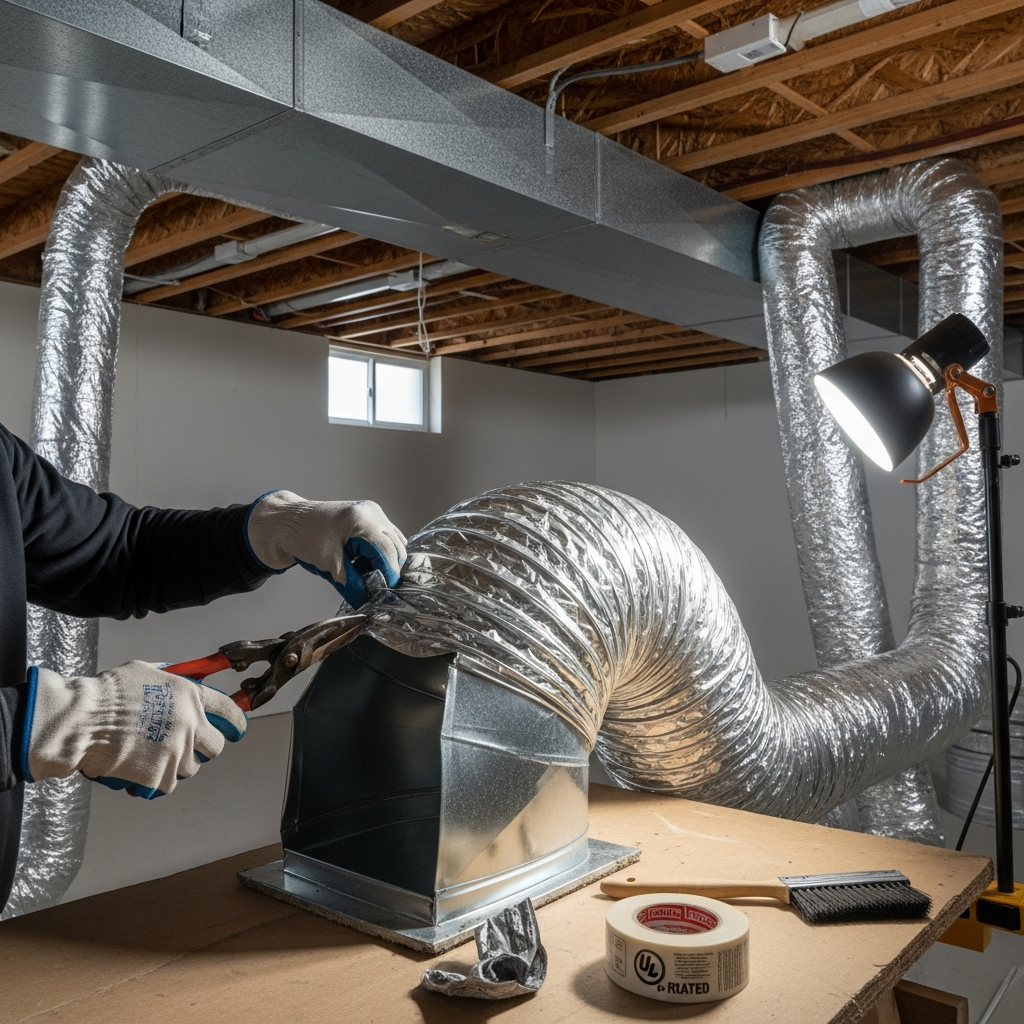
Durable repairs use materials designed for ducts, not generic hardware-store tapes. Mastic formulated for HVAC applications, UL-rated tapes, hangers spaced to support long runs, and properly insulated jackets are part of a professional toolkit. The method matters as much as the material. For instance, sealing only the visible part of a joint without reinforcing the underlying connection can lead to short-lived results. The best work combines sealing, mechanical fastening, and support so joints remain tight despite vibration and temperature swings.
Energy and comfort goals also shape method choices. If an attic run passes through a hot or cold space, additional insulation may be recommended to stabilize supply air temperatures. Return leaks that draw air from dusty or damp zones need sealing to protect indoor air quality and filtration. Technicians balance these improvements to support even temperatures and cleaner air throughout the home.
Project Scope: Minor, Moderate, or Extensive
Think of scope as a spectrum. On the lighter end, a project might focus on sealing accessible joints, rehanging a few sagging lines, and correcting a crushed elbow. Moderate projects can include replacing damaged flex sections, reinforcing transitions at plenums, and improving return capacity in problem rooms. The most extensive scenarios address long-standing design issues—rerouting branches, rebuilding plenums, and rebalancing airflows to distant spaces. The scope is always anchored to diagnostics and to the comfort challenges you report.
The more complete the solution, the more stable your system tends to be over the long term. That does not mean everything has to be done at once. Many Somerville homeowners opt for a phased plan: address the biggest leaks and restrictions now, then schedule secondary improvements later. A clear roadmap preserves momentum while respecting your timeline.
Somerville Climate and Seasonal Strategy
Local weather patterns add context to repair decisions. Hot summers and cold winters magnify the consequences of leaky or poorly insulated ducts. When the system runs harder, losses pile up faster and rooms feel off-balance. Tackling repairs before the most demanding season gives crews time to verify results and gives you the comfort gains when you will feel them most. Planning also reduces scheduling pressure when everyone else is trying to book visits at the same time.
In addition, homes that experienced recent renovations or roof work should consider a post-project duct check. Construction often stirs up dust and can jostle supports or connections. A quick verification ensures your distribution network is still tight and performing as intended.
Diagnostics Make the Difference
The conversation about “how much” is only meaningful when grounded in data. Visual inspection highlights obvious issues; pressure testing and airflow readings reveal the hidden ones. Photos and notes help you see exactly where gaps were found, where insulation is thin, and which returns are undersized or leaky. After the work, verification testing confirms that air now travels where it should and that problem rooms are receiving proper supply.
Documentation is an underrated benefit. A final report becomes a useful reference if you change filters, remodel, or sell the home. It proves that the system has been evaluated and improved with recognized methods, raising confidence for future owners and contractors alike.
Risks of Delaying Repairs
Waiting on duct repairs can be tempting, especially if symptoms come and go. But delay can allow small leaks to expand and flex runs to sag further, steadily degrading performance. Return leaks have an added downside: they can pull in air from dusty, humid, or unconditioned spaces, challenging filtration and comfort. Over time, the equipment may work harder to compensate, cycling longer and struggling to maintain set points. Early action usually restores stability with fewer steps.
A hidden effect of leaky distribution is noise. Whistling at loose joints, rattling hangers, and pressure imbalances can all produce sounds that occupants notice most at night. By securing connections and balancing airflow, well-planned repairs often result in a calmer-sounding home.
Comparing Proposals: What to Look For
When you gather proposals, read beyond the headline. Strong documentation spells out diagnostics, materials, and specific tasks. It should anticipate access challenges and describe surface protection. Clear communication about optional enhancements—such as adding return capacity or upgrading insulation—helps you weigh the benefits against your goals. Clarity saves time, avoids misunderstandings, and ensures you approve work that genuinely solves the problems you feel day to day.
Ask for a walkthrough of key findings. A short conversation builds trust, reveals the contractor’s attention to detail, and gives you a chance to prioritize. A team that explains trade-offs well is more likely to deliver a satisfying outcome.
Middle-of-Project Checkpoints
As work proceeds, midway checkpoints keep everything aligned. Technicians can show progress photos, confirm that previously hidden defects match initial expectations, and confirm any adjustments to the sequence. This transparency ensures the project remains focused on high-impact steps and that your most important comfort concerns are being addressed as planned. A reliable provider of duct repair services will welcome questions and provide updates without hesitation.
Homeowners can support momentum by clearing access paths, noting any new noises or drafts, and keeping pets and belongings away from work zones. These simple steps allow teams to concentrate on quality without unnecessary delays.
After the Repair: Maintenance and Monitoring
Freshly sealed and supported ducts benefit from routine care. Replace filters on schedule to maintain airflow and protect the blower. Keep supply and return grilles unobstructed by furniture or drapes. In basements and crawlspaces, glance at visible runs occasionally to verify that hangers are secure and insulation remains intact. When you notice unusual odors, dust accumulation, or shifting comfort patterns, schedule a quick check before small concerns grow.
Consider a seasonal tune-up that pairs equipment service with a brief duct review. This combined approach keeps the distribution system and the mechanical system aligned, sustaining the comfort gains delivered by your recent repairs.
Frequently Asked Questions
Q: What symptoms point to duct problems? A: Rooms that never match the thermostat, persistent dust, rattling or whistling sounds, and temperature swings between levels often suggest leaks or restrictions. If you recently remodeled, an inspection can verify that supports and seals were not disturbed.
Q: How disruptive is the work? A: Crews strive to protect finished spaces with covers and drop cloths. Access holes are located thoughtfully, and patching is coordinated. In open basements and attics, repairs proceed quickly with minimal disruption to living areas.
Q: Can I phase the project? A: Yes. Many homeowners start with the most impactful tasks, such as sealing main trunks and fixing crushed runs, then schedule secondary improvements later. A clear roadmap keeps everything organized.
Q: Will repairs improve indoor air quality? A: Sealing return leaks reduces the chance of pulling in dusty or damp air from unconditioned zones. Balanced airflow encourages better filtration performance, which supports cleaner, fresher rooms.
Q: How do I choose a contractor? A: Look for thorough diagnostics, clear photos, specific task lists, and a respectful communication style. Local familiarity with Somerville’s building types and climate is a plus.
Take the Next Step with Confidence
Understanding what shapes the commitment for air duct work puts you in control. With a data-driven assessment and a transparent plan, you can approve improvements that solve real problems and keep your home comfortable through every season in Somerville. When you are ready for dependable diagnostics and workmanship, schedule professional air duct repair services and enjoy a calmer, more consistent indoor environment.
