Pro Dryer Vent Cleaning vs. DIY Brush Kits in Somerville, New Jersey
Choosing between professional dryer vent cleaning and DIY brush kits is a decision many Somerville homeowners face. Both options aim to improve airflow and reduce lint buildup, but the level of thoroughness, safety, and reliability can differ dramatically. Understanding what each path entails helps you decide how to protect your home, your appliance, and your time.
Dryer vents do more than carry lint away; they exhaust heat and moisture outdoors. When that pathway is restricted, you may see longer drying times, warmer laundry rooms, or unusual odors. A clear vent supports consistent performance and lowers the risk of overheating. Whether you opt to call a pro or reach for a brush kit, the goal is the same—safe, efficient drying—but the journey to that goal looks very different.
This guide breaks down the tools, techniques, and outcomes for both approaches, with local insight for Somerville’s housing styles and seasons. With the right information, you can select a maintenance plan that fits your home’s layout, laundry habits, and comfort level with hands-on work.
What DIY Brush Kits Can and Cannot Do
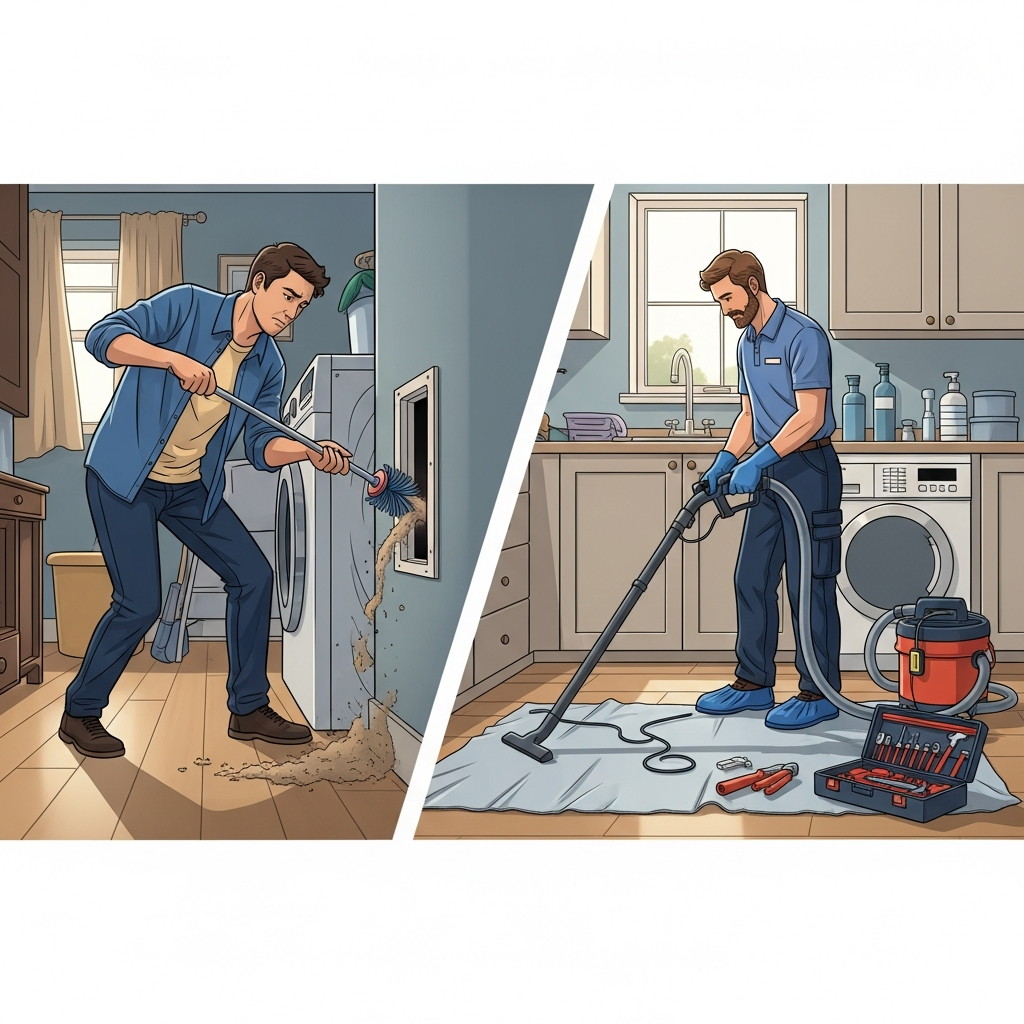
DIY brush kits appeal to homeowners because they seem straightforward: insert a flexible rod and brush into the vent, rotate to dislodge lint, and pull debris back out. For short, straight runs with minimal bends, this method can remove a meaningful amount of buildup, especially near the appliance connection. If you are disciplined about routine use and your vent layout is simple, a DIY kit can provide a basic level of maintenance between professional visits.
- Strengths: Low barrier to entry; helpful for short, direct paths; can remove surface-level lint.
- Limitations: Struggles with elbows, long runs, nested debris, or compacted lint; may scatter lint inside the home without proper containment.
- Risks: Aggressive brushing can damage thin duct walls; rods can disconnect or snag; connectors may get loosened inadvertently.
Another challenge with DIY tools is verification. Without airflow measurement or a full-path inspection, it’s difficult to confirm that the entire duct is clear and the exterior termination opens freely. Partial cleaning can give the impression of success while leaving deep obstructions behind.
How Professional Cleaning Differs
Professional dryer vent cleaning employs specialized equipment and a whole-system mindset. Technicians start by assessing the route from dryer to exterior, then choose tools that match your vent material, length, and complexity. With rotating agitation devices and negative air capture, pros dislodge compacted lint while drawing debris away safely.
- Route mapping: Confirming the path, materials, and number of elbows.
- Protective setup: Safeguarding floors and walls; creating containment so loosened lint doesn’t enter the living space.
- Targeted agitation: Using brushes or air whips suited to the vent type to break up dense accumulations without harming the duct.
- Controlled extraction: Employing high-powered vacuums and negative pressure to remove debris efficiently.
- Exterior verification: Ensuring the termination damper opens fully and seats correctly when the dryer is off.
- Performance check: Testing airflow to verify restored exhaust.
The result is a clean pathway from end to end, with performance validated before the technician leaves. That verification step is the key differentiator between a guess and a guarantee of improved function.
Local Factors in Somerville
Somerville’s homes and condos often feature interior laundry closets or basement setups. These can translate into long vent runs with multiple turns. Winter cold and summer humidity also influence how lint behaves. A local pro understands these variables, anticipates challenges like sticky dampers or crushed connectors, and arrives with the right techniques for your property.
Exterior terminations can become clogged by nesting activity or seasonal debris. Professionals check and correct these issues, while DIY kits may never reach the termination effectively or confirm proper damper movement.
Safety Considerations
Lint is highly combustible. When it accumulates in elbows or near heat sources, risk increases. Professionals remove dense deposits thoroughly and can identify conditions—like a crushed connector or a long, sagging run—that exacerbate heat buildup. They also reduce the chance of internal duct damage, which DIY brushes can cause if used aggressively or without proper guidance.
Another safety element is appliance strain. Restricted vents force the dryer to run hotter and longer. Over time, this can wear components and potentially lead to malfunction. By restoring designed airflow, professional service helps your dryer operate within its intended parameters.
Time and Convenience
DIY kits require time and patience. You’ll need to move the dryer, navigate tight spaces, and manage any debris. If the brush snags or a rod disconnects, the project can become frustrating. In contrast, professionals handle the entire process swiftly and neatly, from setup to verification. The convenience of a single, well-executed visit is a major advantage for busy households.
When DIY Is Reasonable—and When It Isn’t
DIY is reasonable if your vent is short and straight, you have clear access, and you’re comfortable moving the appliance. It can serve as a light maintenance measure between professional appointments. However, DIY is not advisable when the run is long, includes multiple elbows, terminates on a roof, or shows signs of severe restriction such as hot laundry rooms, odors, or repeated cycle extensions.
If you suspect nesting, visible damage, or a stuck exterior flap, professional intervention is the prudent choice. Those issues call for targeted tools, safety practices, and diagnostic experience.
Measuring Results the Right Way
A key difference between approaches is proof of performance. Pros use airflow evaluations and visible checks of the termination to confirm success. Homeowners might sense improvement after DIY brushing, but without measurements or a clear look at the exterior damper, it’s tough to be certain. A verified result provides peace of mind and helps you plan sensible maintenance intervals.
Maintenance Frequency in Somerville
For many households, annual professional attention is a sensible baseline, with adjustments based on laundry volume, pets, and vent complexity. High-use homes or properties with long interior runs may benefit from more frequent checks. If you use a DIY kit between visits, treat it as a supplementary step rather than a substitute for end-to-end service.
Choosing a Professional: What to Look For
As you compare local options, focus on process details and communication. A trustworthy provider explains their step-by-step plan, uses purpose-built equipment, protects your home, and verifies airflow at the end. They’ll also advise on safer connectors and point out any configuration issues that could cause recurring problems.
- Clear explanations and homeowner education.
- Specialized tools for agitation and capture.
- Exterior termination checks and functional verification.
- Respectful, tidy work habits and protective measures.
Technicians who approach the job holistically deliver durable results and practical guidance you can use between visits.
Somerville Homeowner Checklist Before Any Cleaning
Before a DIY attempt or a professional visit, prepare the space to make the process easier and safer.
- Clear the area around the dryer and provide a path for moving the appliance.
- Locate the exterior vent and ensure general access.
- Note any symptoms: long drying times, odors, or visible lint accumulation.
- Secure pets and plan for short appliance downtime.
These simple steps save time and support a neat, efficient service experience.
Midway Tip for Smarter Decisions
If you’re weighing convenience, safety, and verified results, consider booking professional dryer vent cleaning. With local expertise, the right tools, and performance checks, you get more than a surface sweep—you get peace of mind that your entire system is clear and functioning as designed.
Frequently Asked Questions
Q: Can DIY brushes damage my vent? A: Yes, if used aggressively or in fragile ducts, brushes can scratch or puncture thin walls, loosen joints, or snag on fasteners. Pros minimize this risk with matched tools and techniques.
Q: How do I know if my vent run is too complex for DIY? A: Multiple elbows, long interior paths, roof terminations, and stacked laundry closets all suggest you should call a professional for proper access and verification.
Q: Will DIY remove nesting material? A: Not reliably. Nests can be dense and intertwined. Professionals use targeted tools and methods to clear them safely and completely.
Q: Is it normal for the laundry room to get hot during drying? A: Excess heat often indicates restricted airflow. Professional cleaning and confirmation of the exterior damper typically resolve the issue.
Q: How often should I plan professional service if I use a DIY kit between visits? A: Treat DIY as supplementary. Many homes still benefit from an annual professional evaluation, adjusted for usage and vent complexity.
Q: Do pros check the connector behind the dryer? A: Yes. They evaluate and may recommend safer, more robust options if the existing connector is crushed, kinked, or made of unsuitable material.
Q: Can professional cleaning reduce odors? A: Absolutely. Clearing lint and moisture pockets and restoring exhaust typically removes musty or burnt smells.
Q: What if my dryer shows airflow-related error codes? A: A professional can determine whether the issue is vent restriction, a stuck damper, or an appliance-side problem.
Q: Are exterior screen covers recommended? A: Screens tend to trap lint and restrict exhaust. A functioning damper is usually preferred to allow proper airflow while deterring pests.
Q: Will this help fabric care? A: Yes. With correct exhaust, clothes spend less time in heat, which is gentler on fibers and colors.
Make the Confident Choice for Your Somerville Home
If you’re ready for reliable, measured results and a cleaner, safer vent system, schedule expert dryer vent cleaning. You’ll get end-to-end service, local insight, and the verification that separates a quick attempt from a job done right.
