Finding the Best Dryer Vent Cleaning Near You in Somerville, New Jersey
When you search for the best dryer vent cleaning near me in Somerville, New Jersey, you are doing more than ticking off a home maintenance task—you are protecting your home, your family, and your investment. Lint buildup and hidden obstructions can restrict airflow, overwork your dryer, increase drying times, and raise the risk of overheating. Starting with a trusted local professional for dryer vent cleaning helps ensure your system is thoroughly inspected, properly cleared, and optimized for safe, efficient performance tailored to our local housing stock and climate.
Somerville’s blend of historic homes, multifamily residences, and newer construction means dryer vents can vary widely in length, material, and route complexity. A seasoned local technician understands these differences and brings a methodical, safety-first approach. From identifying crushed or disconnected sections to clearing bird nests and high-density lint pockets, the best providers combine specialized tools with diagnostic know-how to restore proper ventilation and reduce wear on your appliance.
Beyond safety, high-quality dryer vent service supports energy efficiency and everyday convenience. When vents breathe freely, clothes dry faster, fabrics experience less heat stress, and moisture exits the home as intended. This translates into shorter laundry days, better fabric care, and fewer headaches stemming from repeat cycles, mystery odors, or stubborn humidity in the laundry area.
What Sets the Best Local Dryer Vent Cleaners Apart
Choosing the right company begins with standards and ends with results. The best teams stand out because they take a complete-system approach, communicate clearly, and document their work. Look for providers who assess both the interior and exterior portions of the venting pathway, verify air flow, and provide recommendations tailored to your home’s construction and laundry habits.
- Comprehensive assessments that include lint trap, transition hose, concealed runs, elbows, and exterior termination.
- Use of agitation tools, negative air collection, and high-powered vacuums designed for venting systems rather than generic household devices.
- Attention to vent materials and routing to ensure fire-safe, code-compliant configurations.
- Clear, homeowner-friendly communication, including before-and-after insights and maintenance tips.
- Respect for your home: shoe covers, drop cloths, and tidy work practices throughout the visit.
Equally important is a provider’s approach to problem-solving. The best professionals don’t just remove lint; they search for root causes behind recurring clogs, heat alarms, or condensation. They may identify long unsupported runs, crushed foil hoses, or a damper that sticks shut on windy days. Addressing those underlying issues produces long-term gains far beyond a single cleaning appointment.
Why Local Knowledge Matters in Somerville
Somerville experiences four true seasons, with humid summers and chilly winters. Moisture-laden air in summer and cold temperatures in winter can both affect how lint compacts and how damp exhaust behaves. Local pros understand how seasonal swings influence drying performance. They also know the building styles common to our neighborhoods—capable of anticipating tight utility closets, attic runs, or basement transitions typical of certain streets and developments.
Historic homes may feature longer, more complex vent routes with multiple turns. Newer condos may place the laundry closet mid-unit, which increases run length and makes maintenance more critical. Multifamily properties can present unique access or routing considerations. The best Somerville technicians arrive ready with the right tools and strategies for each configuration.
Signs You Need a Dryer Vent Specialist
While routine maintenance is wise for any household using a clothes dryer, certain clues point to an urgent need for professional service. Pay close attention to the following warning signs and schedule an inspection if one or more apply to your home.
- Clothes take longer than one cycle to dry, or each load requires progressively more time.
- The laundry area feels hotter or more humid than usual during operation.
- A burnt or musty odor appears while the dryer runs.
- Lint accumulates rapidly around the lint trap, behind the dryer, or near the vent termination outside.
- The exterior vent flap sticks, doesn’t open fully, or shows signs of bird or rodent activity.
- The dryer shuts off mid-cycle or displays error codes related to heat or airflow.
- Visible kinks or crushing on the transition hose behind the dryer.
Any of these symptoms indicates restricted airflow, and the solution is not simply to run the dryer longer. Prolonged operation amplifies heat, wear, and energy use, increasing the likelihood of overheating and component failure. An expert evaluation ensures that the entire pathway is clear, connected, and venting outdoors as intended.
How Pros Clean Dryer Vents the Right Way
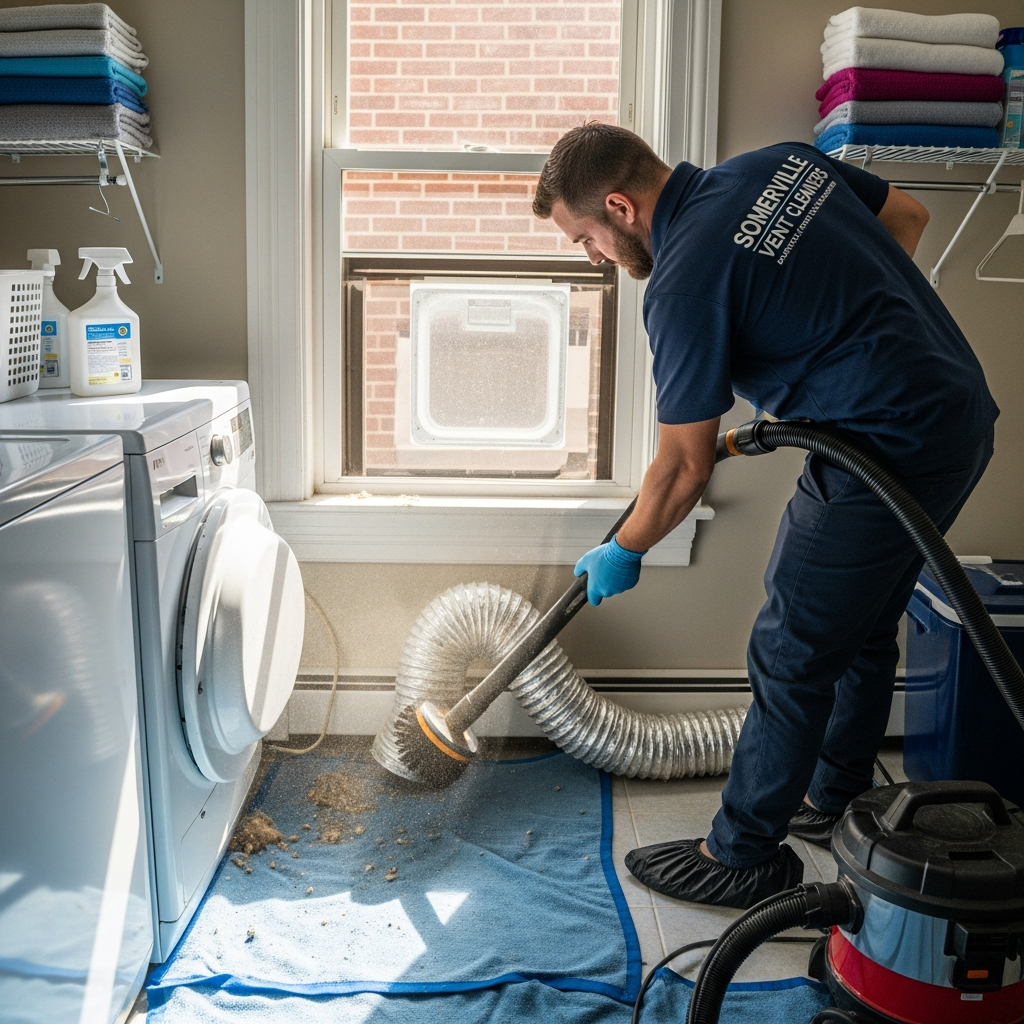
The most effective dryer vent cleaning follows a systematic process designed to protect your home while delivering verifiable results. Technicians begin by unplugging or safely disconnecting the appliance, inspecting the transition hose, and confirming the route from the dryer outlet to the outside termination. They then remove lint and debris with specialized tools while maintaining controlled airflow for containment.
- Preparation and protection: move the dryer carefully, protect floors, and create a safe workspace.
- Inspection: identify material type, bends, elbows, length, and any visible damage or disconnections.
- Agitation: use rotating brushes or air whips that break up compacted lint without damaging the duct walls.
- Extraction: apply vacuum systems and negative air techniques to capture loosened debris instead of dispersing it into the home.
- Exterior termination check: ensure the flap or louver opens freely and isn’t blocked by nests, screens, or dense lint layers.
- Transition hose evaluation: replace crushed or unsafe materials with appropriate, fire-resistant components when recommended.
- Airflow verification: test performance and confirm that the system exhausts properly.
This start-to-finish approach does more than clear the duct; it restores the designed function of the dryer vent system. The result is more consistent drying, lower heat stress on fabrics, and a safer laundry space.
Benefits You Can See and Feel
Homeowners often notice the difference right away. Freshly cleared vents allow the dryer to breathe, so heat and moisture exit efficiently. That means faster cycles and reduced wear on both the dryer and your textiles. Fewer repeat cycles translate into less time in front of the laundry machine and more time for what matters most. On the safety front, removing highly combustible lint eliminates a key ignition source, and resolving hidden kinks or crushed sections reduces excessive heat buildup.
Comfort improves, too. When humidity and heat leave the laundry area as designed, the room feels less stuffy, and condensation problems on walls or windows diminish. Over time, consistent ventilation also helps prevent musty odors that can migrate into bedrooms, closets, or hallways, especially in tightly sealed or energy-efficient homes.
How to Compare Local Providers
In Somerville, you’ll find a range of options, from one-person operations to established teams. The best way to compare is by looking beyond marketing claims and focusing on process, transparency, and client care. Ask about their inspection method, the tools they use, what’s included, and how they verify success at the end of the visit.
- Process clarity: Can they explain their step-by-step approach in simple terms?
- Tools and techniques: Do they use equipment specifically designed for dryer vents?
- Documentation: Will they provide observations or recommendations following service?
- Scheduling and punctuality: Do they offer convenient booking and arrive on time?
- Care standards: Do they protect floors, walls, and appliances while working?
As you evaluate providers, remember that thoroughness and safety practices matter more than speed. A meticulous technician who identifies a concealed disconnection or damaged termination cap can save you from repeated callbacks and performance issues.
Mid-Project Diagnostics and Problem Solving
Occasionally, a technician may discover surprises inside a vent run—dense lint mats from years of accumulation, screws protruding into the duct, or a sagging section that traps debris. Experienced pros adapt on the spot, adjusting tools and techniques to clean effectively while preserving duct integrity. They will also explain what they find and what it means for your home.
If a configuration issue is uncovered—such as a long unsupported run through a crawlspace—the best providers offer clear guidance on remediation options. Even straightforward changes, like swapping a fragile transition hose for a more durable, code-appropriate connector, can dramatically improve safety and performance.
When you want dependable, locally attuned help, consider working with a Somerville team that focuses on the details and offers reliable follow-through on recommendations for ongoing maintenance. If you are ready to streamline laundry days and enhance home safety, connect with trusted pros for quality dryer vent cleaning that matches the needs of your property and family.
Preparing Your Home for a Successful Appointment
A little preparation helps your visit go smoothly. Before your appointment, clear a path to the laundry area, remove items stored on or around the dryer, and make sure the exterior termination is accessible. If your dryer sits on a pedestal or in a tight closet, mention that during booking so the technician arrives ready with any specialty tools for confined spaces.
- Move laundry baskets and detergents out of the way.
- Locate the exterior vent termination and ensure it is not blocked by seasonal items or vegetation.
- Note any recent changes, such as a new dryer, renovations, or unusual noises and odors.
- Secure pets and plan for brief appliance downtime during service.
With these steps completed, your technician can work efficiently and leave the space clean and organized when finished.
Aftercare and Maintenance Insights
Following professional cleaning, adopt simple habits to keep your dryer vent system in top condition. Always clean the lint trap between loads, avoid overloading the dryer, and ensure the room remains well-ventilated. If your household does heavy laundry—such as frequent towel or bedding loads—consider a proactive maintenance schedule tailored to your usage.
Monitor for any return of slow drying times or unusual odors. Should symptoms reappear earlier than expected, a follow-up evaluation may be warranted to rule out damage, wildlife intrusion, or a configuration issue. Staying attentive helps you catch small problems before they become big ones.
Frequently Asked Questions
Q: How long does a professional dryer vent cleaning usually take? A: Most visits are completed within a single appointment, with timing dependent on vent length, layout complexity, and access. Homes with lengthy runs or multiple turns can take longer due to additional diagnostics and careful cleaning of each section.
Q: Will my laundry room be dusty afterward? A: Reputable technicians use containment and specialized equipment designed to capture debris. They work neatly, protect surrounding surfaces, and leave the space tidy at the end of service.
Q: My dryer is new. Do I still need the vent cleaned? A: Yes. Even brand-new dryers rely on a clear exhaust pathway. Construction debris, leftover packaging lint, or a poorly installed transition hose can compromise performance from day one.
Q: Can I clean the vent myself with a household vacuum? A: Household vacuums are not designed for the length and complexity of dryer vents. They can remove surface lint at the connection point but rarely clear compacted debris deep inside elbows and long runs.
Q: How often should I schedule service? A: Many households benefit from an annual visit. Factors like high laundry volume, pets, or long vent runs can warrant more frequent attention. Your technician can recommend a schedule based on your home and usage.
Q: Are foil or plastic transition hoses safe? A: Certain materials are more prone to crushing or heat damage. A technician can recommend a safer, more durable connector that supports optimal airflow and aligns with best practices.
Q: What if the exterior vent flap is stuck? A: A stuck flap restricts airflow and allows moisture and heat to back up into the system. Technicians will free or replace the termination and ensure it opens and closes smoothly.
Q: Will professional cleaning make my dryer quieter? A: Improved airflow often reduces strain on the appliance, which can lead to smoother, quieter operation. Persistent noises may indicate a mechanical issue with the dryer itself.
Q: Can blocked vents trigger error codes? A: Yes. Many modern dryers monitor temperature and airflow. If venting is obstructed, the machine may display alerts or shut down to protect its components.
Q: Do birds or rodents really nest in vents? A: Yes, especially in exterior terminations without proper dampers. Nests can severely restrict airflow and should be removed by a professional who can also recommend deterrents.
Schedule Your Service in Somerville Today
If you are ready for safer, more efficient laundry days and a home that breathes easier, connect with a trusted local team for expert dryer vent cleaning. Book a convenient appointment, get a thorough evaluation, and enjoy the peace of mind that comes from a clean, properly functioning vent system backed by knowledgeable professionals who know Somerville homes inside and out.
