Finding Reliable Hood Cleaning Near Somerville
Choosing the right team for your restaurant’s exhaust hood can feel daunting, especially with busy service schedules and varied kitchen layouts across Somerville and neighboring communities. A dependable provider helps you prevent grease fires, keep airflow strong, and stay prepared for inspections—all while minimizing downtime. Whether you run a casual spot near Main Street or a campus dining venue, the right local partner will tailor service to your volume, menu, and hours. If you are comparing options and want a benchmark for quality, look for companies with proven expertise in kitchen exhaust hood cleaning, complete documentation, and a safety-first approach.
Beyond sparkling stainless steel, effective service reaches the plenum, ducts, fan, and roof containment. You should expect a start-to-finish process that protects your equipment, your roof, and your team while delivering consistent, measurable results. The guidance below will help you evaluate providers and set up a service plan that supports your operation year-round.
What Matters Most When Choosing a Provider
Experience with your cooking style is key. Heavy frying, charbroiling, or wok cooking produces more grease-laden vapors than light sautéing and baking, so your provider must tailor cleaning frequency and methods accordingly. Ask about their process for protecting fire suppression nozzles, documenting ducts and the fan, and containing rinse water. Confirm they carry appropriate insurance and train technicians in lockout/tagout procedures, rooftop safety, and chemical handling.
Proof of Work and Documentation
Reliable providers deliver before-and-after photos of the hood interior, accessible duct sections, the fan housing and blades, and the roof curb or containment. Detailed reports with dates, scope, and corrective recommendations make inspections smoother and help you plan maintenance. Keep these records organized by hood location so you can share them quickly during an audit.
Scheduling Around Your Service
A good partner adapts to your hours. Many restaurants prefer overnight or early-morning appointments so equipment is cool and the line is clear. Build a schedule that covers frequent filter service and canopy cleaning, plus quarterly ducts and fan work for most high-volume kitchens. Coordinate with your menu calendar—before holidays and events, tighten intervals to keep capture strong during extended rushes.
Safety and Site Protection
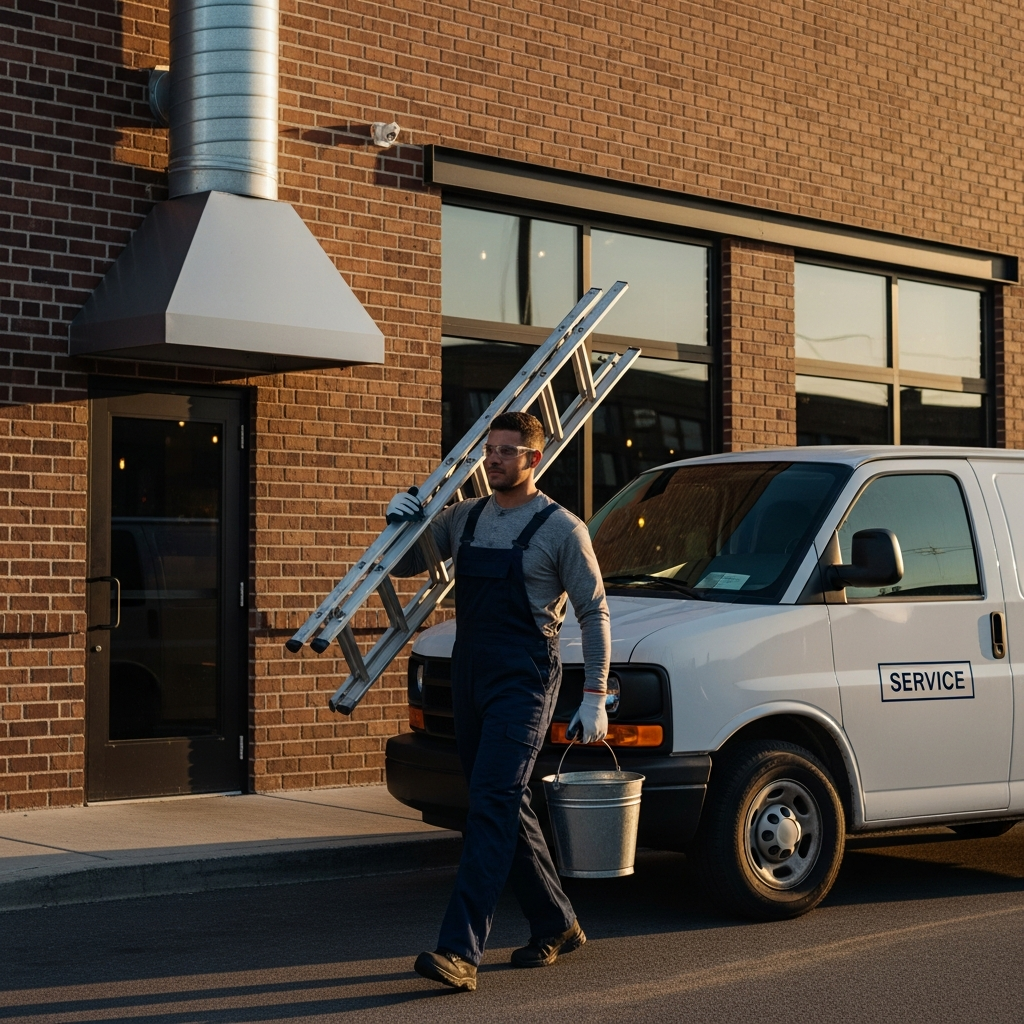
Ask about site prep practices: floor dams or mats to contain rinse water, plastic sheeting to protect appliances and outlets, and approved caps for fire suppression nozzles. On the roof, look for hinge kits that allow safe fan opening without straining wiring, plus grease containment with fresh absorbent media. Technicians should wear non-slip footwear and eye protection and should leave your space dry and safe to reopen.
Quality Indicators You Can See
After service, the canopy interior should be free of oily sheen, including in corners and along seams. Filters should be clean and seated correctly, oriented for proper airflow. The fan should run smoothly without new vibrations or squeals, and the roof curb should be free of spills or stains. Indoors, the floor should be dry and not slippery, with stainless exteriors polished to a uniform finish.
Somerville-Specific Considerations
Local kitchens often navigate seasonal spikes tied to community events and warm-weather dining. Choose a provider familiar with these rhythms who can adjust intervals temporarily and return to your standard cycle when volume normalizes. Providers who know the area also understand common building layouts and rooftop access challenges, which reduces setup time and improves safety.
Building a Service Plan
Start with an assessment visit. A technician should examine your hood size, filter style, duct path, access panels, and the fan configuration. From there, you can set up a plan that includes daily in-house wipe-downs, weekly filter service, monthly canopy and plenum cleaning, and quarterly duct and fan deep service. Blend professional visits with your team’s routines so you get continuous results without overspending time or effort.
Common Problems and How Pros Address Them
Persistent smoke in the kitchen can indicate insufficient make-up air, clogged filters, or duct restrictions. Professionals test capture with simple indicators and inspect supply filters and dampers. Rooftop grease staining typically points to saturated containment or fan drain issues; a good provider replaces media, cleans the curb, and checks that drains route correctly. Fan vibrations often come from uneven residue on blades or belt wear; technicians degrease blades evenly and record belt condition for maintenance follow-up.
What to Ask During a Quote
Ask about the scope: canopy, plenum, ducts, fan, and roof containment. Request sample reports and photos from similar kitchens. Confirm chemical types and dwell times, rinse and containment methods, and final polish expectations. Discuss documentation format—digital photos, checklists, and invoices should be delivered promptly and stored in a shared folder for your records.
Verifying Mid-Cycle Cleanliness
Between scheduled visits, perform simple checks. Use a flashlight to scan seams and corners inside the hood for any shiny film. Hold a paper strip under the capture zone to confirm steady pull. Remove one filter weekly for a quick soak and rinse, rotating positions to equalize wear. If you spot rapid buildup or smell lingering grease, contact your provider to adjust frequency or investigate fan and make-up air performance.
Integration with Inspections
Align professional cleaning with your inspection calendar. Conduct an internal inspection just before your scheduled service so findings become the service plan. After service, review the provider’s photos and verify a sample of areas yourself. This loop builds confidence that everything was cleaned to spec and keeps your records audit-ready.
Why Local Expertise Helps
Proximity matters when you need flexible scheduling, quick follow-ups, or help during unexpected volume surges. Local teams understand typical building codes, access routes, and weather patterns that affect rooftop work. They can coordinate with your staff for overnight work and return swiftly if you spot something that needs touch-up.
Frequently Asked Questions
Q: How often should a professional clean our system? A: Many high-volume kitchens benefit from monthly canopy and filter service with quarterly duct and fan cleanings. Adjust based on smoke capture, residue levels, and inspection feedback.
Q: What distinguishes a great provider? A: Safety-first site prep, clear documentation with photos, thorough duct and fan coverage, and the willingness to tailor schedules and methods to your cooking style.
Q: Can we rely only on professional visits? A: Pair them with daily wipe-downs and weekly filter service in-house. This combination delivers consistent results and extends the effectiveness of each professional cleaning.
Q: How do we ensure the roof stays clean? A: Install or maintain grease containment, replace absorbent media regularly, and confirm that drains route properly. After each visit, expect a clean curb and surrounding area.
Q: What signals a problem between services? A: New vibrations or squeals from the fan, visible smoke spillover, sticky film returning quickly inside the canopy, or odors that persist despite recent cleaning.
Set Up Service with Confidence
A dependable hood cleaning plan safeguards your people, property, and reputation. With the right partner, you will get consistent results, clear documentation, and scheduling that respects your busy hours. When you are ready to evaluate options or secure a recurring plan, reach out to local professionals who specialize in kitchen exhaust hood cleaning. You will streamline inspections, sustain strong airflow, and keep your Somerville kitchen ready for every rush.
