Dryer Vent Cleaning Service in Somerville, New Jersey: Safety, Efficiency, and Peace of Mind
If your dryer seems to take longer to finish a cycle, or your laundry room feels warmer than usual, your vent system may be due for professional attention. Regular dryer vent cleaning is one of the most important, yet overlooked, home maintenance tasks for Somerville homeowners. It improves drying performance, reduces energy waste, and—most importantly—lowers the risk of a dangerous lint-fueled fire. In a busy household, lint can build up rapidly inside the vent and termination hood, and even a high-quality dryer cannot compensate for a blocked or poorly routed exhaust path.
Somerville’s seasonal shifts add to the challenge. Spring’s pollen and humidity, summer’s heat, and winter’s cold can each influence how moisture and lint move through your exhaust duct. With time, minor airflow restrictions become major obstructions, stressing your dryer’s motor, heating element, and safety controls. A thorough cleaning resets your system back to safe baseline performance, helping you protect your home and extend the life of your appliance.
Why Professional Dryer Vent Cleaning Matters
Dryers are designed to push warm, moist air and lint through a duct to the exterior. When that duct is constricted by lint, crushed tubing, or a stuck exterior hood, pressure rises and heat accumulates. Lint is both flammable and fibrous, which means it can ignite easily and feed combustion quickly. Beyond fire hazards, restricted vents lead to longer dry times, higher utility usage, and more wear on tumbling fabrics. Clothes may feel hot but still damp; towels can come out musty; and your laundry room may smell stale due to trapped moisture.
In many cases, homeowners try to solve the problem by running the dryer longer or increasing heat settings. That approach masks symptoms while accelerating lint production. Professional cleaning addresses root causes by clearing the entire pathway from the dryer’s internal lint passage to the exterior termination, and by identifying defects—such as screws protruding into the duct or unnecessary elbows—that catch and accumulate lint.
Common Signs Your Vent Needs Attention
- Dryer cycles take 10–20 minutes longer than normal, even for small loads.
- Clothes feel unusually hot after a cycle, but pockets or seams remain damp.
- The laundry room becomes warmer or more humid when the dryer runs.
- You notice a burning or dusty odor during cycles.
- The exterior vent hood flap does not open fully, or it sticks.
- Visible lint buildup appears around the vent cover or behind the dryer.
- The dryer frequently shuts off mid-cycle or displays airflow-related error messages.
What a Professional Dryer Vent Cleaning Service Includes
While every home is unique, a comprehensive appointment typically follows a proven workflow designed to restore reliable airflow and verify safe operation.
- Assessment and safety check: The technician confirms fuel type (gas or electric), inspects the transition duct, verifies the termination style, and checks for combustible materials near the dryer.
- Airflow and back-pressure measurement: Baseline readings identify the severity of restriction and guide the cleaning strategy.
- Appliance pull-out and protection: Floor and wall surfaces are protected. The dryer is carefully moved to access the connection point without stressing gas, water (for steam dryers), or electrical lines.
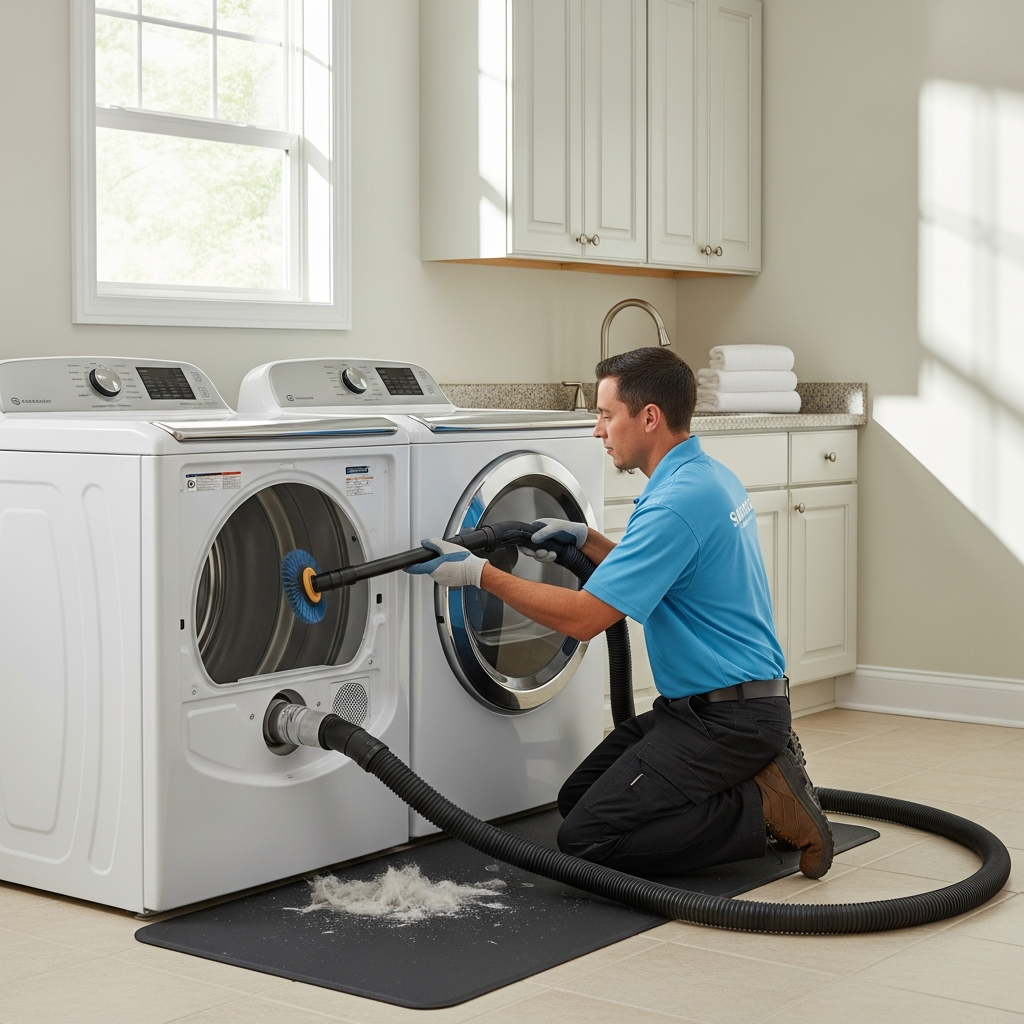
- Mechanical agitation: Lint and debris are loosened with rotary brushes or air-whip tools sized for your duct diameter and length. Special attention is given to elbows, long horizontal runs, and any sections where screws or seams could trap fibers.
- Vacuum extraction: High-efficiency collection equipment removes loosened material, reducing dust in the home.
- Exterior termination service: The exterior hood or louver is cleaned; bird or rodent nesting is removed; the damper is checked for free movement and adequate backdraft protection.
- Transition duct evaluation: The short connector between dryer and wall is inspected for kinks, crushing, or unsafe materials. If necessary, the technician recommends replacing foil or plastic flex with a UL-listed, smooth-walled, or semi-rigid alternative.
- Sealing and reassembly: Connections are secured with the correct clamps or foil-backed tape (not cloth duct tape). The dryer is leveled and returned to position with room for safe airflow.
- Post-cleaning verification: Final airflow and pressure readings are compared to the baseline to document improvement.
Benefits You Will Notice Immediately
- Faster drying times with more consistent results across different fabrics.
- Lower energy waste because the appliance no longer compensates for blockages.
- Reduced heat stress on the dryer’s internal components for longer service life.
- Less humidity and fewer musty odors in the laundry area.
- Peace of mind from reducing a leading cause of residential dryer-related fires.
Unique Considerations for Somerville, NJ Homes
Somerville neighborhoods include a mix of detached homes, townhomes, and multi-unit buildings. Vent length and routing can vary widely; some installations travel through attics or crawlspaces, while others run long horizontal distances before exiting. Older homes may have transitions that are too long or compressed behind the appliance, and newer builds sometimes prioritize compact laundry closets that leave minimal clearance.
In addition, mid-Atlantic weather can affect exterior terminations. Louvers may stick in freezing conditions, while spring pollen and summertime lawn clippings can accumulate around vents at grade. A professional cleaning service identifies these local issues and recommends simple protective steps—like trimming vegetation near the hood, ensuring a clear snow line in winter, and confirming that screens are not installed where they could trap lint.
Best Practices Between Cleanings
- Empty the dryer’s lint screen before every load and periodically wash it with mild dish soap to remove fabric softener residue.
- Run smaller loads of heavy fabrics so towels and blankets do not mat and shed excessive lint at once.
- Allow at least a few inches of clearance behind the dryer to prevent the transition duct from crushing or kinking.
- Check that the exterior damper opens fully when the dryer operates; little or no movement indicates a blockage.
- Avoid using plastic or thin foil accordion hoses and never fasten internal vent joints with screws that intrude into the airflow path.
When to Schedule Service
For an average single-family home in Somerville, an annual cleaning is a strong baseline. Households with several weekly laundry days, pets that shed, or long/complex vent runs may need service every six to nine months. After renovations, moving the dryer, or a replacement appliance installation, schedule a cleaning and verification check to confirm safe performance from day one.
In the middle of a busy season, the smartest time to act is when you first notice pattern changes—longer cycles, lingering moisture, or a warmer laundry area. A quick assessment and a targeted cleaning can restore performance before problems compound. If you want a local team that understands common vent routes and termination types in Somerville neighborhoods, consider booking professional dryer vent cleaning and keep your household humming.
Frequently Asked Questions
Q: How long does a typical cleaning appointment take? A: Most single-family homes require 45–90 minutes depending on vent length, accessibility, and the extent of buildup. Complex runs or rooftop terminations can extend the visit.
Q: Is dryer vent cleaning messy? A: Technicians use protective measures and high-efficiency collection equipment to capture dislodged lint. Surfaces are covered, and the exterior area is tidied at the end of the job.
Q: Will cleaning fix long dry times immediately? A: In most cases, yes. When airflow is restored, cycles normalize quickly. If issues persist, the technician will look for secondary causes such as a failing moisture sensor, a crushed transition duct, or a partially closed damper.
Q: Can I clean the vent myself? A: Home kits can help with short, straight runs, but professional tools and experience are invaluable for longer or complex ducts. Technicians also spot unsafe materials and code-related concerns during the visit.
Q: How do pets influence cleaning frequency? A: Pet hair sheds into fabrics and transfers to the lint screen and vent. Multi-pet households typically benefit from more frequent maintenance.
Q: Will cleaning reduce allergens or odors? A: Restored airflow reduces trapped moisture, which cuts down on musty smells and helps prevent microbial growth. While not a substitute for broader indoor air quality strategies, it is a meaningful improvement.
Q: What if my vent exits to the roof? A: Roof terminations are common in some layouts and can be safely serviced with the right access and tools. Your technician will assess pitch, height, and weather conditions before proceeding.
Schedule Reliable Service in Somerville Today
Give your laundry routine the upgrade it deserves—safer operation, quicker cycles, and a fresher laundry space. Book trusted local dryer vent cleaning today and enjoy better performance with every load.
