Introduction: What Makes an Air Duct Repair Team “Trusted” Near Somerville?
When it comes to the comfort and health of your home in Somerville, New Jersey, the company you choose to service your ducts matters. A trusted provider brings proven methods, transparent communication, and a track record of durable results. Repairs are not just about closing gaps; they are about restoring a smooth, balanced pathway for air that holds up through seasonal changes and daily use. If you are evaluating local options, start by reviewing workmanship standards and how results are verified. Exploring an established option for trusted air duct repair can help you compare approaches and select a team that takes your home’s performance seriously.
This guide outlines hallmarks of reliable providers, the steps involved in careful repair, and how to evaluate outcomes. With these insights, you can choose confidently and set clear expectations from the first visit.
Hallmarks of a Reliable Air Duct Repair Service
- Clear assessment process: Professionals explain how they identify leaks and damage and what measurements they will use to verify improvements.
- Quality materials: Crews rely on mastic, UL-listed foil tape, mesh reinforcement, and properly supported flex duct.
- Attention to both supply and return: Balanced sealing prevents waste and keeps unfiltered air from entering the system.
- Mid-project verification: After addressing major leaks, technicians reassess airflow and look for smaller gaps that can now be detected.
- Respect for your home: Protective coverings, tidy workspaces, and clear communication about schedule and access.
Common Problems Found in Somerville Homes
Many homes mix older sheet-metal trunks with flexible branches added during renovations or additions. Over time, joints loosen, foil tapes dry out, and flexible runs sag or kink. Some returns may be improvised through wall cavities or utility spaces and can pull in unconditioned air. Trusted technicians take the time to trace these pathways, identify the most impactful fixes, and recommend layout corrections where necessary.
The Step-by-Step Process of Dependable Repair
- Interview and visual survey: The technician asks about comfort issues and inspects accessible ducts for obvious gaps, loose connections, and damage.
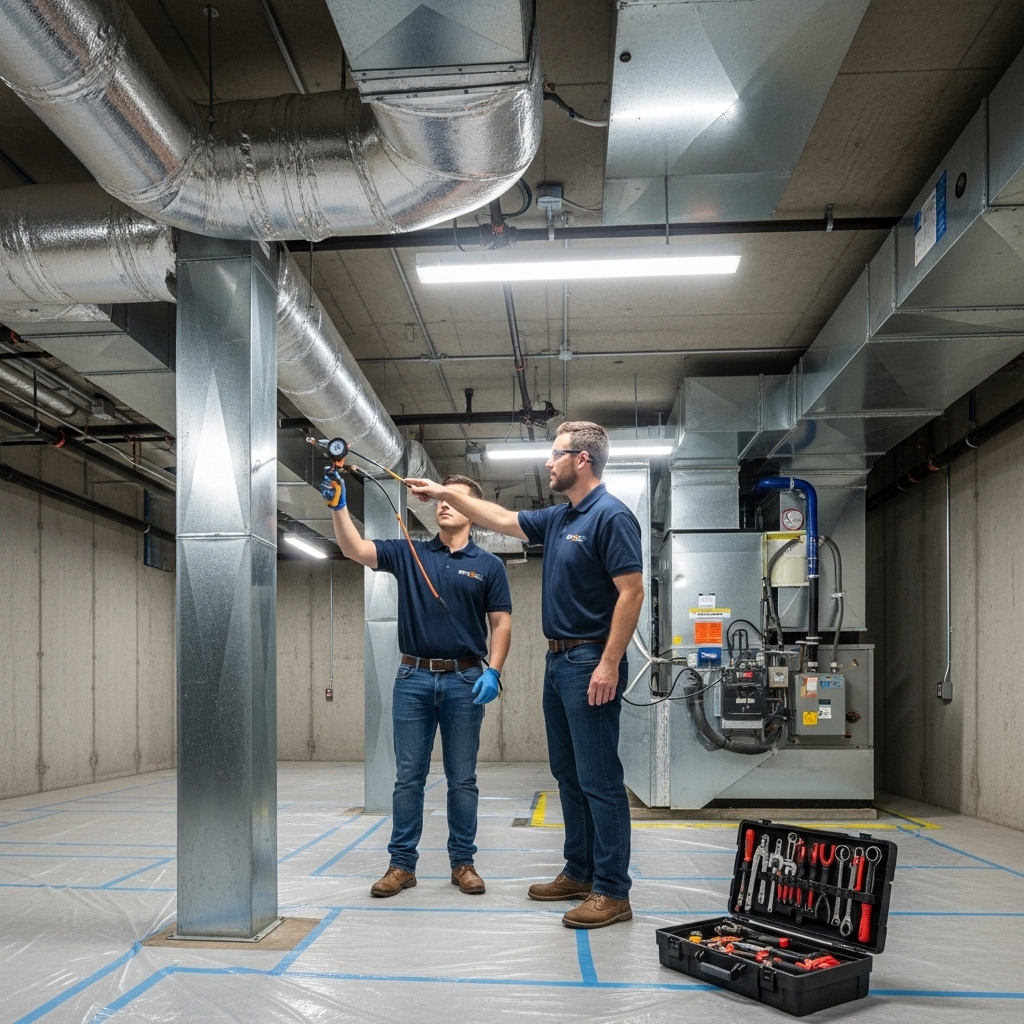
- Testing and documentation: If appropriate, duct pressure testing quantifies leakage. Airflow or temperature readings at registers establish baselines.
- Targeted repair: Damaged flex runs are replaced or re-supported; misaligned take-offs are corrected; boots are secured and sealed.
- Sealing and reinforcement: Mastic and UL-listed tape are applied to seams and joints, with mesh where necessary.
- Verification: Airflow readings are retaken at key registers to confirm improvement and identify any remaining weak spots.
- Recommendations: If certain sections are undersized or severely deteriorated, the technician outlines upgrade options for long-term reliability.
Why Verification Matters
Closing visible leaks is only part of the job. A trusted team relies on measurements to confirm that conditioned air reaches the rooms that need it. This approach builds confidence that repairs will hold up and deliver the comfort improvements you expect. Verification also reveals hidden issues, such as a crushed run behind a finish or a return path that pulls air from a utility area.
Somerville Climate and Housing Considerations
Seasonal humidity can stress materials, promoting condensation on unsealed supply lines in summer and making marginal joints pull apart in winter. The town’s mix of historic and newer construction means duct layouts vary widely. A team experienced with local homes understands how to navigate tight mechanical spaces, protect finishes, and apply methods that fit each layout.
Materials and Techniques You Should Expect
- Mastic sealant for seams and joints to create a flexible, long-lasting seal.
- Foil or mastic tape rated for HVAC use, applied to clean, dry surfaces with firm pressure.
- Mesh reinforcement to bridge larger gaps with strength.
- Properly supported flexible ducts with gentle bends to protect airflow.
- Secured boots and transitions at registers to eliminate end-point leakage.
These materials, correctly installed, form the backbone of a durable repair strategy.
Mid-Project Insights: Finding the Hidden Leaks
Once the most obvious openings are sealed, duct pressure changes and subtle leaks may become detectable. Skilled technicians systematically re-check elbows, take-offs, and returns. This iterative approach is a sign of thoroughness and a great predictor of lasting results. If you are pursuing repairs, choose a provider that includes this step and explains the findings along the way. You can also explore teams experienced in air duct repair technicians who emphasize measurement-driven results.
How to Compare Providers
- Ask about testing: Do they measure leakage or airflow before and after?
- Request materials lists: What sealants and tapes will be used?
- Discuss access: How will they protect floors, walls, and ceilings?
- Review timelines: What steps will be completed in the first visit and what might require a return trip?
- Clarify communication: How will results and recommendations be documented for your records?
Frequently Asked Questions
Q: How do I know if a company is truly experienced with local homes? A: Ask for examples of similar projects in Somerville and what approaches were used. Experienced teams can explain typical problem areas found in the area’s housing stock and how they resolve them.
Q: Will sealing change the sound of my system? A: Some homeowners notice a quieter operation after major leaks are closed because air moves more predictably and vibrations are reduced.
Q: Can I do part of the work myself? A: You can seal small accessible gaps on metal ducts with mastic or UL-listed tape. However, addressing returns, hidden runs, and flex duct issues is best left to professionals for durable results.
Q: What if my home has hot and cold spots even after sealing? A: In that case, layout adjustments or balancing may be needed. A trusted provider will propose targeted changes to improve distribution.
Q: How often should I revisit duct inspections? A: A brief annual check of accessible areas is wise, with a deeper review every few years or after renovations.
Protecting Your Investment with Good Habits
- Replace filters on schedule to keep return pressures healthy.
- Keep flex runs clear of storage boxes to prevent crushing.
- Monitor visible joints and boots each season for signs of loosening.
- Leave registers open unless a professional recommends specific balancing.
These simple habits help preserve the benefits of professional repairs and make your system easier to evaluate in the future.
Choose Confidence and Clarity
Selecting a provider is easier when you know what good work entails: careful diagnosis, quality materials, verified results, and clear communication. With a team that meets these standards, you can expect steady comfort and dependable performance.
Next Steps for Somerville Homeowners
Document rooms with airflow issues, note any visible duct concerns, and reach out to a qualified team. Ask about their testing methods, materials, and typical timeline. With this information, you will be well positioned to make an informed decision.
Get the Reliable Results You Deserve
If you are ready for a measured, methodical approach that prioritizes your home’s performance and your peace of mind, connect with a local specialist. For prompt scheduling and a thorough evaluation, contact our air duct repair team and take the first step toward consistent comfort across every room.
